
Most school safety lists are written around the things adults fear. The rules that actually reduce harm are written around the things that injure children — falls, corridors, traffic at the school gate, and adults the child already knows. Those are not the same list.
This article separates the two. It sets out 25 rules a child can genuinely perform, grouped by where the risk sits rather than in the order they occur to a writer, and it marks clearly which hazards are the school's legal responsibility rather than the child's. It is written for parents and teachers anywhere; the legal duty differs by country, so the article names the international framework first and uses national instruments as worked examples.
I train supervisors, not eight-year-olds. But the question I ask on an industrial site is the same one worth asking of a school rule: can this person actually do this, at the moment it matters, under real conditions? Most rule lists fail that test.
Key takeaways
Falls dominate school injury data. A US study of emergency department visits from 1995 to 2019 found climbing apparatus accounted for around 36% of playground equipment injuries, swings about 26% and slides about 20%, with a mean age of 6.5 years.
The Comprehensive School Safety Framework 2022–2030 puts safe facilities (Pillar 1) and teaching children risk skills (Pillar 3) in separate pillars, for a reason: a child's rule cannot substitute for a control the school owes them.
"Stranger danger" is no longer taught by the National Center for Missing & Exploited Children, which teaches recognition of luring tactics and safe adults instead. Most harm to children comes from people they know.
NHTSA puts the highest-risk moment of the bus journey outside the vehicle: the 10-foot danger zone during loading and unloading.
The UK regulator explicitly warns schools against over-caution, arguing for risk awareness rather than risk avoidance. A rule list that frightens a child is a failure, not a success.
House style for all graphics: Friendly technical line illustration, muted palette with a single accent colour, clean sans-serif labels, amber reserved for hazards. No photorealism, no depicted injuries, no identifiable children.
What the school owes your child, and what they control#
The school controls the hazard. The child controls their behaviour near it. Confusing those two produces rules that sound responsible and protect nobody — "be careful on the climbing frame" is not a control if the surfacing underneath it is asphalt.
The international framework makes this split explicit. The Comprehensive School Safety Framework 2022–2030, published by the Global Alliance for Disaster Risk Reduction and Resilience in the Education Sector and endorsed across UN agencies, is built on a foundation of enabling policy plus three pillars. Pillar 1 is safer learning facilities. Pillar 2 is safety and educational continuity management. Pillar 3 — risk reduction and resilience education — is where a child's own rules live. Pillar 3 is the last one, not the first.
National law follows the same logic. In England, a school's duty to pupils flows from the employer's general duty to persons other than employees under the Health and Safety at Work etc. Act 1974, with risk assessment required under the Management of Health and Safety at Work Regulations 1999; the HSE's guidance for schools sets out what proportionate management looks like. In the United States, playground equipment is governed by voluntary consensus standards — ASTM F1487 for public-use equipment and ASTM F1292 for impact-attenuating surfacing — which the CPSC references in its Public Playground Safety Handbook, updated in 2025.
Here is how the split works across the hazards this article covers.
Hazard | The school's duty | The child's rule |
|---|---|---|
Falls from play equipment | Compliant equipment, impact-attenuating surfacing, inspection records | Come down the way you went up; report broken kit |
Traffic at the gate and bus stop | Segregated pedestrian and vehicle routes, supervised crossing | Stay out of the danger zone; cross where the driver sees you |
Fire and evacuation | Alarms, drills, clear escape routes, roll-call arrangements | Stop, leave what you're carrying, go to the muster point |
Lab and workshop practicals | Risk assessment, eye protection provided, teacher supervision | Wear the goggles for the whole practical |
Allergens in food | Individual care plans, staff trained on adrenaline auto-injectors | Don't share food; know your own plan |
Harm from adults or peers | Safeguarding policy, vetting, a named reporting route | Tell a safe adult, by name |
Two questions are worth asking your child's school, and both have documentary answers:
What is under the climbing equipment, and when was it last checked? Surfacing depth is the single control that most changes fall outcomes, and it degrades quietly as loose fill displaces.
Who is the named person a child tells, and does my child know that name? A reporting route the child cannot name is not a reporting route.
The 25 rules, ordered by where children are actually getting hurt#
The grouping below follows injury data rather than intuition. Getting to and from school and break-time falls come first because that is where the serious injuries cluster; the safeguarding and online rules come last, not because they matter least but because they are the ones that need most conversation and least memorisation.
Getting to and from school (rules 1–4)#
The most dangerous part of a bus journey is not the journey. NHTSA identifies the loading and unloading area — roughly 10 feet on all sides of the bus — as the danger zone, where the driver's sightlines fail and passing motorists are the main threat.
Stay 10 feet clear of a stopped bus — five giant steps. If you must cross in front, walk far enough forward that you can see the driver's face.
Make eye contact with the driver before you step out. If you cannot see their eyes, they cannot see you.
If you drop something near the bus, tell the driver. Never reach for it. This is the specific behaviour that puts children under the rear wheels, and it is worth rehearsing rather than just stating.
Walk the agreed route, and say so if you change it. Not a fear rule — a findability rule.
Corridors, stairs and classrooms (rules 5–9)#
Corridor injuries are unglamorous and constant. They concentrate at transitions: bells, doorways, stair landings, the first ninety seconds of break.
Walk in corridors, and keep to one side. Collisions happen at doorways, where two flows meet.
Hold the handrail on stairs, one step at a time. A hand on the rail converts most stair falls into a stumble.
Carry your bag on both shoulders, and never leave it in a walkway. Bags on floors are the most common trip hazard in a school building.
Never climb or hang on lockers, shelving or bookcases. Furniture tip-over is a recognised child fatality mechanism, and it is silent and fast.
Push your chair in, and keep cables and coats off the floor. Housekeeping is a control, not tidiness.
Break time, playground and PE (rules 10–14)#
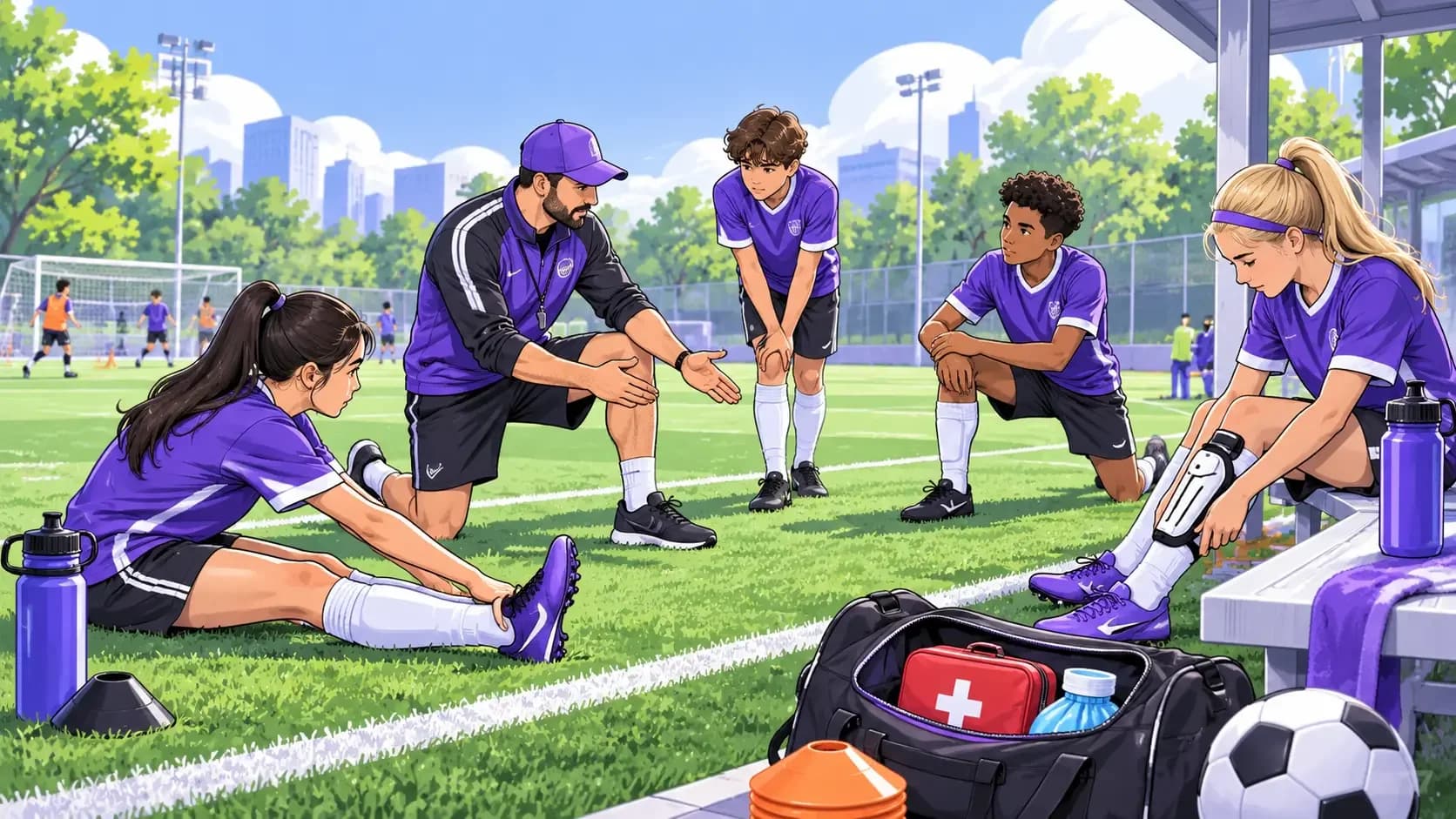
This is where the fractures happen. Monkey bars and climbing frames carry substantially higher odds of extremity fracture than other equipment, and the mean age of a playground injury sits around six and a half.
Check the equipment before you use it, and report anything broken or loose. Children notice damage before inspectors do.
Come down the way you went up. Jumping from height onto displaced surfacing is the classic mechanism.
Take off hoods, drawstrings, scarves and lanyards before climbing. The 2025 CPSC handbook update strengthened warnings on entanglement and strangulation, including helmet chin straps on play equipment.
Play where a supervising adult can see you. Not to be watched — so that help arrives fast.
If someone is hurt, get an adult. Do not move them. Give the rule a script: who you fetch, and what you say.
Labs, workshops, food and health (rules 15–19)#
Practical lessons are where a school most resembles a workplace, and where the same control failures appear — protection worn for the visible hazard only, and substances handled by habit.
Wear eye protection for the whole practical, not just the part that looks dangerous. Most eye injuries in school labs happen during setup and clearing away.
Never taste, smell or mix anything unless a teacher tells you to. This covers labs, food technology and the cleaning cupboard equally.
Don't share food or drinks, and know your own allergy plan. A child with a diagnosed allergy should be able to say what they are allergic to and where their medication is.
Wash your hands before eating and after the toilet. The one rule on this list with a genuine population-level effect on absence.
Never take anyone else's medication, and never give away your own. Including paracetamol, inhalers and auto-injectors.
People, safeguarding and online (rules 20–25)#
These rules are about recognition, not avoidance, and they are the ones that most need rehearsing in conversation rather than reciting.
Know your safe adults by name — at school and at home. Name three.
A surprise is something everyone finds out about later. A secret is something you're told never to tell. An adult asking a child to keep a secret from their parents is itself the warning sign. NCMEC publishes classroom lessons on exactly this distinction, and on uncomfortable touch, for ages 5 to 11.
Your body is yours. You can say no to touch that makes you uncomfortable, including from people you know. This rule is worthless if it excludes familiar adults, because that is where the risk actually sits.
Tell someone if you're bullied, and tell someone if you see it. Reporting is not telling tales — say those words explicitly, because children have usually been taught the opposite.
Don't share your name, school, photograph or location online, and show an adult any message that makes you uneasy. The second half matters more than the first.
If you're lost or frightened, go to a person in uniform or an adult with children. Do not wander looking for a familiar face. This is the rule that replaces "stranger danger", and it is covered in full in the next section.
⚠️ Safety critical: Rules 21, 22 and 23 only work if a child has seen an adult respond well to a small disclosure. A child who has been told off for reporting something trivial will not report something serious. Practise on the small things.
The one rule to stop teaching: why "stranger danger" fails children#
Most school safety lists still carry a version of "don't talk to strangers". The organisations that specialise in this stopped teaching it years ago, and the reasons are worth understanding, because the replacement rule is more useful and easier for a child to apply.
The message fails in three specific ways.
It points at the wrong people. The large majority of harm to children — abuse, and most abduction — comes from someone the child already knows. A rule aimed exclusively at unknown adults leaves the actual risk untouched, and worse, implies that familiar adults are automatically safe.
Children cannot apply it. Asked to describe a stranger, young children reliably describe a villain: ugly, mean, monstrous. They do not picture a friendly woman with a pushchair or a helpful-seeming teenager, which is precisely the presentation an adult attempting to lure a child will adopt.
It removes the child's best option when lost. A frightened child who has been taught that unknown adults are dangerous will hide from the shop assistant or the teacher on duty who could reunite them in ninety seconds. The rule makes the most common bad situation worse.
NCMEC's KidSmartz programme teaches recognition of luring tactics instead, and has catalogued more than a hundred of them. Its own guidance replaces "never talk to strangers" with a specific instruction: if you need help, look for a uniformed police officer, a shop assistant with a name badge, or a parent with children. UK child protection charities and police child-protection advisers have made the same shift on the same evidence.
Two findings from NCMEC's analysis of attempted abductions matter directly to a school article. Many attempts occurred while the child was travelling to or from school, between 2pm and 7pm, and involved a suspect in a vehicle. And in NCMEC's 2018 analysis of attempted abduction trends, 83% of the children who got away did something active — they ran, yelled, kicked or pulled away. Politeness is the failure mode. A child who has been raised to be helpful and quiet needs explicit permission to be loud and rude to an adult.
The replacement is three rules a child can actually run:
Recognise the situation, not the person. An adult asking a child to go somewhere, keep a secret, or help find a lost pet is the signal, whoever they are. Adults ask other adults for help.
Identify safe strangers in advance. Uniform, name badge, or an adult with their own children. Practise it in real places — the supermarket, the station, the school gate.
Give permission to be loud. Rehearse the actual words: "I can't go with you until I check with my mum." Said firmly, while walking away.
⚠️ Safety critical: Teach the child to check with you before going anywhere with anyone — including people you both know. The tactic NCMEC calls the friend trick works precisely because the adult really does know the parent.
How to make a school safety rule actually stick#
Twenty-five rules is more than any child holds. That is not an argument against the list — it is an argument for treating it as a reference for adults and teaching a much smaller set to the child.
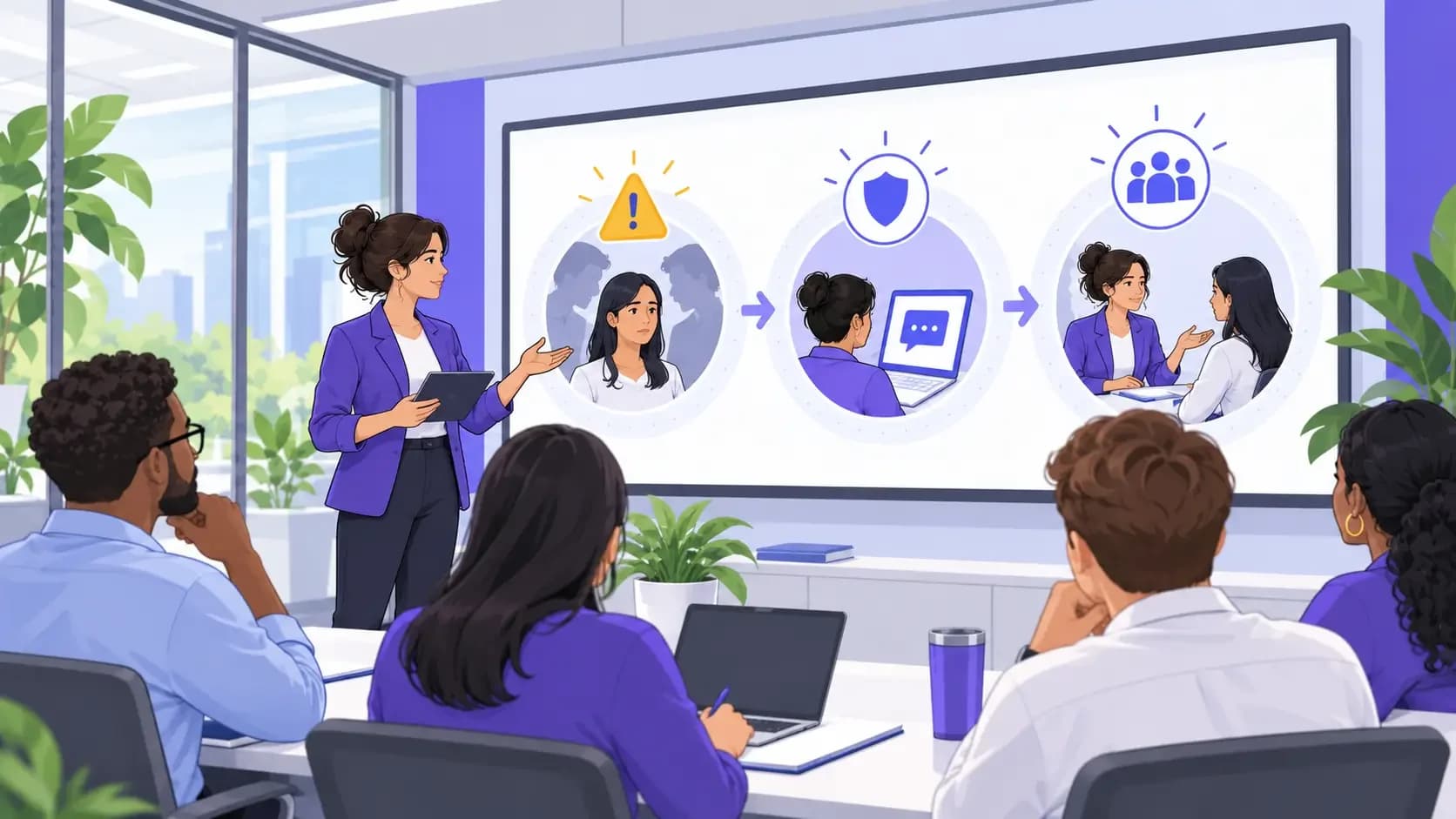
This is the part I can speak to directly. My work is technical education and site assurance: designing competence routines for supervisors, then going out at night and with contractors to check whether the written control survives contact with real conditions. Across pharmaceutical, port, offshore and manufacturing sites, written rules fail at the point of use for four reasons, and every one of them applies to a seven-year-old in a corridor.
There are too many. A rule set nobody can recall is a document, not a control. Pick five for this term.
They are not matched to what the person can do. "Be aware of your surroundings" is not performable. "Take five big steps in front of the bus before you cross" is.
They have never been rehearsed. People do not perform under pressure what they have only read. The difference between a child who knows the evacuation rule and one who has walked it is the difference between compliance and behaviour.
Reporting has been punished. On industrial sites this shows up as near misses that never get logged. In a school it shows up as a child who does not mention the first uncomfortable thing that happens.
The rehearsal point is the one I would push hardest. Running night operations fatigue work for a container terminal operator, I found repeatedly that the crews who performed correctly at 3am were not the ones who had read the procedure most recently — they were the ones who had physically walked it. Reading a rule and performing a rule are different skills, and the gap between them widens under stress. A child at the moment of a real evacuation is under more stress than an adult on a night shift.
Before teaching a rule, run it through these four checks:
Count them. If your child cannot list this term's rules on their fingers, there are too many.
Make it performable. Rewrite anything that starts with "be careful" or "be aware" into a physical action.
Walk it once. The route, the crossing, the words they would say. Once beats explaining it four times.
Reward the small report. Respond calmly to the trivial disclosure, because that is the audition for the serious one.
Match the rule to the age band, and the recall problem largely solves itself.
Age | Teach these first | How to teach it | What they cannot yet do |
|---|---|---|---|
4–7 | Safe adults by name; body boundaries; stay where an adult can see you | Rehearsal and role-play; short scripts | Judge an unfamiliar situation, or generalise a rule |
8–11 | Bus danger zone; equipment and play rules; reporting bullying; lost protocol | Walk the route; practise the words for reporting | Resist social pressure from peers reliably |
12+ | Lab and workshop discipline; online sharing; medication; helping others safely | Reasoning, not instruction — explain the mechanism | Assess risk under peer observation |
✅ Worth checking: Ask your child to tell you what they would do, not whether they know the rule. "What would you do if you dropped your phone by the bus?" tells you something. "Do you remember the bus rule?" tells you nothing.
What proportionate looks like — and the trap at the other end#
There is a failure mode on the far side of this, and the regulator names it directly. HSE's guidance tells school leaders that sensible management means focusing on real risks rather than trivial ones, and that the aim is to promote risk awareness rather than risk avoidance — giving pupils an appreciation of risk and how to handle it, rather than an environment scrubbed of it.
I recognise the pattern from audit work. The sites where I write the most findings are rarely the ones with thin procedures — they are the ones where the rule book grew every time something went wrong, until nobody could name the five rules that actually mattered. Volume of rules and quality of control are not the same variable, and past a point they move in opposite directions.
That matters for a rule list, because a list can do harm. A child taught that the world is full of dangerous adults, that play equipment is dangerous, and that any discomfort is a threat does not become safer. They become less willing to go outside, less able to judge an ordinary situation, and no better protected against the risks that are real.
The test to apply to any rule before you teach it is whether it survives all three of these:
Does it point at something that actually injures children? If the honest answer is "it makes me feel better", it is not a safety rule.
Can the child perform it unaided, at the moment it matters? If it needs an adult present, the adult is the control.
Does it leave the child more capable, or more frightened? A rule that produces fear without producing an action has failed.
Frequently asked questions#
These are the questions parents most often search alongside this topic, answered against the same sources used above.
What are the most important safety rules at school?#
Judged by injury data rather than by what worries adults: staying out of the 10-foot danger zone around a school bus, holding the handrail on stairs, coming down play equipment rather than jumping, removing drawstrings and hoods before climbing, and knowing a named safe adult to report to.
At what age should you stop teaching "stranger danger"?#
At every age. Leading child protection organisations, including NCMEC, do not teach it at all. Replace it from the start with recognising luring situations and identifying safe strangers a lost child can approach — someone in uniform, someone working behind a counter, or an adult with children.
What is the school responsible for, and what am I responsible for?#
The school owns the physical controls: equipment, surfacing, supervision ratios, drills, safeguarding policy and reporting routes. Parents own the child's own behaviour rules and the conversations behind them. A child's rule never substitutes for a control the school owes them.
How many safety rules can a child actually remember?#
Far fewer than 25. Treat this list as an adult reference and teach a child around five at a time, chosen for their age band and rehearsed rather than recited. Rules that have never been practised do not survive a real situation.
What should my child do if they get lost on a school trip?#
Stop moving, stay where they are, and if nobody comes, approach a person in uniform, a member of staff at a counter, or an adult with children. Wandering to look for a familiar face is what turns a short separation into a long one.
Are school playgrounds required to meet a safety standard?#
It varies by country. In the United States, ASTM F1487 and F1292 are voluntary consensus standards referenced in the CPSC's Public Playground Safety Handbook, though many states and insurers require compliance in practice. In the UK and much of Europe, BS EN 1176 and BS EN 1177 perform the same role. Ask your school for the last inspection record.
Key points#
The value of a rule list is not its length. Twenty-five rules exist here because the risks genuinely divide into five zones and each needs covering — but the working set for any individual child is five, matched to their age, rehearsed rather than read.
Three things carry more weight than the list itself. The school's physical controls do more for your child's safety than any rule they memorise, so ask about surfacing, inspection records and the named reporting route. The stranger danger message should be retired and replaced with situation recognition and safe strangers. And a child who has seen an adult respond calmly to a small report will make a large one.
If something on this page conflicts with your school's own policy or your child's individual healthcare plan, the school's policy and the plan take precedence — they are written against conditions this article cannot see.
Sources
What you need to know about the Comprehensive School Safety Framework — UNESCO
Epidemiology of child playground equipment-related injuries in the USA, 1995–2019 — J Paediatr Child Health
Playground safety, children younger than 6 — Nationwide Children's Hospital
Leave a Reply