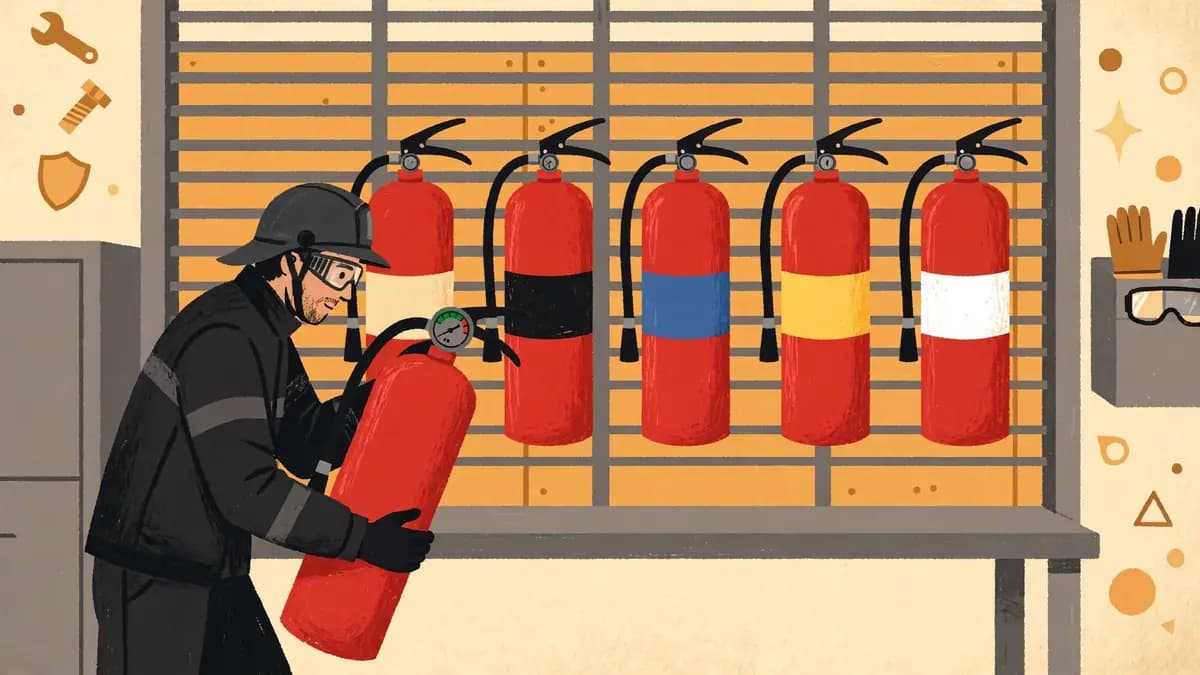
There are six types of portable fire extinguisher: water, foam, carbon dioxide (CO2), dry powder, wet chemical and water mist. Each one puts out a different kind of fire, and the wrong choice can make a fire worse. In the United Kingdom every extinguisher body is red, and a coloured band tells you what is inside. In the United States there is no colour code, so the label does the job instead.
The six types at a glance
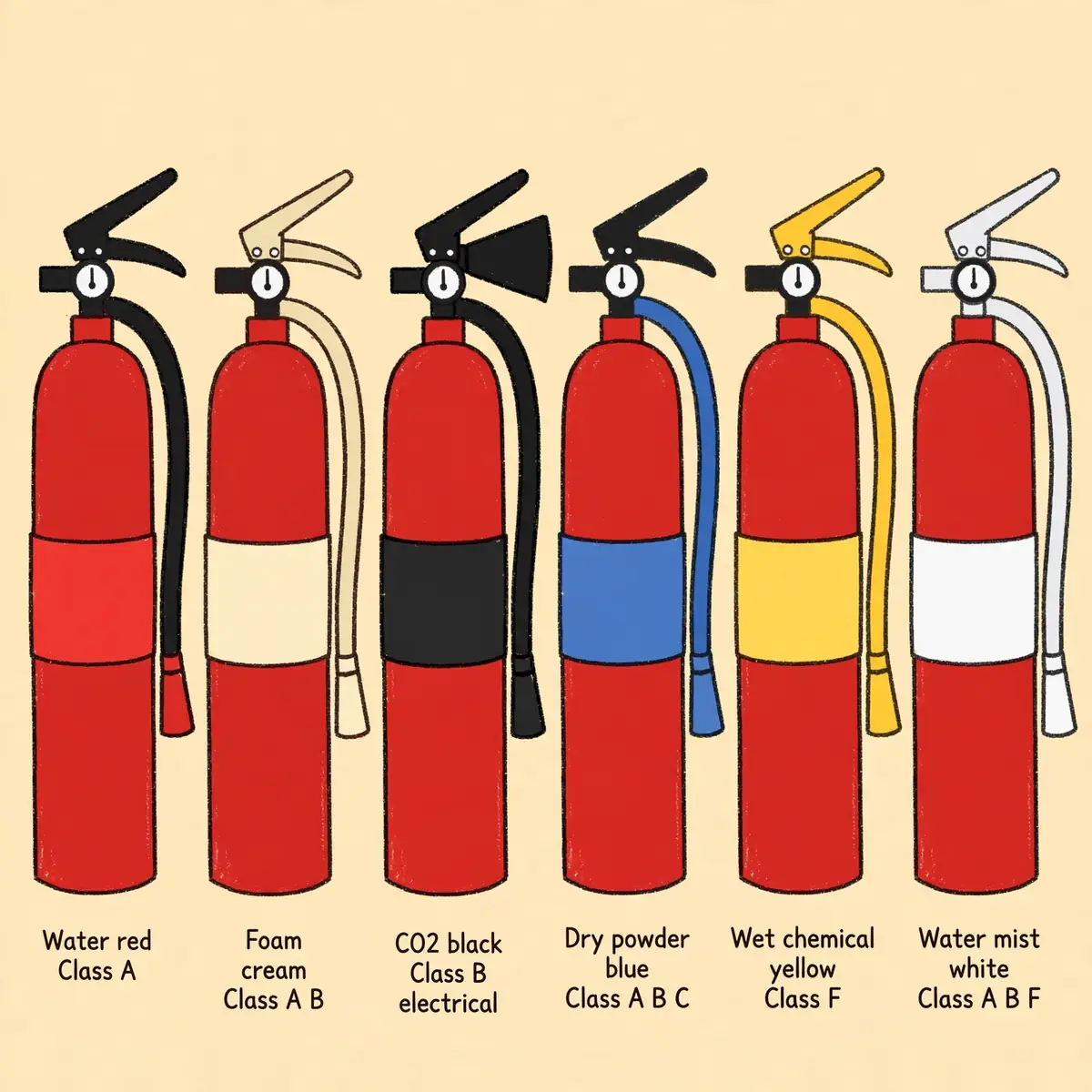
The table below gives the short answer. Read the label on the extinguisher as well: it lists the fire classes and the rating the unit was tested for. The fire extinguisher colour codes in the table are the United Kingdom system. The sections after the table explain each type in full.
| Type | UK band colour | Use on | Never use on |
|---|---|---|---|
| Water | Red | Class A | Flammable liquids, live electrics, cooking oil |
| Foam | Cream | Class A, B | Live electrics, cooking oil, metal fires |
| CO2 | Black | Class B, electrical | Class A (re-ignites), cooking oil, metal fires |
| Dry powder | Blue | Class A, B, C, electrical | Cooking oil, metal fires |
| Wet chemical | Yellow | Class F, A | Flammable liquids, gases, live electrics, metal fires |
| Water mist | White | Class A, plus B, F and electrical if the label says so | Class D |
In the United Kingdom, the construction of portable extinguishers is covered by BS EN 3, and the colour coding by BS 5306-10. Every body is signal red, and the band or panel that shows the contents covers at least 5% of the surface area. Older extinguishers with the whole body painted in the type colour are still legal to use if they are not defective. Halon extinguishers, once green, have been illegal in the United Kingdom since the end of 2003, except for a few aircraft and military uses.
What the fire classes mean first
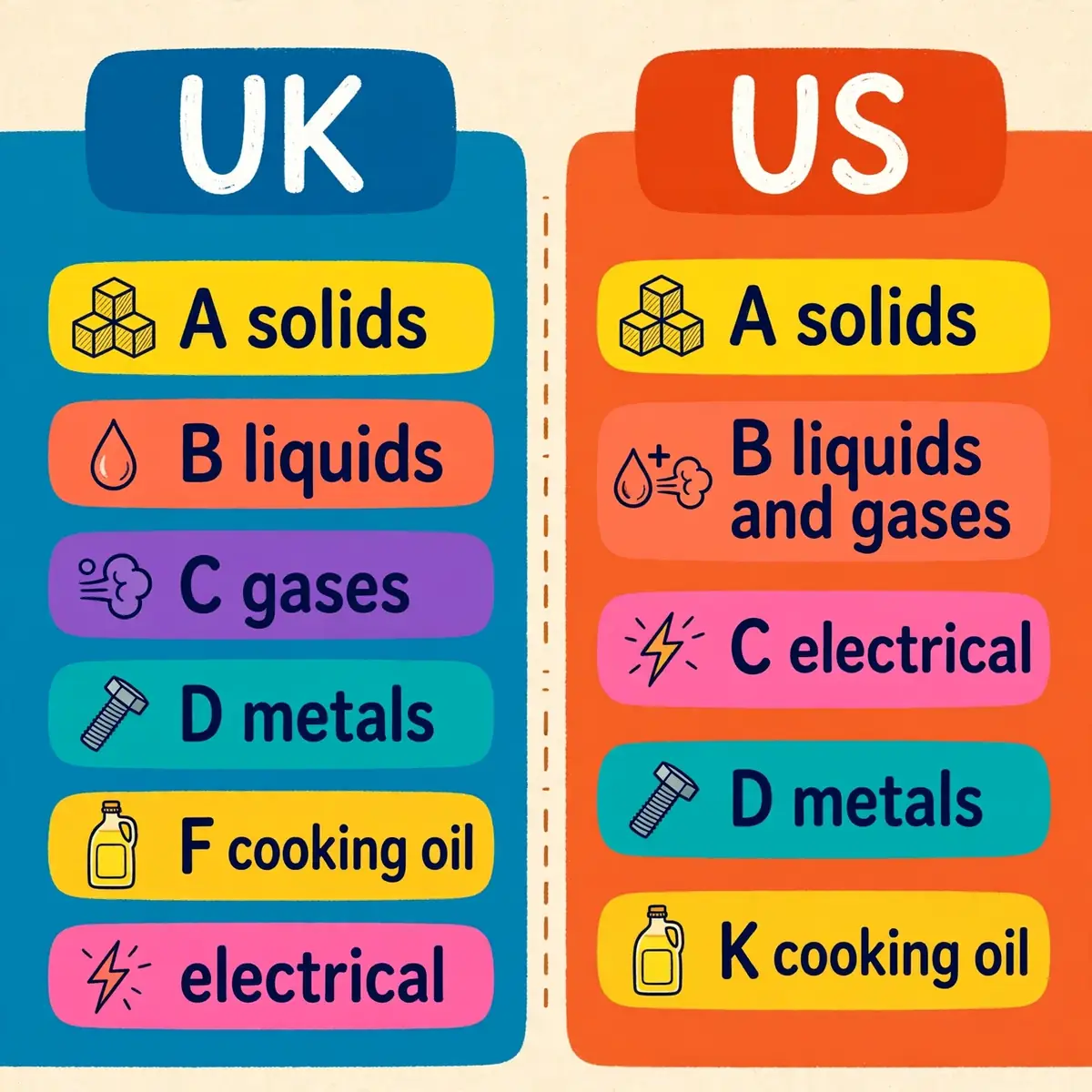
Fires are grouped by what is burning, and the extinguisher must match that fuel. The United Kingdom and Europe use the BS EN 2 classes. The United States uses the NFPA 10 classes, which OSHA follows. The letters do not match, so a Class C extinguisher means something different on each side of the Atlantic.
| What is burning | United Kingdom and Europe | United States |
|---|---|---|
| Wood, paper, textiles, plastics | Class A | Class A |
| Flammable liquids | Class B | Class B |
| Flammable gases | Class C | Class B |
| Combustible metals | Class D | Class D |
| Cooking oils and fats | Class F | Class K |
| Live electrical equipment | No class letter (spark symbol) | Class C |
Electrical fires have no class letter in the United Kingdom. They are treated as the fire of whatever material the electrical fault has set alight. The full letter-by-letter detail, including the ratings each class carries, is in the companion piece on fire extinguisher classes.
Water extinguishers
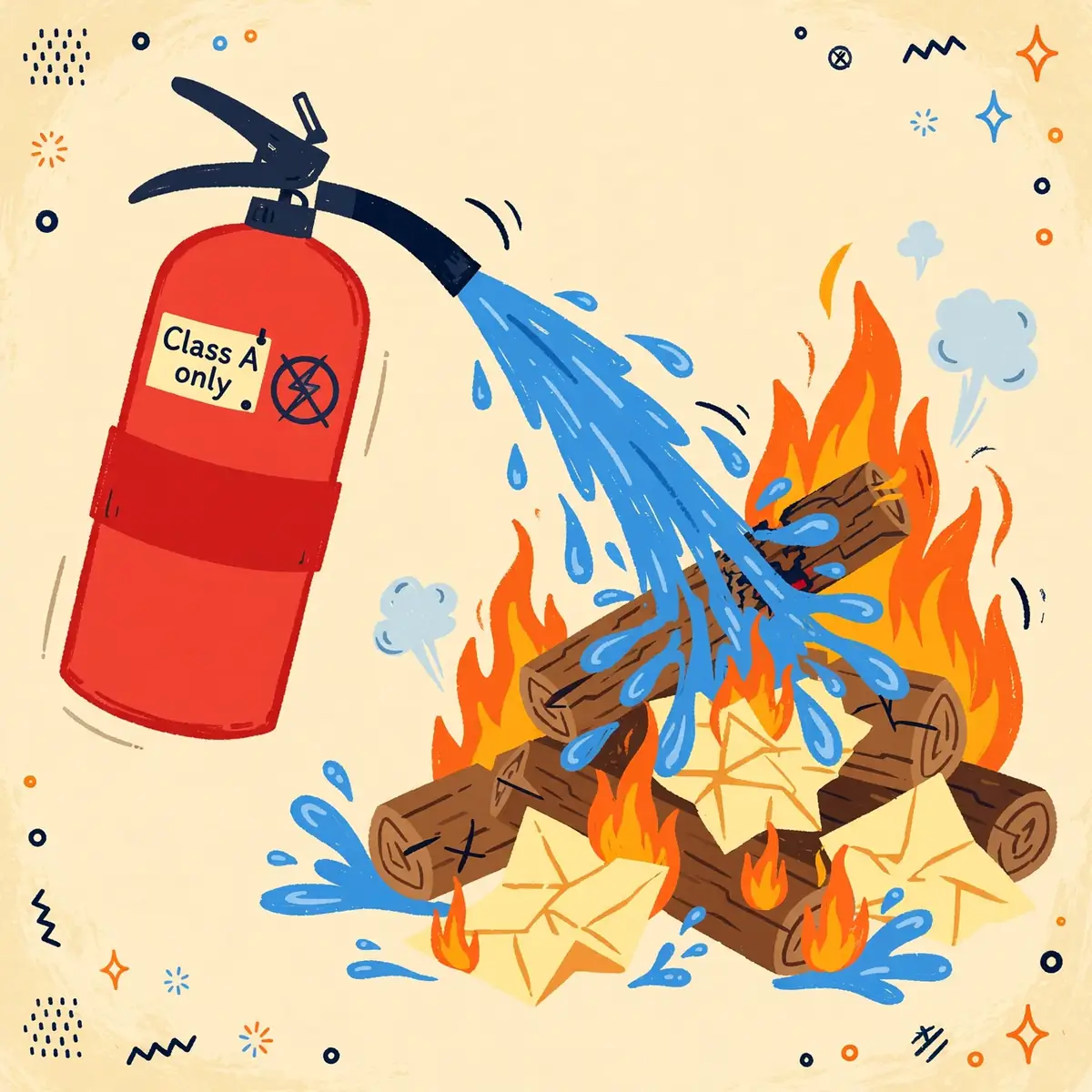
Water is the simplest and cheapest type. It puts out a fire by cooling the burning solid until the fire can no longer sustain itself. It works only on Class A fires: wood, paper, fabric, cardboard and other solid materials. Common sizes are 6 and 9 litres, and the band on the body is red, the same colour as the body itself.
You will find water extinguishers in offices, schools, shops and warehouses, usually paired with a CO2 unit so that electrical risks are covered as well. They are a good first choice wherever most of the fire risk comes from furniture, paperwork and fittings. They need a frost-free store, since a frozen unit cannot discharge.
WarningNever use water on burning cooking oil. The water turns to steam in an instant, expanding to about 1,700 times its liquid volume, and throws burning oil across the room.
Water conducts electricity, so it must never be used on live electrical equipment. It also spreads burning liquid instead of putting it out, so it has no place on a petrol, paint or solvent fire. If the fuel is unknown, do not reach for the water extinguisher.
Foam extinguishers
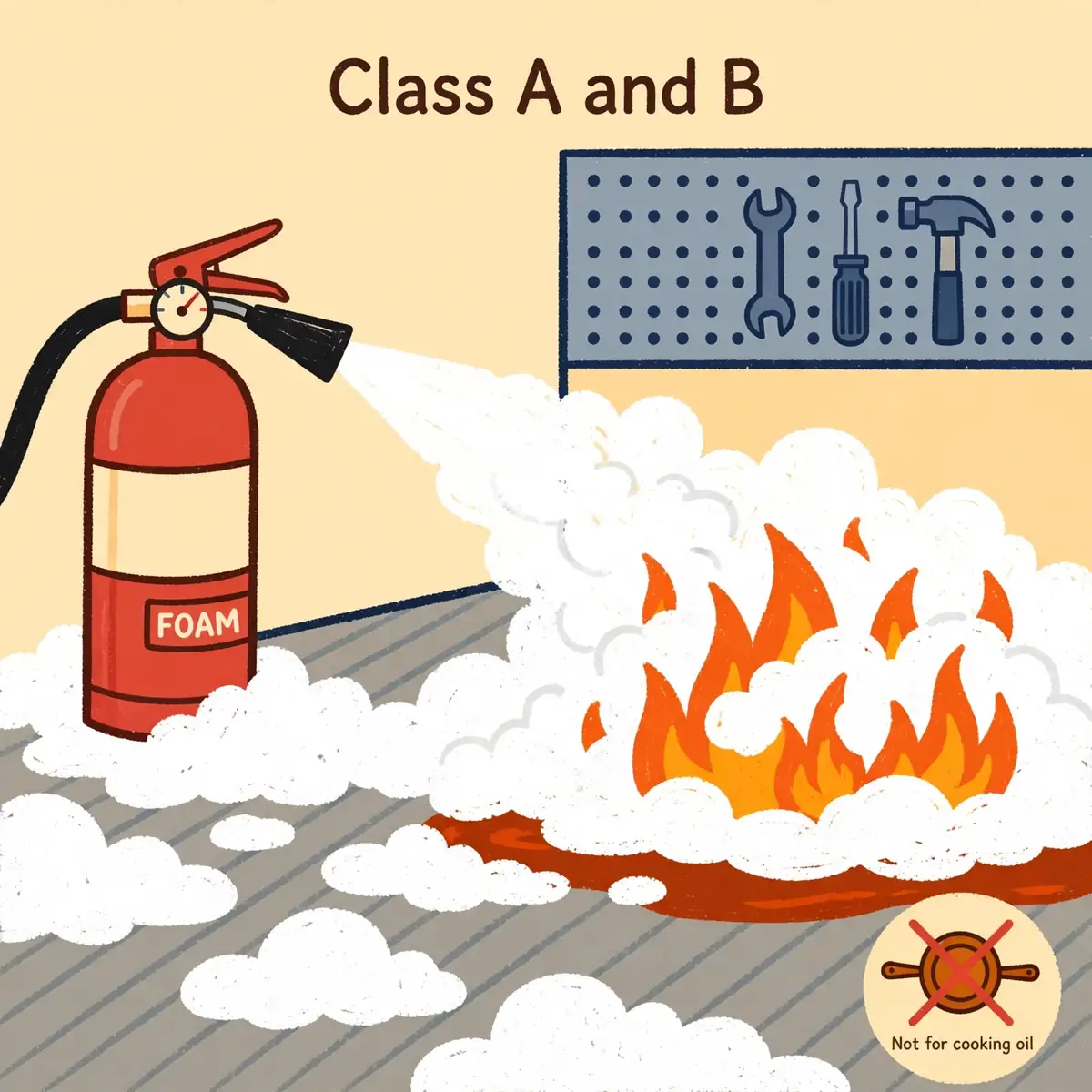
Foam extinguishers spray an aqueous film-forming foam (AFFF) that floats on the surface of a burning liquid. The film smothers the fire by cutting off oxygen, and the water in the foam cools the solid fuel underneath. That double action makes foam the standard choice for Class A and Class B fires together.
You will find foam extinguishers in garages, workshops and buildings that store fuel or paint. They are water-based, so they also work on wood, paper and textiles. A 6-litre foam unit is a common choice for a small office or a domestic garage. The band on the body is cream.
Foam is not for cooking oil fires, even though it handles other liquids well. A deep-fat fryer needs wet chemical instead, because foam cannot form the sealing layer that burning oil demands. Foam must also never be used on live electrical equipment or on metal fires.
CO2 extinguishers
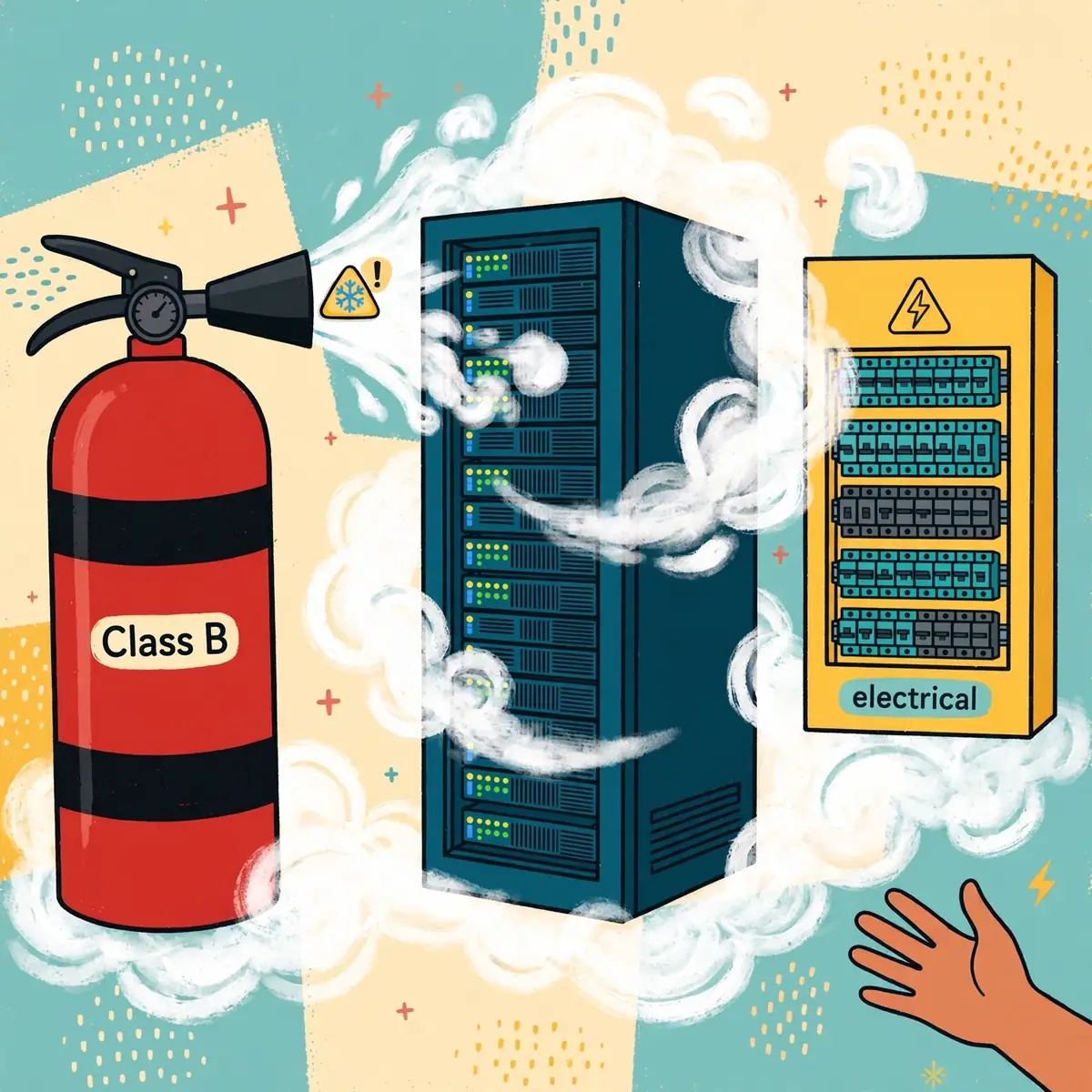
Carbon dioxide extinguishers work by displacing the oxygen a fire needs to burn. The gas leaves no residue behind, which makes CO2 the standard choice beside computers, server racks and electrical panels. For a server room, a CO2 unit is the usual fire extinguisher for electrical fire risk. It also puts out Class B fires involving flammable liquids.
The discharge is short and the gas disperses quickly, so a CO2 extinguisher cools poorly and a deep-seated fire can re-ignite once the gas clears. It does little against burning solids for the same reason. Use it on the fire it is made for, and do not expect it to hold a smouldering Class A fire down.
WarningDo not hold the horn of a CO2 extinguisher while it discharges. The horn gets cold enough to cause frost burns on bare skin.
Carbon dioxide is an asphyxiating gas, so take care when using it in a small enclosed space. Ventilate the room as soon as the fire is out, and leave at once if you feel light-headed. The band on the body is black.
Dry powder extinguishers
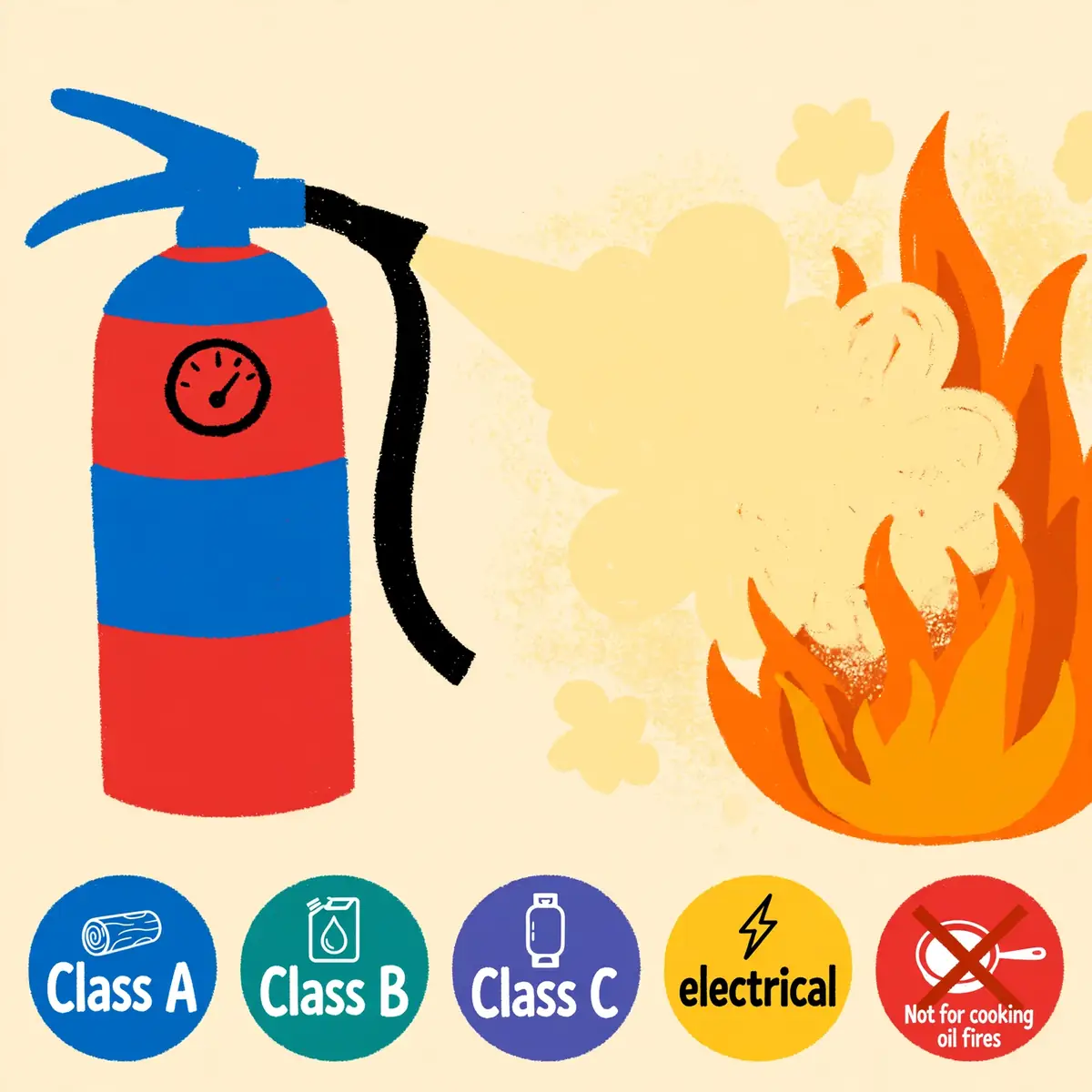
A dry powder fire extinguisher uses ABC powder. The powder interrupts the chemical chain reaction of the fire and smothers the flames. One unit therefore covers Class A, B and C fires and live electrical equipment. That range makes it the usual choice for vehicles, forecourts and outdoor plant, where the fire class is hard to predict.
The trade-off is the cloud it makes. Discharged powder cuts visibility and irritates the lungs, so British guidance in BS 5306-8 advises against dry powder in offices and small rooms. It also leaves a fine residue that is hard to clean from electronics and machinery. Where visibility and clean-up matter, CO2 is the better choice for electrical fires.
AlertDry powder cuts visibility and irritates lungs. British guidance advises against it in offices and small rooms, so choose CO2 or foam there instead.
Surrey Fire and Rescue notes that standard dry powder is safe on electrical equipment up to 1,000 volts. The site's PPE requirements may call for a mask when the room is small and the powder cloud has nowhere to go. The band on the body is blue.
Specialist powders for metal fires
Ordinary ABC powder must never be used on a combustible metal fire. Some metals react violently with it, and the fire can flare instead of going out. Metal fires need a specialist powder, and the two types sold in the United Kingdom are L2 and M28.
Which specialist powder a workshop needs depends on the metals on site, so the supplier must match the powder to the metal. The band is blue, the same as standard dry powder, so read the label before you pick the unit up. Metal fires are rare outside machine shops and foundries, and most workplaces will never need one.
Wet chemical extinguishers
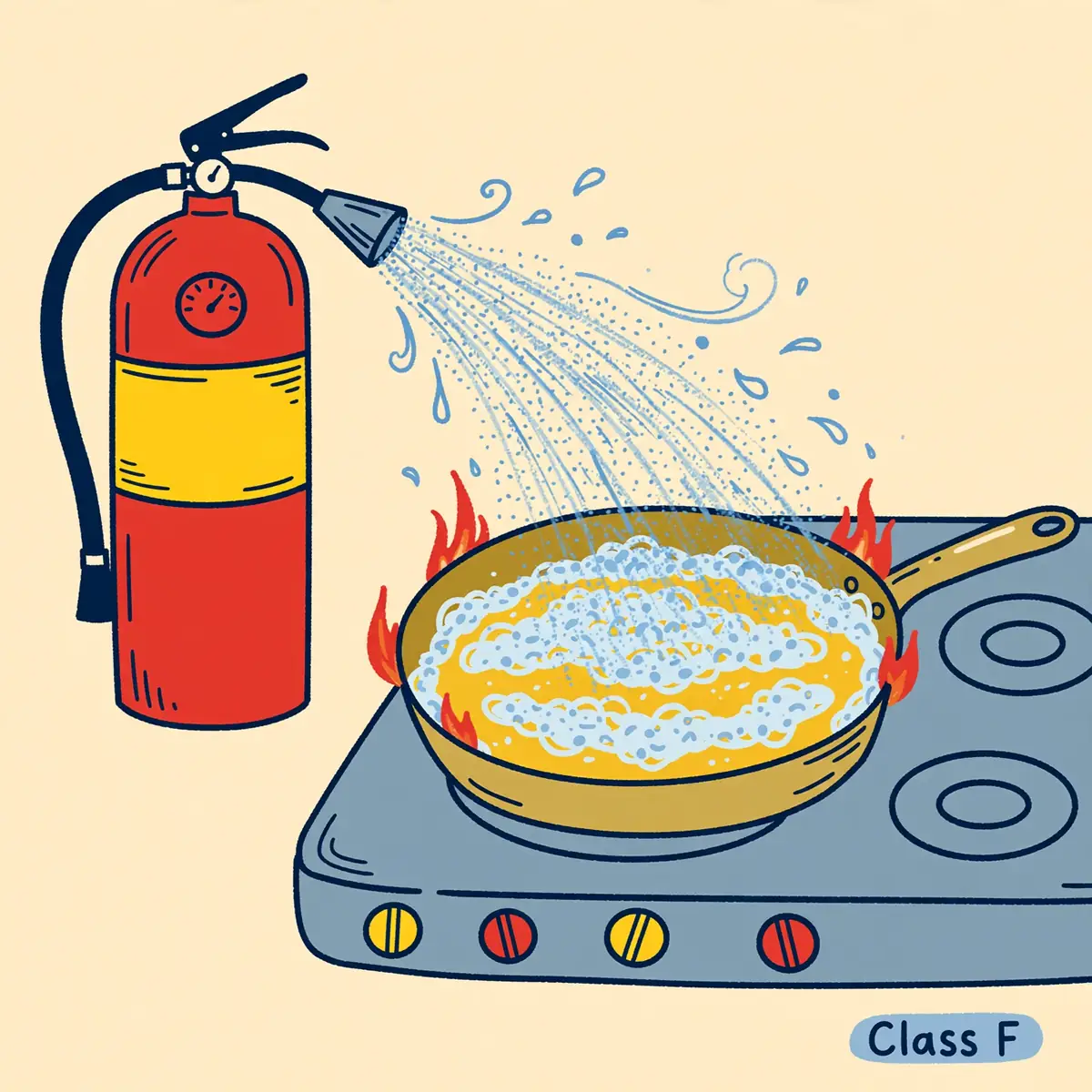
A wet chemical fire extinguisher is made for cooking oil and fat fires, Class F in the United Kingdom and Class K in the United States. The unit discharges a potassium acetate solution as a fine mist. The mist cools the burning oil below its auto-ignition point. It then reacts with the oil to form a soapy layer that seals the surface and stops the fire re-igniting.
That cooling-and-sealing action makes wet chemical the only agent fully rated for deep-fat fryer fires. It also works on Class A fires, so a kitchen unit can cover a waste-bin fire as well as the fryer. Commercial kitchens must have one, and any home with a deep-fat fryer should too. The band on the body is yellow.
Wet chemical must not be used on flammable liquids, flammable gases, live electrical equipment or metal fires. A chip-pan fire is the one place where water is most dangerous and wet chemical is most needed. Keep the yellow-banded unit by the kitchen door, never above the hob.
Water mist extinguishers
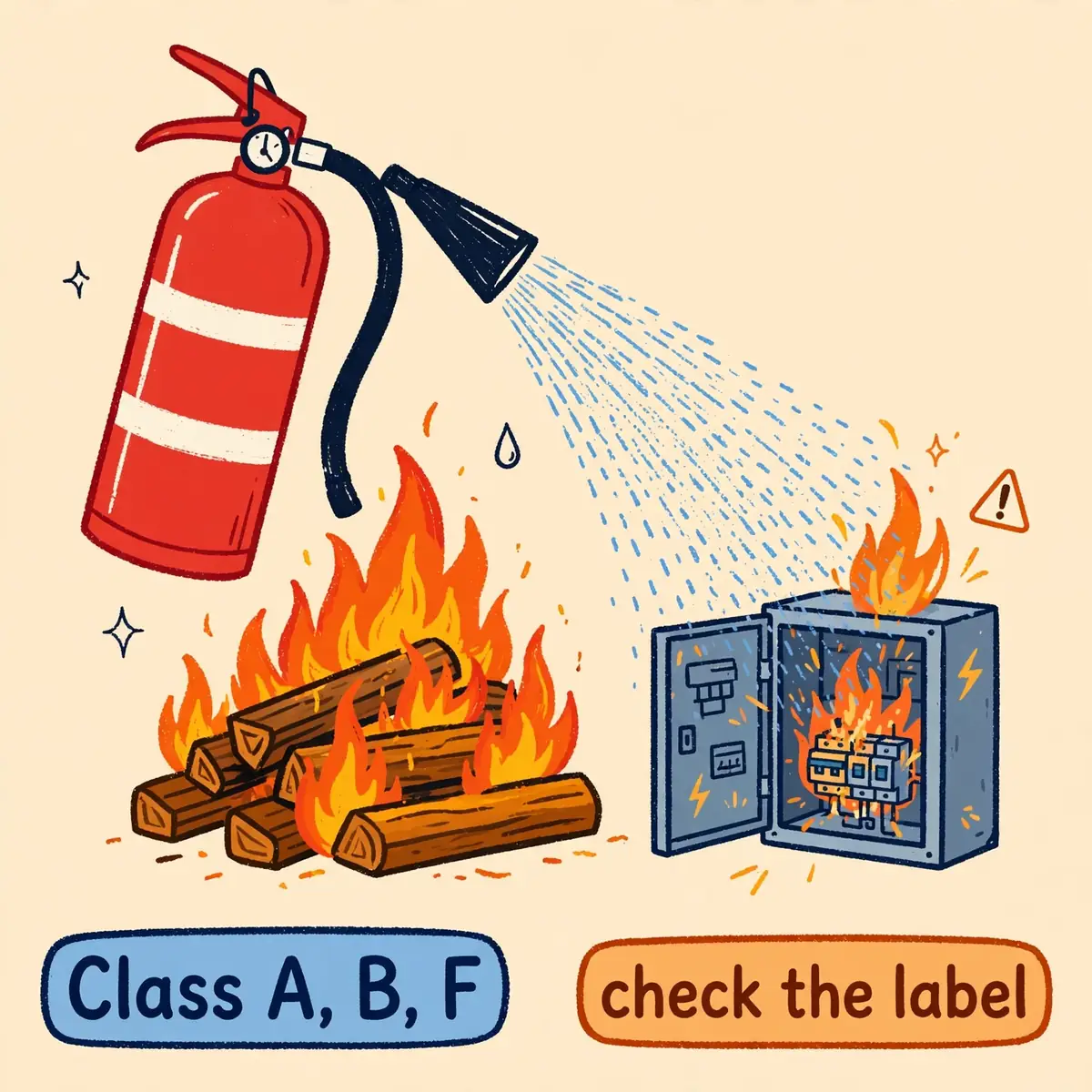
Water mist is the newest of the six types. The unit sprays deionised water as a super-fine mist, and the tiny droplets absorb heat from the fire and block oxygen from reaching it. Because the droplets are so small, the mist leaves little residue and causes little water damage.
Many water mist extinguishers are tested for Class A, B and F fires and for electrical equipment, so one unit can replace two in a small office. Check the label first: not every model covers every class, and only models that carry a dielectric test are safe on live electrics. The band on the body is white.
Water mist costs more than water or foam, and it is not rated for Class D metal fires. Its strength is versatility in a single unit. For a small room with mixed risks — paper, a kettle and a computer — a tested water mist unit is often the tidiest answer.
How to read the label and the rating
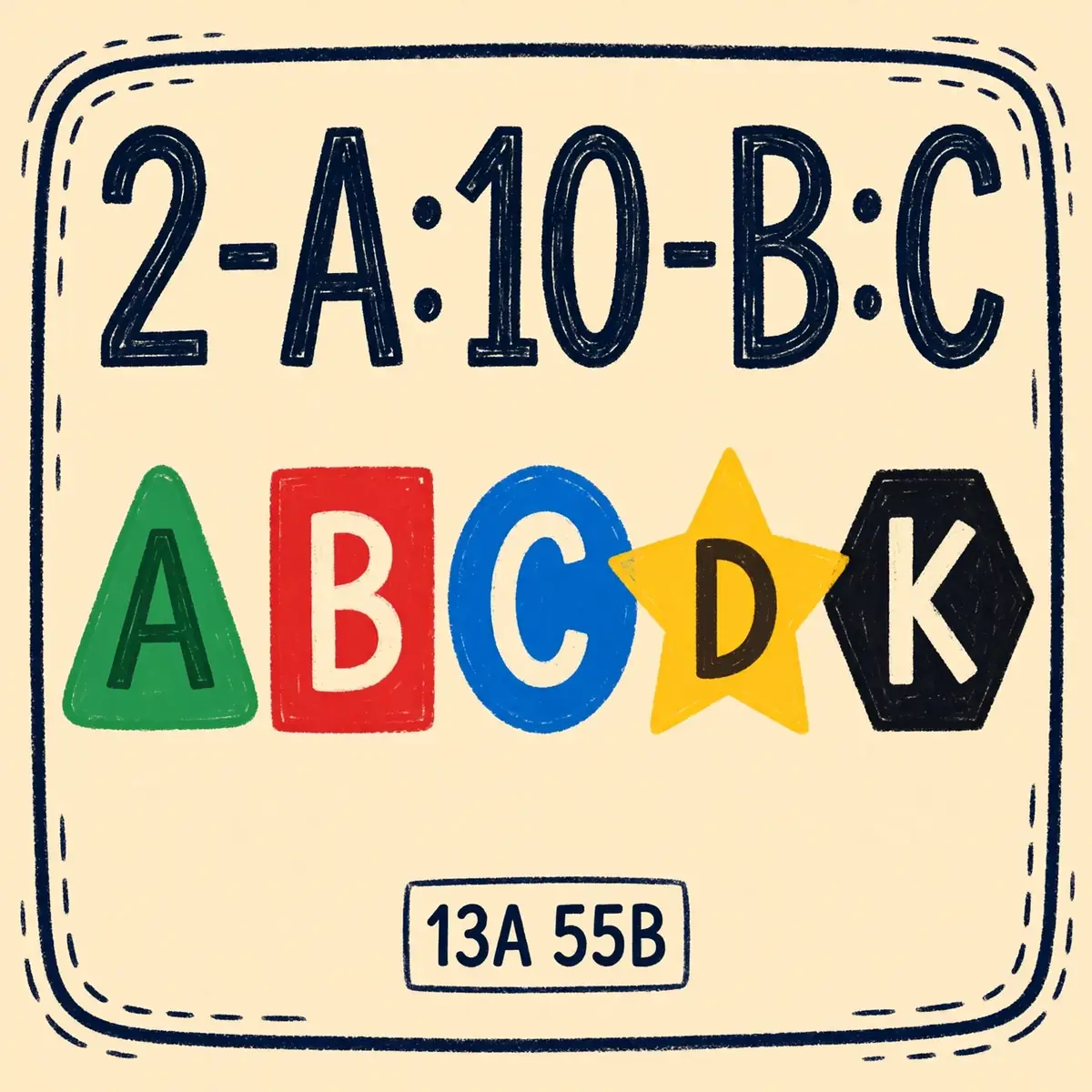
Every extinguisher carries a label that lists the fire classes it is tested for and a rating that shows how large a fire it can put out. The rating system differs between the United States and the United Kingdom, so read the letters and numbers with the right system in mind.
TipDo not rely on colour alone outside the United Kingdom. US extinguishers are not colour-coded, so always read the label before you use one.
Reading a US rating
A United States label shows a rating such as 2-A:10-B:C. Each part means something different. The 2-A is the Class A rating: each A unit equals about 1.25 gallons of water, so 2-A is about 2.5 gallons. The 10-B is the Class B rating, roughly the square feet of flammable liquid fire the unit can put out.
The C at the end has no number. It means the extinguisher is safe on energised electrical equipment. The label also carries picture symbols:
- Green triangle for Class A.
- Red square for Class B.
- Blue circle for Class C.
- Yellow star for Class D.
- Black hexagon for Class K.
A symbol with a red slash means the unit must not be used on that class.
Reading a UK rating
A United Kingdom label shows ratings such as 13A or 55B. The number is the size of fire the extinguisher put out under test conditions, and the letter is the fire class. The larger the number, the larger the fire the unit can handle. Class C, Class D and electrical fires carry no numerical rating.
Class F ratings come from four benchmark tests using 5, 15, 25 and 75 litres of sunflower oil, so a 75F unit has passed the largest test. The label also lists the classes the unit covers, and the coloured band on the body matches the type. If the band and the label disagree, trust the label and report the unit.
How to use a fire extinguisher: the PASS method
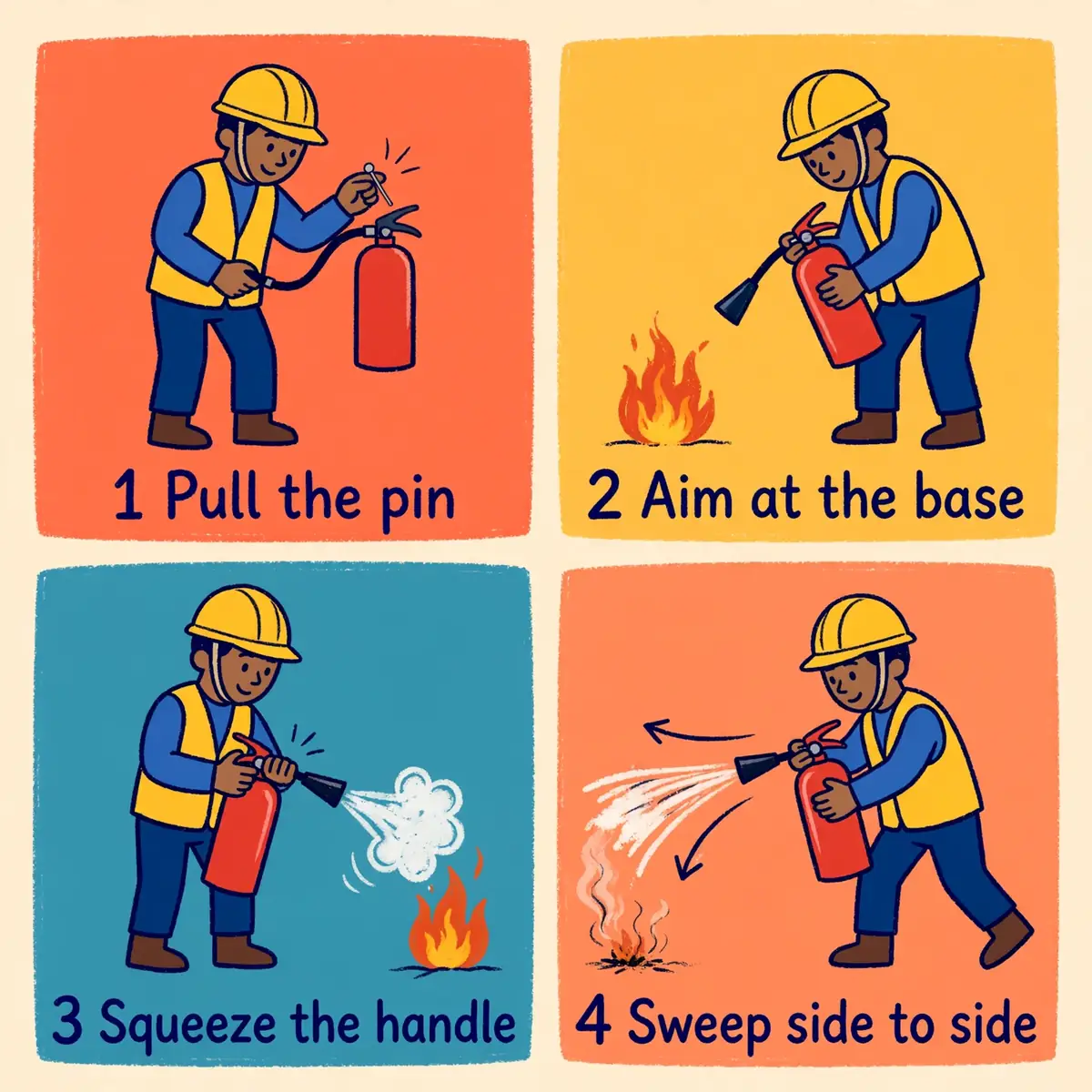
Every portable extinguisher is operated the same way, whatever agent it holds. The four steps spell PASS, and they are worth rehearsing before a fire starts, not during one. Rehearsing them is part of emergency preparedness. A 1–2 kg unit discharges in about 8 to 12 seconds, so there is no time to work the steps out on the spot.
- Pull the safety pin and break the tamper seal.
- Aim the nozzle or horn at the base of the fire, not at the flames.
- Squeeze the handle steadily to discharge the agent.
- Sweep from side to side until the fire is out.
Start at the maximum effective range shown on the label and move closer only if the fire is shrinking. If the fire is not out when the agent runs out, leave at once. A used extinguisher, even partly used, must be recharged or replaced before it goes back on the wall.
Fight or flee: when not to use one
An extinguisher is a first-response tool for a small fire in its early stage. Fight only if the fire is small, you have raised the alarm, and the exit is behind you. Keep a first aid kit within reach for minor burns, and check everyone for smoke inhalation after any fire, even a small one.
Leave at once if the fire grows, if the smoke is thick, or if you cannot see the base of the fire. Evacuation always takes priority over firefighting, and the people who should leave first are the ones with no training and no extinguisher in hand. Close the door behind you, call the fire service, and follow the site's practice emergency procedures for the drill you have already rehearsed.
Where to put extinguishers and how many
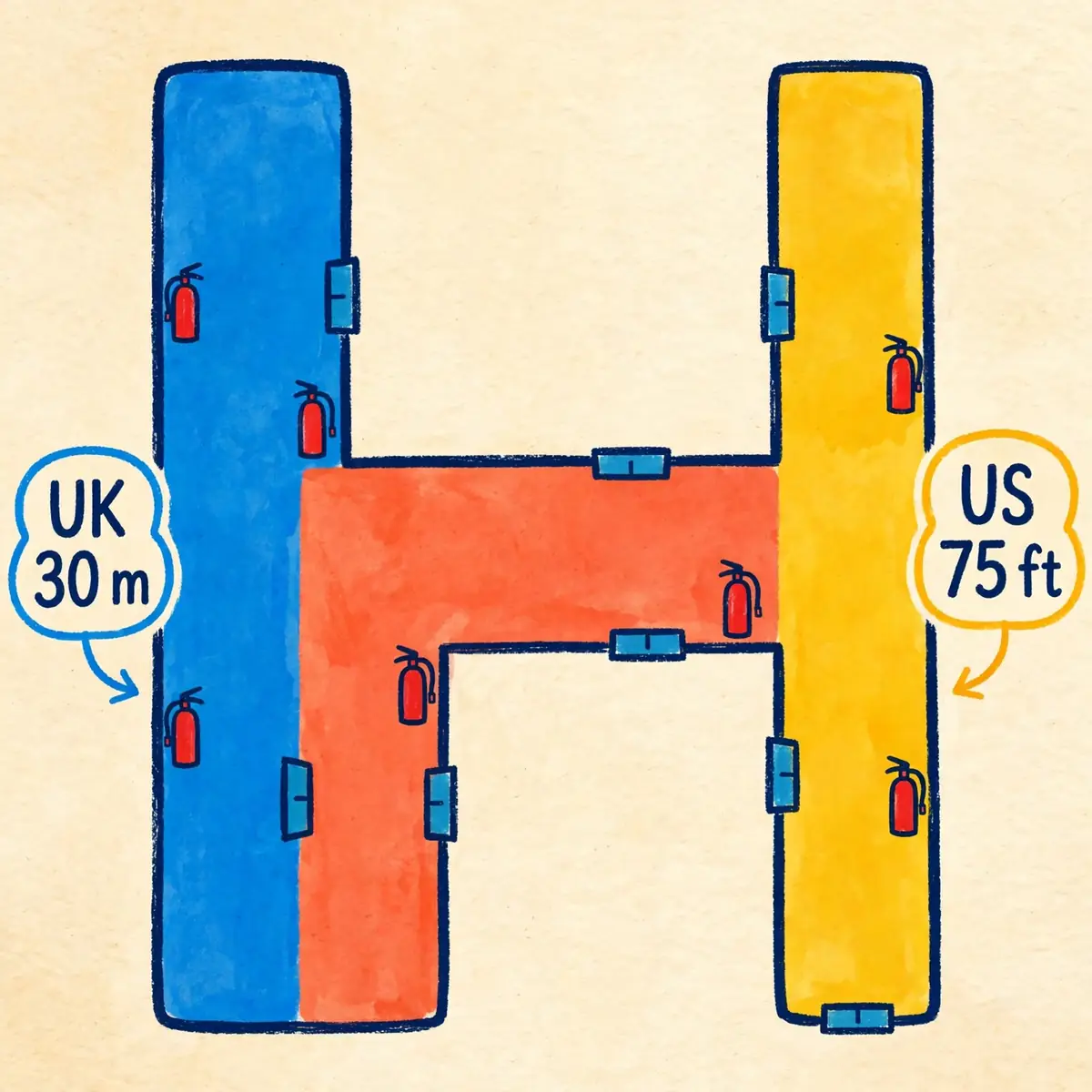
Placement matters as much as the type. An extinguisher behind a locked door or at the far end of the room is no use when seconds count. The rules below put the two systems side by side. British Standard BS 5306-8 applies in the United Kingdom, and OSHA 1910.157 with NFPA 10 applies in the United States.
In the United Kingdom
BS 5306-8 asks for at least two Class A-rated extinguishers on each floor. Their total Class A rating must be at least 0.065 times the floor area in square metres, and never less than 26A. Fire and rescue services use a common benchmark: one 13A-rated water-based extinguisher for every 200 square metres of floor area. There must be at least one extinguisher on each floor.
Travel distances are:
- Class A: 30 metres.
- Class B: 10 metres.
- Class C: 30 metres.
- Class F: 10 metres.
- Electrical risks: 10 metres.
Mount the unit on an escape route, near a door to a place of safety. The handle sits 1 metre above the floor for units over 4 kg, and 1.5 metres for lighter ones. Never place one over a cooker or heater.
In the United States
OSHA 1910.157(d) sets the travel distances directly. No more than 75 feet (22.9 metres) to a Class A extinguisher, 50 feet (15.2 metres) to a Class B extinguisher, and 75 feet to a Class D agent. NFPA 10 (2026) adds the detail. A 2-A unit is the minimum for Class A protection, one per 11,250 square feet or less. A Class K unit must sit within 30 feet of the cooking equipment.
Mounting follows NFPA 10 section 6.1.3. The top of the unit must sit no more than 5 feet above the floor for units up to 40 lb, and 3.5 feet for heavier units. The bottom must sit at least 4 inches off the floor. The instructions must face outwards, and the unit must be visible or signed where it cannot be seen.
Checks, servicing and replacement
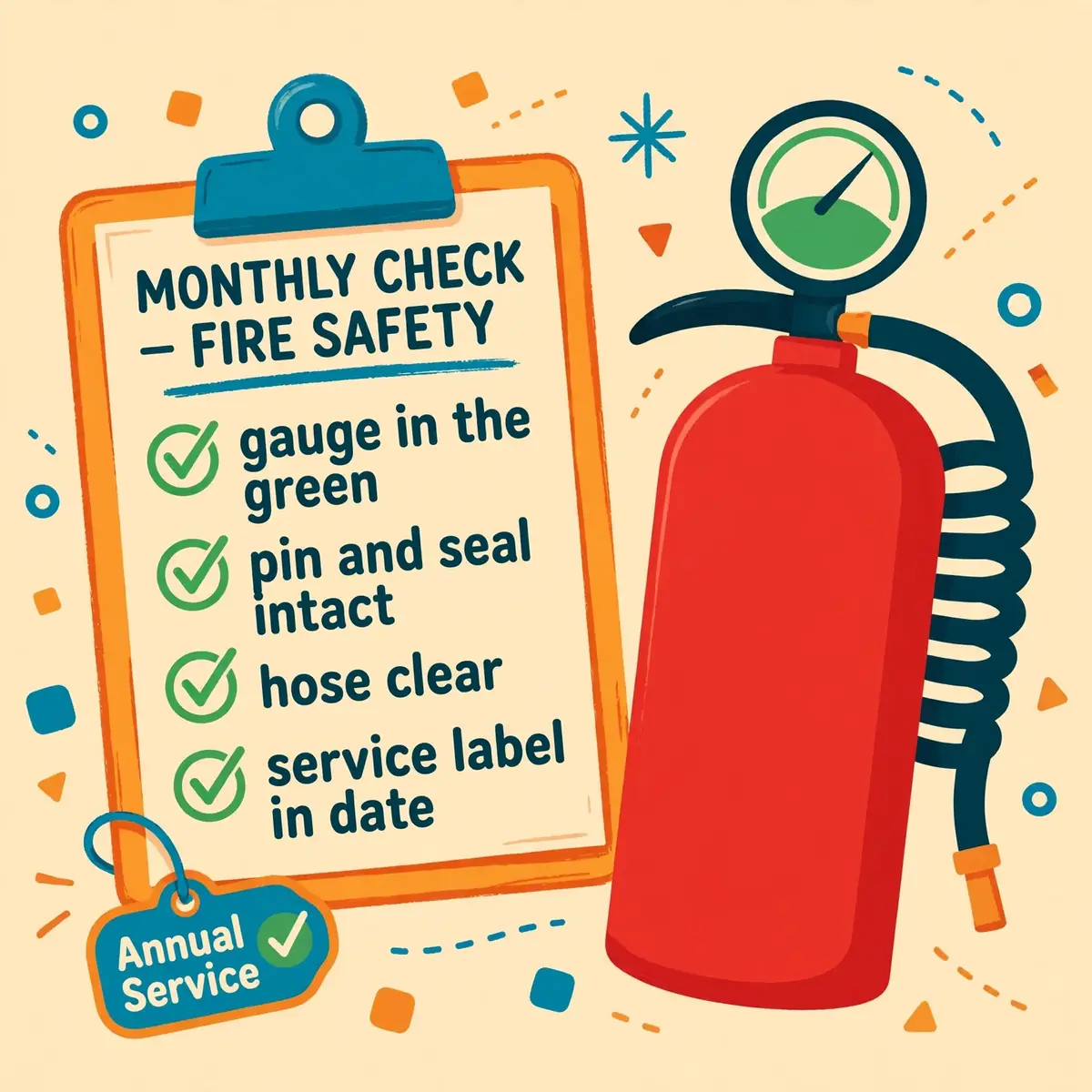
An extinguisher that has lost pressure or had its seal broken is a decoration, not a safety device. Both the United Kingdom and the United States require a monthly visual check and an annual service, and the longer-term tests depend on the type.
The monthly visual check
OSHA requires the monthly check in the United States under 1910.157(e)(2), and BS 5306-3 recommends the same rhythm in the United Kingdom. The check takes a minute and needs no tools. Walk the route and look at each unit in turn.
- It is in its designated place, visible and not blocked.
- The pin and tamper seal are intact.
- The pressure gauge needle sits in the green.
- There is no damage, corrosion or leakage.
- The hose or horn is clear and undamaged.
- The service label is in date.
Record the check in the fire safety log book. A unit that fails any item comes out of service at once and is replaced or repaired before the next shift. Alternate protection must be provided while a unit is away for maintenance or recharging.
Annual service and pressure tests
A competent person must service each extinguisher at least once a year in the United Kingdom, under BS 5306-3. OSHA requires an annual maintenance check in the United States, under 1910.157(e)(3). The service covers the pressure, the seals, the mechanical parts and the agent, and the date is recorded on the tag.
The longer-term tests run by type. In the United Kingdom, water, foam, powder and wet chemical units need an extended service every 5 years, and CO2 units an overhaul every 10 years. In the United States, hydrostatic tests fall due every 5 years for water, CO2 and wet chemical units, and every 12 years for dry chemical units. Stored-pressure dry chemical units need an internal examination every 6 years. Non-rechargeable units are never tested; NFPA 10 retires them at 12 years.
Choosing the right extinguisher for each room
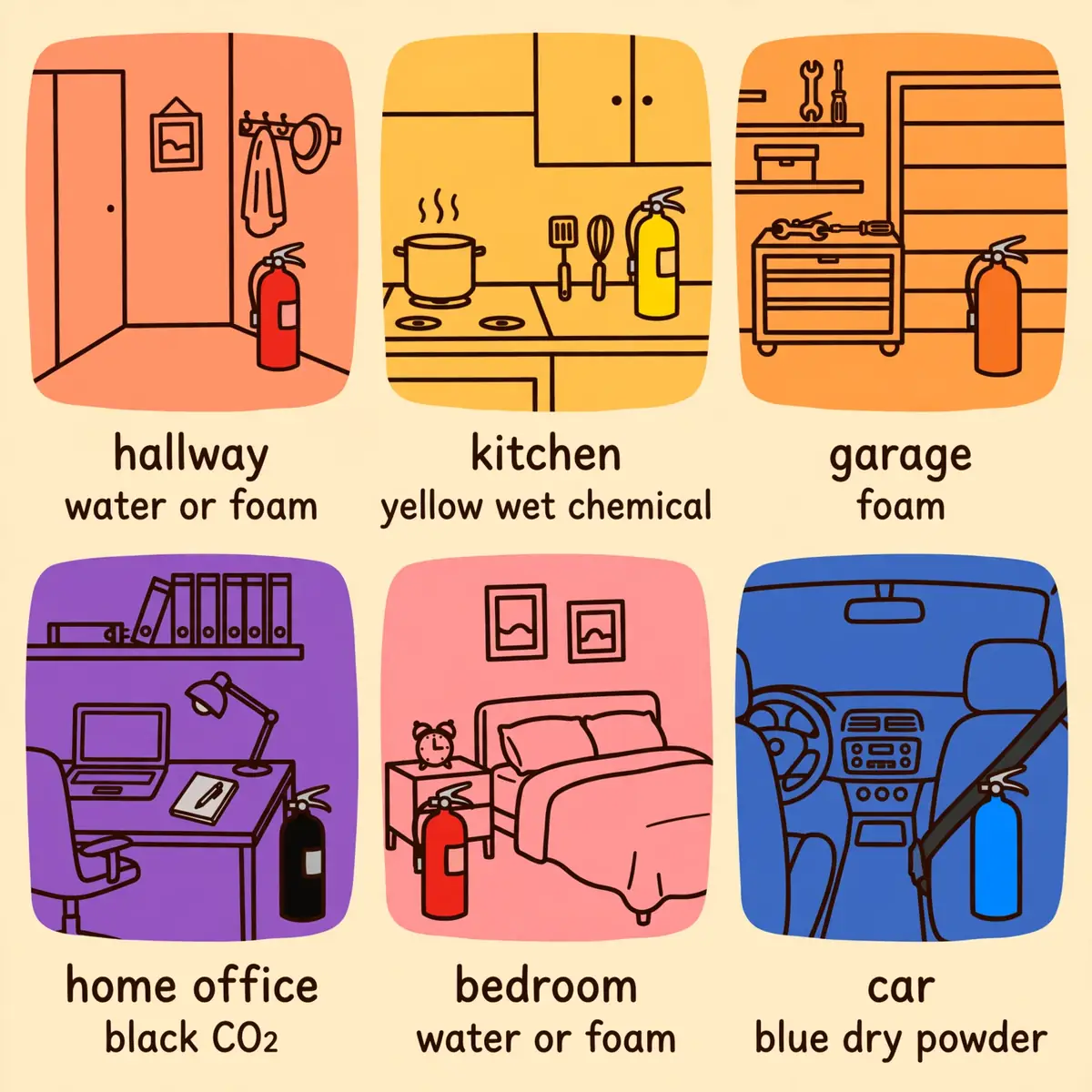
There is no single extinguisher that covers every class of fire, so the choice starts with the risks in each room. In a workplace the fire risk assessment decides the types and numbers; at home the same thinking applies, room by room.
| Room | Main risk | First choice | Also keep nearby |
|---|---|---|---|
| Hallway or living room | Wood, paper, textiles | Water or foam | ABC dry powder |
| Kitchen | Cooking oil and fat | Wet chemical | Fire blanket |
| Garage or workshop | Petrol, paint, solvents | Foam | ABC dry powder |
| Home office or server room | Electrical equipment | CO2 | Water mist (label-checked) |
| Bedroom | Bedding and clothes | Water or foam | None needed |
| Car | Fuel and electrics | ABC dry powder | None needed |
Place each extinguisher on the way out, not between you and the likely fire. In a kitchen, mount it near the door, never above the hob, so you can grab it as you pass and still have a clear retreat. Where different types sit together, label them clearly so nobody grabs the wrong one in a hurry.
TipChoose extinguishers from the fire risk assessment, not from a catalogue. The assessment names the fuels in each room, and the fuels name the agent.
Frequently Asked Questions
What are the five main types of fire extinguisher?
The five main types are water, foam, CO2, dry powder and wet chemical. Water mist is a newer sixth type. In the United Kingdom each has a coloured band on a red body: red for water, cream for foam, black for CO2, blue for dry powder, yellow for wet chemical and white for water mist.
What colour fire extinguisher is used for electrical fires?
In the United Kingdom use a CO2 extinguisher (black band) or a dry powder extinguisher (blue band). Some water mist extinguishers (white band) are also tested for electrical fires, so check the label. Never use a plain water or foam extinguisher on live electrics.
Which fire extinguisher is used for a chip pan fire?
A wet chemical extinguisher, which has a yellow band in the United Kingdom and is called Class K in the United States. Never use water on burning cooking oil, because it turns to steam instantly and throws burning oil into a fireball. A fire blanket is a useful second line of defence in a kitchen.
Can I use a water extinguisher on an electrical fire?
No. Water conducts electricity and creates a risk of electrocution. If you need to tackle an electrical fire, first isolate the power if it is safe to do so, then use a CO2 or dry powder extinguisher. If the power cannot be isolated, CO2 is the safest agent.
Are fire extinguishers colour-coded in the United States?
No. US extinguishers are not colour-coded: most are red and Class K kitchen units are often stainless steel. You choose them by the class letters, picture symbols and rating on the label, for example 2-A:10-B:C.
How often should fire extinguishers be checked?
Check them visually every month. They need a service by a competent person every year. In the United Kingdom, water, foam, powder and wet chemical units also need an extended service every 5 years and CO2 units an overhaul every 10 years. In the United States, OSHA requires monthly inspections and an annual maintenance check.
Can I use a fire extinguisher on a lithium-ion battery fire?
Extinguishers made for lithium-ion battery fires are now sold, but they are not currently compliant with British Standard BS 5306, and they only help if used very early. A developing battery fire is unlikely to be fully put out, and the batteries can re-ignite or explode. Treat it as a reason to leave, not a reason to stay and fight.
What should I do with an old halon extinguisher?
Halon extinguishers, once green, have been illegal in the United Kingdom since the end of 2003, except for a few aircraft and military uses. Do not use one and do not supply one. Have it disposed of safely through a licensed waste handler, and replace it with a modern type matched to the risk.
Sources
- OSHA — 29 CFR 1910.157, Portable fire extinguishers
- Bayshore Safety — NFPA 10 fire extinguisher requirements explained (2026 edition)
- Aviva — Loss Prevention Standard: Fire Extinguishers (PDF, version 1.1, October 2024)
- Merseyside Fire & Rescue Service — Firefighting Equipment
- Surrey County Council — Extinguishers and fire blankets
- HSE Docs Pro — Fire Extinguisher Types and Uses Chart (UK & US)
- FireTheGuide — Fire Extinguisher Types: Which One to Use