A school lockdown is a protective response to a threat inside the school building. Teachers lock the classroom door and turn off the lights. They move everyone out of sight of the door and windows, and keep the room silent until law enforcement releases it. The aim is simple: put locked doors and distance between children and the threat, and wait for trained responders to resolve the situation.
A lockdown is not an evacuation. In a fire, everyone leaves the building quickly by the nearest safe route. In a lockdown, everyone stays where they are, behind a locked door, and makes the room look empty. The two responses pull in opposite directions, so staff need to know which one applies and why. Confusing them wastes the minutes that matter most.
Real lockdowns are rare. Most schools will never have one. They are drilled often because, when one is needed, there is no time to think. The actions have to be automatic for staff and students alike. That includes the newest teacher, the substitute covering a class, and the child who joined the school last week.
What a School Lockdown Is
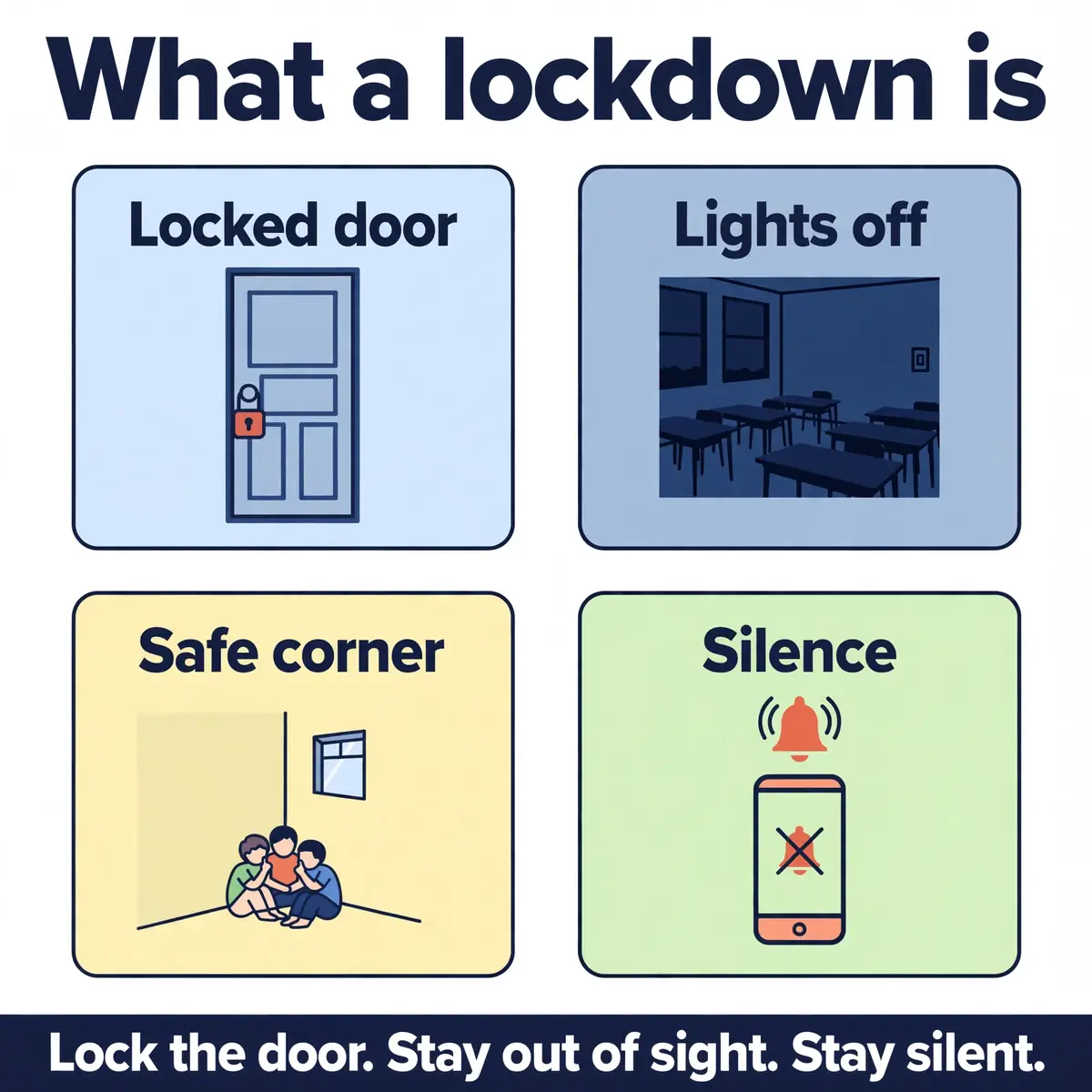
A lockdown secures individual rooms and keeps the people inside them quiet and in place while a threat is inside the building. The threat may be an intruder, a person with a weapon, or someone behaving in a way that puts people in immediate danger. The response is the same in each case: lock, lights off, out of sight, silence, and wait.
The room itself does most of the work. A locked door, a dark room and no sound from inside give a person looking for victims nothing to find. That is why the details matter. A door left unlocked, a light left on, or a child visible through the door window can undo the rest. Every part of the procedure exists to make the room look empty and stay that way.
A lockdown also buys time for the people trained to end the threat. Teachers are not expected to confront an intruder or search the building. Their job is to protect the children in their care, account for them, and keep them calm until law enforcement takes over. The plan should say that plainly, so no member of staff feels they failed by staying put.
TipKnow your room's safe zone before the first drill of the year, and show it to your class on day one.
Lockdown is One of Five Standard Responses
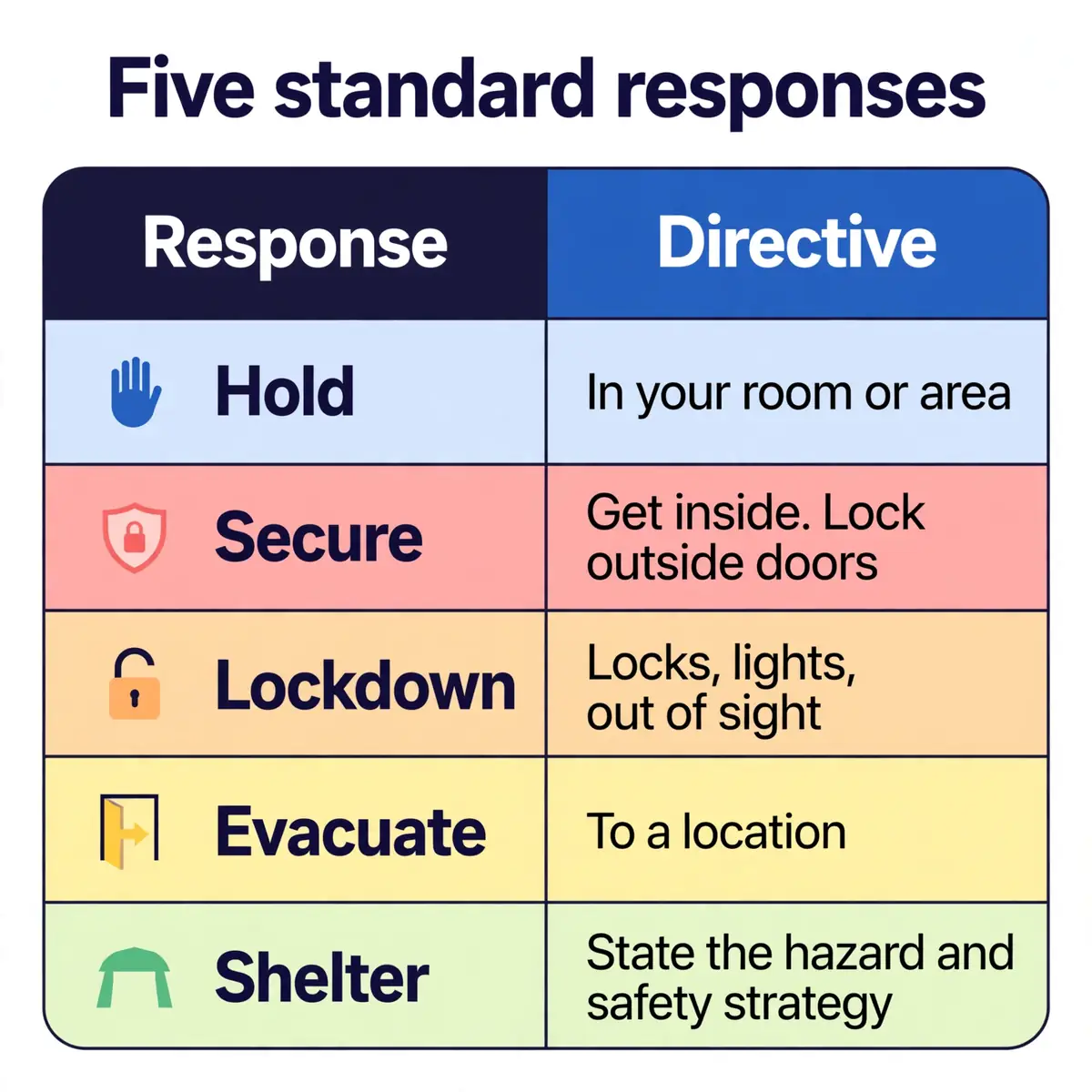
Many schools in the United States use the Standard Response Protocol, known as the SRP, developed by the "I Love U Guys" Foundation. It gives every emergency one of five actions, each with a short directive in plain language. Staff, students and first responders all learn the same words, so the announcement itself tells everyone what to do.
| Action | Directive | When it is used | What staff do |
|---|---|---|---|
| Hold | In your room or area. Clear the halls. | Something is happening in a hallway, such as a medical emergency | Keep students in the room, clear the halls, carry on as usual |
| Secure | Get inside. Lock outside doors. | A threat is outside the building | Bring everyone indoors, lock the outside doors, carry on inside |
| Lockdown | Locks, lights, out of sight. | A threat is inside the building | Lock room doors, lights off, out of sight, silent, do not open the door |
| Evacuate | To a location. | It is safer to leave, such as a fire | Move to the stated location in an orderly way |
| Shelter | State the hazard and safety strategy. | An environmental hazard, such as severe weather | Follow the stated strategy, such as drop, cover and hold on |
Only one action is used at a time, and the action is always announced in plain words, never in codes. A code such as "Code Red" means nothing to a substitute teacher, a visitor, or a new student. There is no time to work out what it means in this particular school. The SRP announcement is repeated twice, so no one misses it in a noisy corridor.
Schools in the United Kingdom work from different guidance, but the idea is the same. The Department for Education's "Protective security and preparedness for education settings" guidance sets out three core responses: lockdown, invacuation and evacuation. Invacuation means moving people inside a building, or to a designated safe space on site, to protect them from a threat outside. Whatever words a school uses, the plan must make clear which response fits which threat, and staff must have practised each one.
When a School Calls a Lockdown
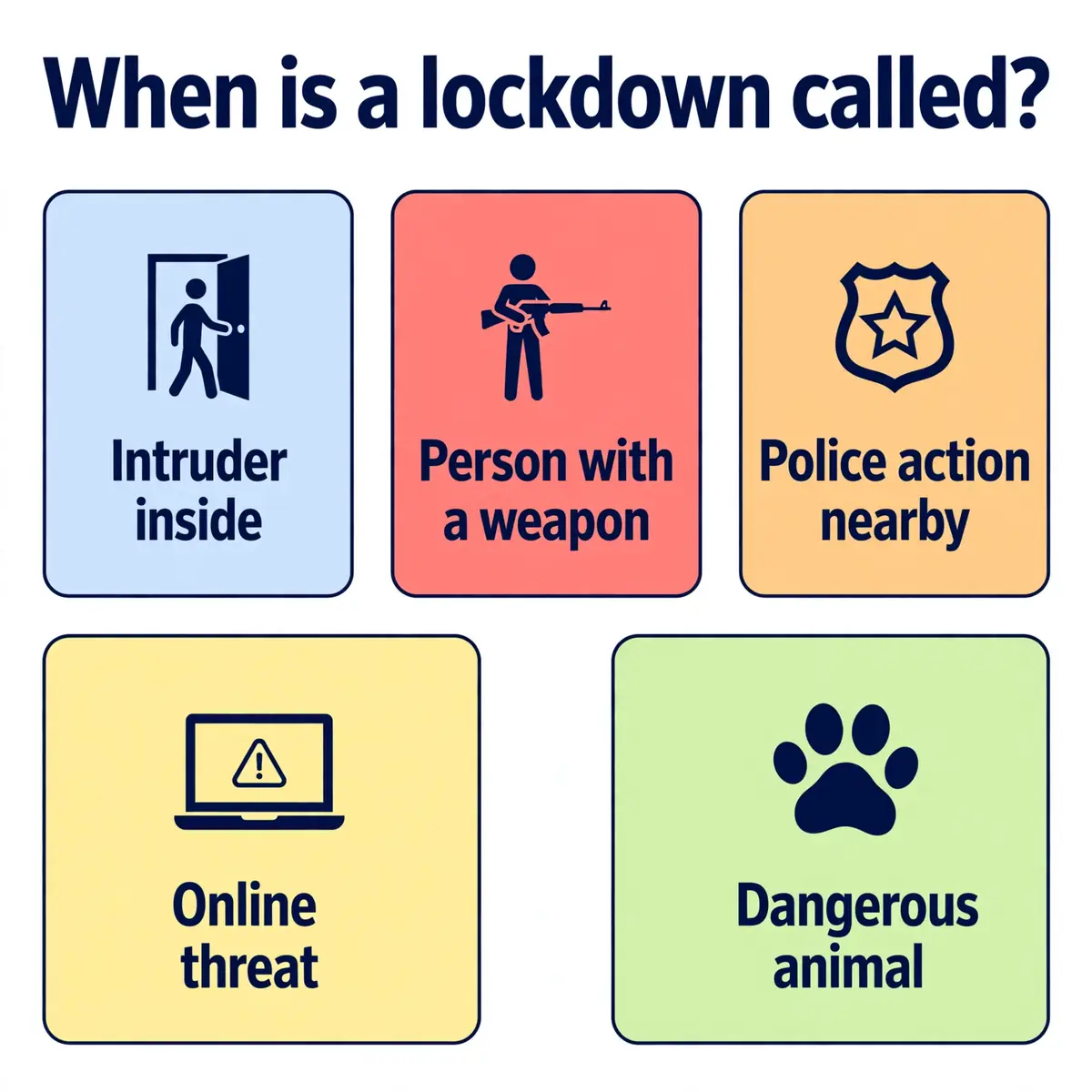
A lockdown is called when there is a threat of violence inside the school or on its grounds. The usual triggers are an intruder in the building, a person with a weapon, or someone whose behaviour puts people in immediate danger. A lockdown can also be called for other reasons. Police action in the neighbourhood, an online threat, or a dangerous animal on site can each trigger one, depending on the school's plan.
Anyone who sees or hears a threat can call a lockdown. The usual routes are phoning the office, calling 999 or 911, or using the school's alert system. Staff should not wait for permission or certainty. If a teacher hears what sounds like gunshots, or sees a person with a weapon, the teacher locks down the classroom immediately. The office is told next. A lockdown called by mistake costs a few minutes of disruption. A lockdown called too late can cost lives.
The announcement uses plain language and is repeated twice, for example "Lockdown! Locks, lights, out of sight!" The repetition matters: corridors are noisy, and some staff will hear only the second call. Every adult on site, including supply teachers, support staff and volunteers, needs to recognise the words and know the actions that follow. That is why the wording is taught at induction, not only at the start of the school year.
AlertA lockdown called by mistake costs a few minutes of disruption. A lockdown called too late can cost lives, so never wait for confirmation before you act.
What Teachers Do in the First Minute
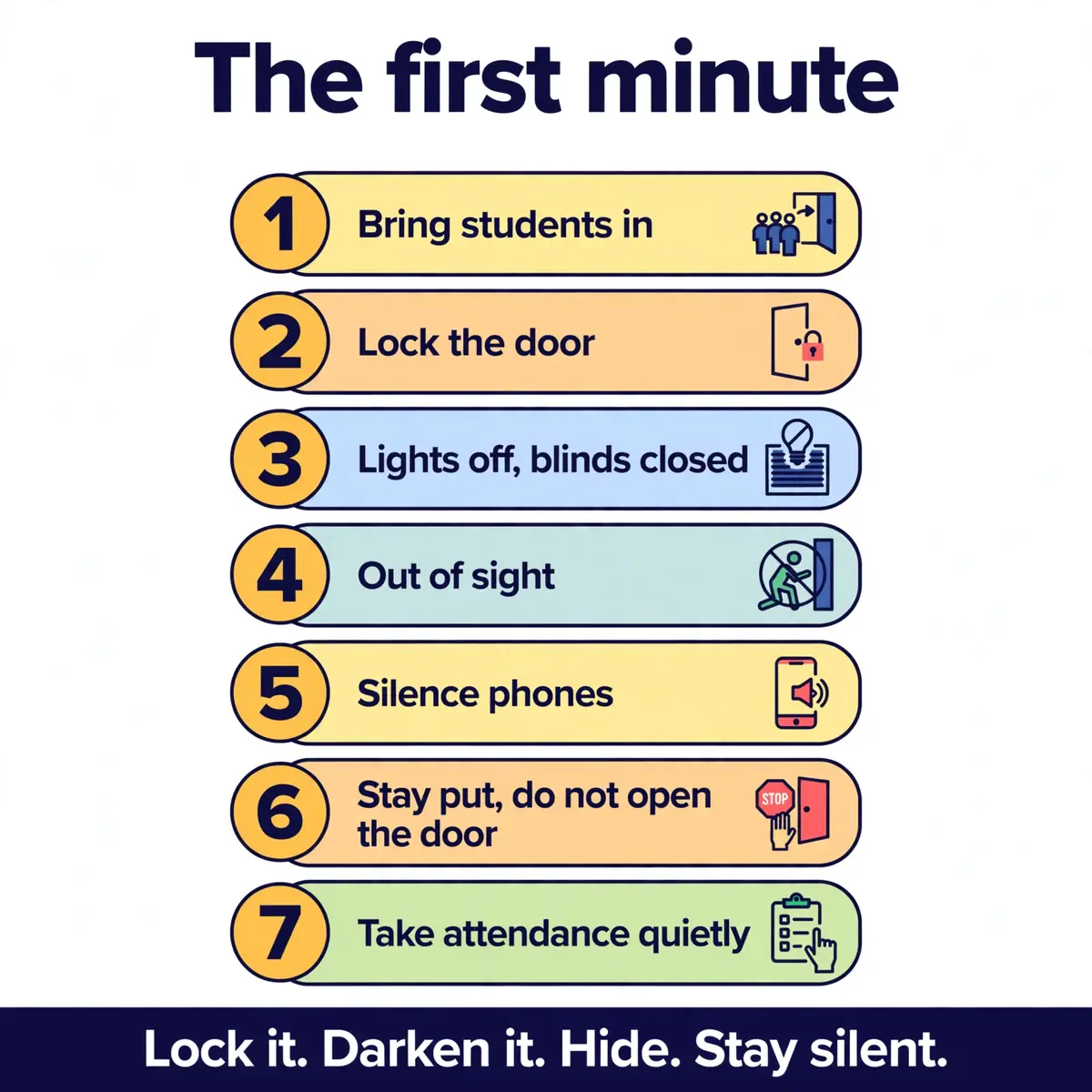
The steps are the same in every room, and they are practised until they are automatic. The order matters: secure the room first, then make it look empty, then stay quiet and wait. Each step takes seconds, and the whole sequence should be finished within a minute of the announcement.
- Bring students in from the hallway nearby, quickly, without leaving the room to search for anyone.
- Lock the classroom door. Keep the key on your person at all times, never in a desk drawer.
- Turn off the lights and close the blinds, if that can be done quickly and safely.
- Move everyone out of sight of the door window and any interior windows, into the safe zone.
- Silence phones and devices, including smartboards and computer monitors, and keep everyone quiet.
- Stay put. Do not open the door for anyone, including people claiming to be law enforcement.
- Take attendance quietly and note anyone missing, anyone extra, and anyone injured.
If the door has no lock, barricade it with furniture or other heavy items. A belt wrapped around the door closer arm can stop an outward-opening door from being opened. These are last resorts, and they should be discussed in training, not discovered in the moment. A room whose door cannot be locked reliably should be reported to the caretaker the same day it is found.
The safe zone is the part of the room that cannot be seen from the door window or the hallway. Teachers should identify it at the start of the year and show it to students during the first drill. Some rooms have no good safe area, such as rooms with glass walls or doors facing long corridors. Those rooms need a plan of their own. Options include a pull-down blind over the door window, or a move to a nearby room with better cover.
WarningOnce the door is locked, do not open it for anyone who knocks. Law enforcement will unlock the door with a key or open it themselves.
What to Do If You Are Not in a Classroom
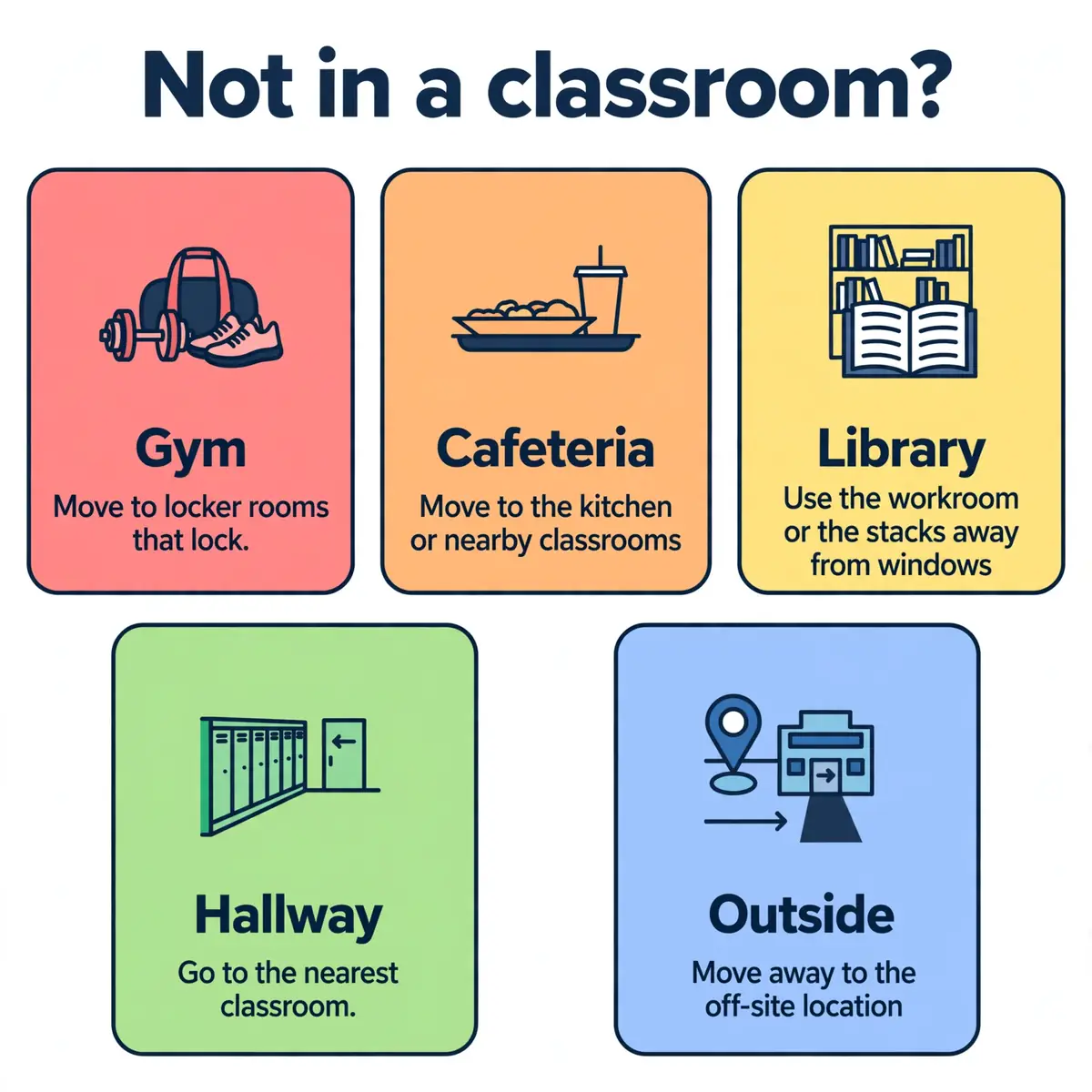
A lockdown plan that only covers classrooms is not a plan. At any moment, students and staff are in gyms, cafeterias, libraries, corridors, washrooms and playgrounds. The plan must set out what happens in each of those spaces, and the adults in charge of them must have practised it.
| Where you are | What to do |
|---|---|
| Gym | Move students into locker rooms or equipment rooms that lock, or leave by the nearest exit away from the threat |
| Cafeteria | Move students into the kitchen, storage rooms or nearby classrooms that lock |
| Library | Use the workroom or offices, or move into the stacks away from windows |
| Hallway or washroom | Go into the nearest classroom or lockable space; the teacher there accepts you |
| Outside | Move away from the building to the pre-set off-site location and call the office to report where you are |
| No lockable room nearby | Lock yourself in a washroom stall and stay quiet until help arrives |
Students who are in a washroom when a lockdown is called should go to the nearest classroom. If that is not possible, they should lock themselves in a stall and stay quiet. Teachers near washrooms should check them quickly, but only if they can do so without leaving their own students unsupervised. No adult should search the building for missing children during a lockdown.
Staff who are not with a class, such as those on a break or in the staff room, should lock down where they are and stay quiet. Catering, cleaning and office staff need the same instruction, and their own safe spaces named in the plan. Visitors should follow the nearest member of staff and do what that person says.
A class outside should not walk back into the building. If a teacher knows exactly where the threat is and has a safe way to lead students away from it, leaving may be safer than staying. The teacher must then call to report the class's location.
If the Fire Alarm Sounds During a Lockdown
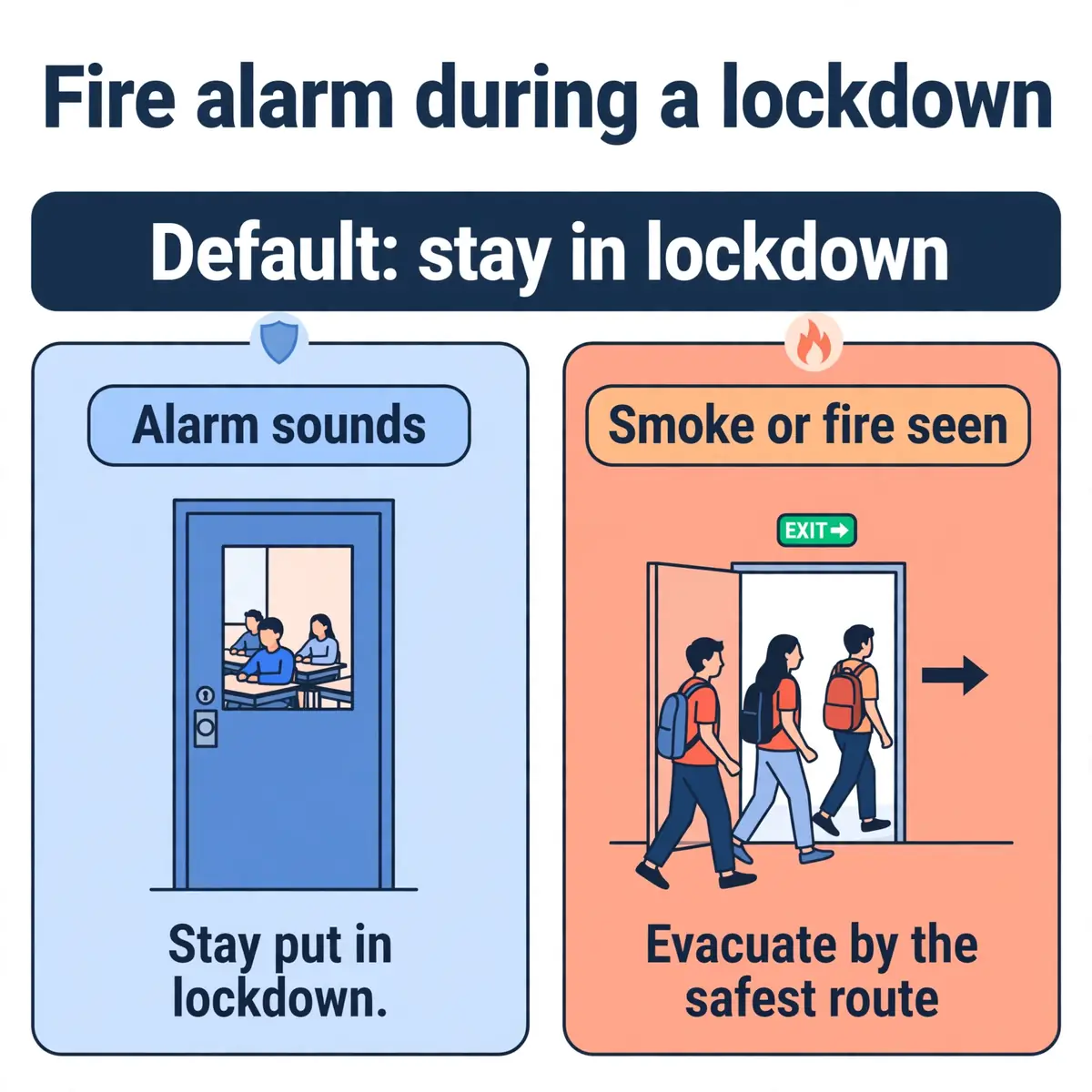
One of the hardest decisions in a lockdown is what to do if the fire alarm sounds. Fire alarms have been pulled deliberately to draw people out of locked rooms, so the default during a lockdown is to stay put. Leaving the room on the sound of the alarm alone can move children straight into danger.
The rule cannot be absolute, because a real fire can also start. Stay in lockdown when the alarm sounds. Leave only if you see or smell smoke or fire in or near your room, or if an administrator or law enforcement tells you to evacuate over the public address system or radio. If there is smoke or fire, evacuate by the safest route. Keep away from both the fire and the reported threat, and call to report your location.
This decision should be discussed openly in staff training. A teacher might have to make it alone, with no time to ask. The plan should state the default and the exception in the same sentence, so no one has to choose between two rules under pressure. A fire drill teaches the evacuation route; a lockdown drill teaches when not to use it.
WarningDo not evacuate automatically when the fire alarm sounds during a lockdown. Stay put unless you see or smell fire, or you are told to leave.
How a Lockdown Ends
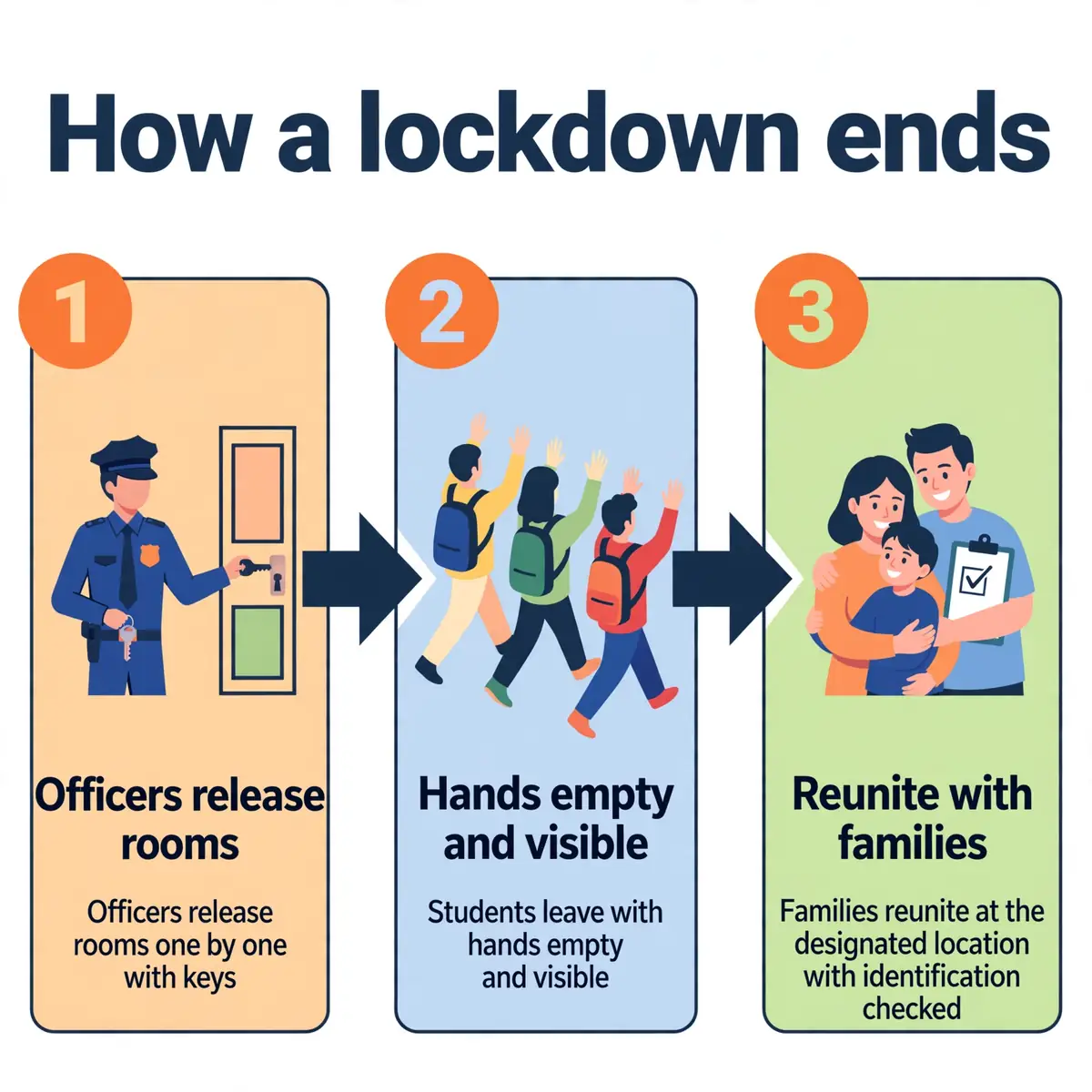
A lockdown ends only when law enforcement say it is over. In many cases, officers go room by room, unlocking doors with keys, checking each room and escorting students out to a safe location. This can take a long time, often hours in a real event, so staff should expect it and prepare students for the wait.
A public address announcement that the lockdown is over is not enough on its own, because an announcement could be made by anyone. A room stays locked until someone opens it with a key. The other way it ends is a confirmation from an administrator known to the teacher, in person or through a pre-agreed method, such as a text to staff phones from the headteacher. If the person giving the all-clear is unknown, ask for identification.
When officers enter a room, they may move quickly and give loud instructions. Everyone should follow them, keep their hands empty and visible, and not run towards the officers. Tell students this in advance, during drills, so the sight of armed officers in the doorway does not cause panic. The release is the most dangerous moment for confusion, and calm, visible hands protect everyone in the room.
After release, students are usually taken to a safe location and reunited with their families through a controlled process. The Standard Reunification Method, which sits alongside the Standard Response Protocol, sets out how schools verify guardians and hand children over one by one. Parents should expect to wait, to show identification, and to follow the school's instructions rather than collecting children from the classroom door.
How Lockdown Drills Work
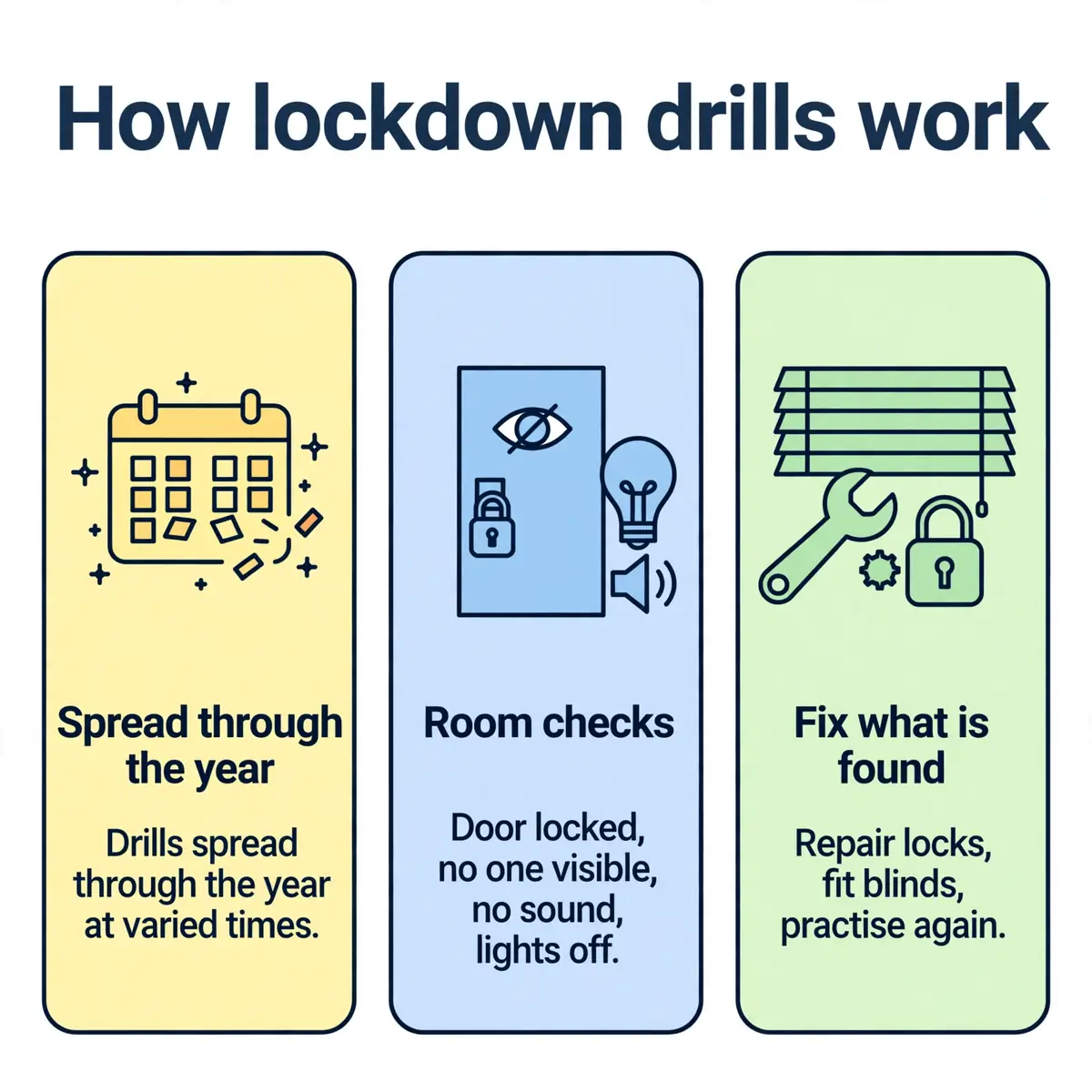
A lockdown drill practises the actions, not the fear. The US Department of Education's guide for developing high-quality school emergency operations plans sets out the planning process that sits behind drills like these. The drill teaches the steps until they are automatic: lock, lights off, out of sight, silence, stay put. Drills are usually spread through the year and varied in timing. They do not always happen at the same time of day or in the same lesson. A drill that only ever happens at 10:00 on a Tuesday tests one version of the school. It does not test the school that exists at lunchtime or at the end of the day.
How often drills must be held depends on where the school is. In the United States, each state sets its own rules, and some set a minimum number of drills each school year. In the United Kingdom, the Department for Education's guidance expects schools to test their plans. It also expects them to rehearse the planned responses, with care around individual trauma. No single number applies everywhere, so staff should know their own local requirement rather than a figure from another state or country.
During a drill, an administrator and often a law enforcement officer walk the halls and check each room. Is the door locked? Can anyone be seen through the window? Can students be heard? Are the lights off? The results are recorded room by room. Over time, the records show which rooms have problems with doors, locks, windows or noise. Doors that do not lock reliably are one of the most common findings. They are also among the easiest to fix, which is why they should be reported the same day.
Drills must include everyone who might be in the building. Students with an Individualized Education Program or a 504 Plan in the United States need the accommodations set out in their plan. A 504 Plan is a support plan under Section 504 of the Rehabilitation Act. Those accommodations let them take part safely and fully. Substitute teachers, new students and visitors need the same plain-language instruction as everyone else. A drill that only tests the regulars in their own classrooms has tested very little. Regular practice emergency procedures across the whole school is what turns a written plan into a working one.
Running a Drill Without Frightening Children
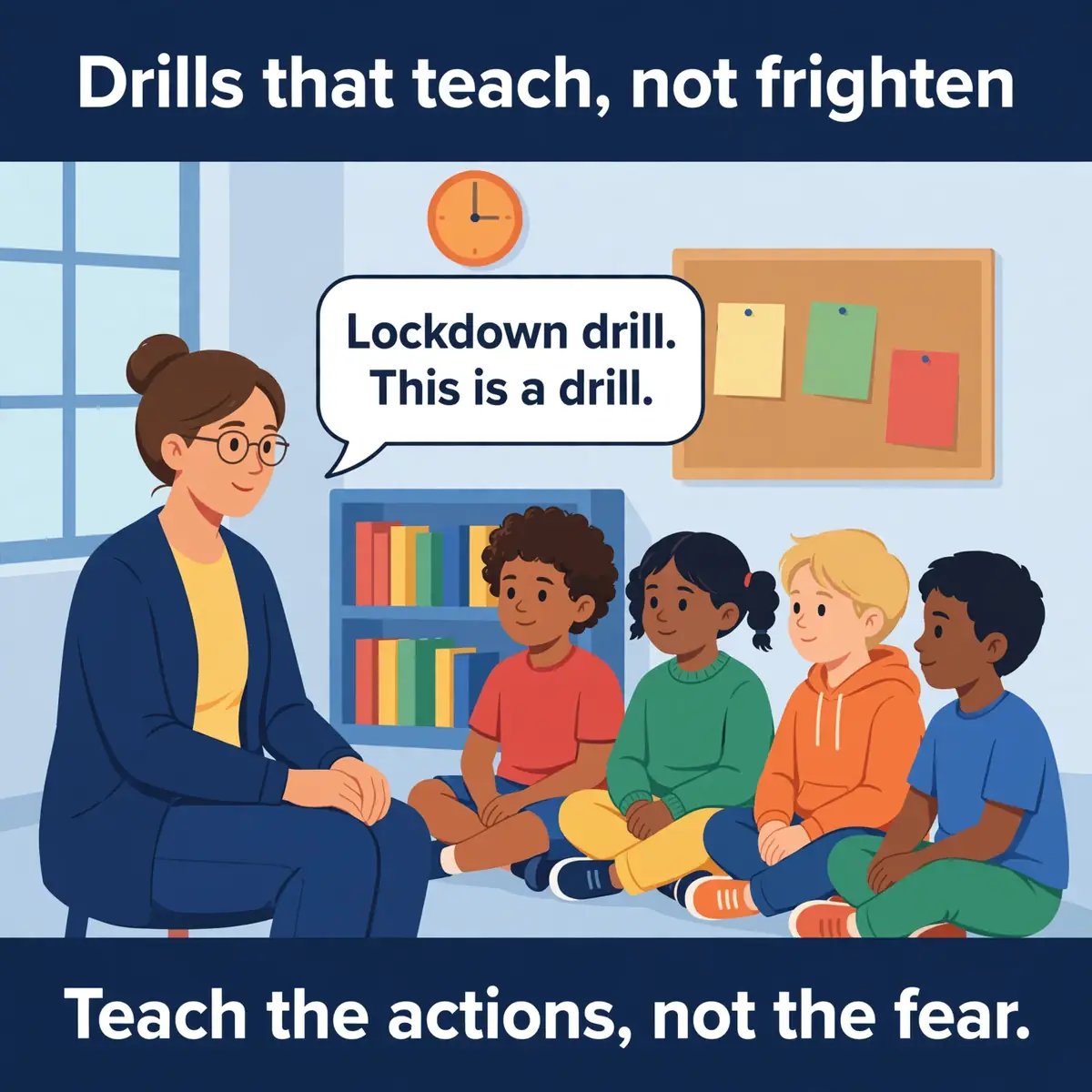
Lockdown drills can teach children to protect themselves without frightening them, but only if they are run the right way. The National Association of School Psychologists and the National Association of School Resource Officers advise schools to announce drills in advance and to avoid simulated violence. They also advise involving school mental health professionals in planning and reviewing the drills. The research they cite supports calm, walk-through drills. Highly sensorial drills that mimic a real attack can traumatise children without making them safer.
Before the Drill
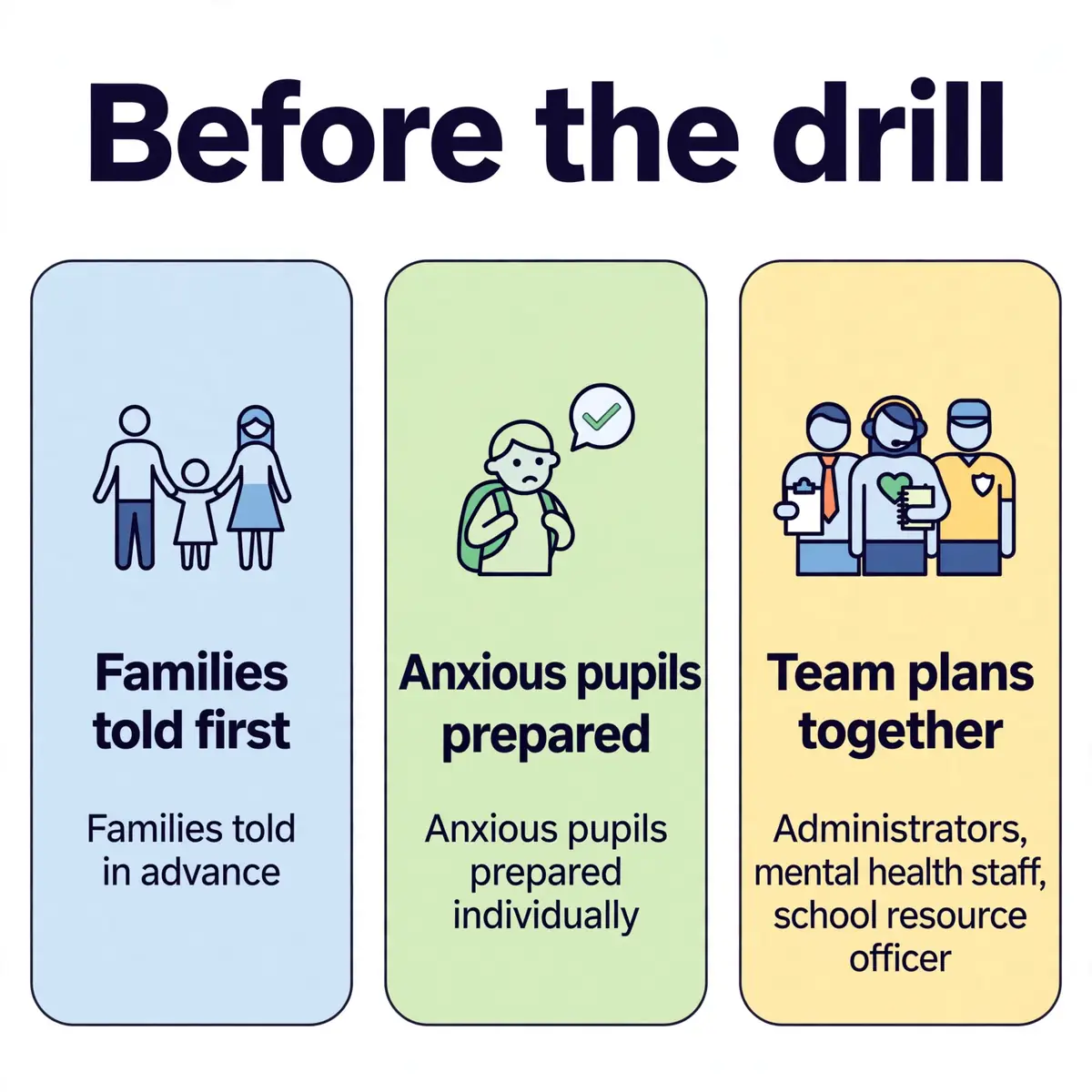
Families should be told when drills happen, so they can talk about them at home. Teachers should prepare the class in advance, in simple language, and explain that a drill is practice for staying safe, like a fire drill. Students who are anxious, or who have past trauma, may need individual preparation and a way to opt out. That arrangement should be agreed with families and the school's mental health staff before the day.
Planning should involve a team, not one person. Administrators, school-employed mental health professionals, school resource officers and safety staff should design the drill together. The design should take account of age and developmental level, disabilities that might affect mobility or understanding, sensory needs such as autism, and second-language needs for students and families. Self-soothing and grounding exercises can be taught to students and staff in advance, so they have something to use during the drill itself.
During the Drill
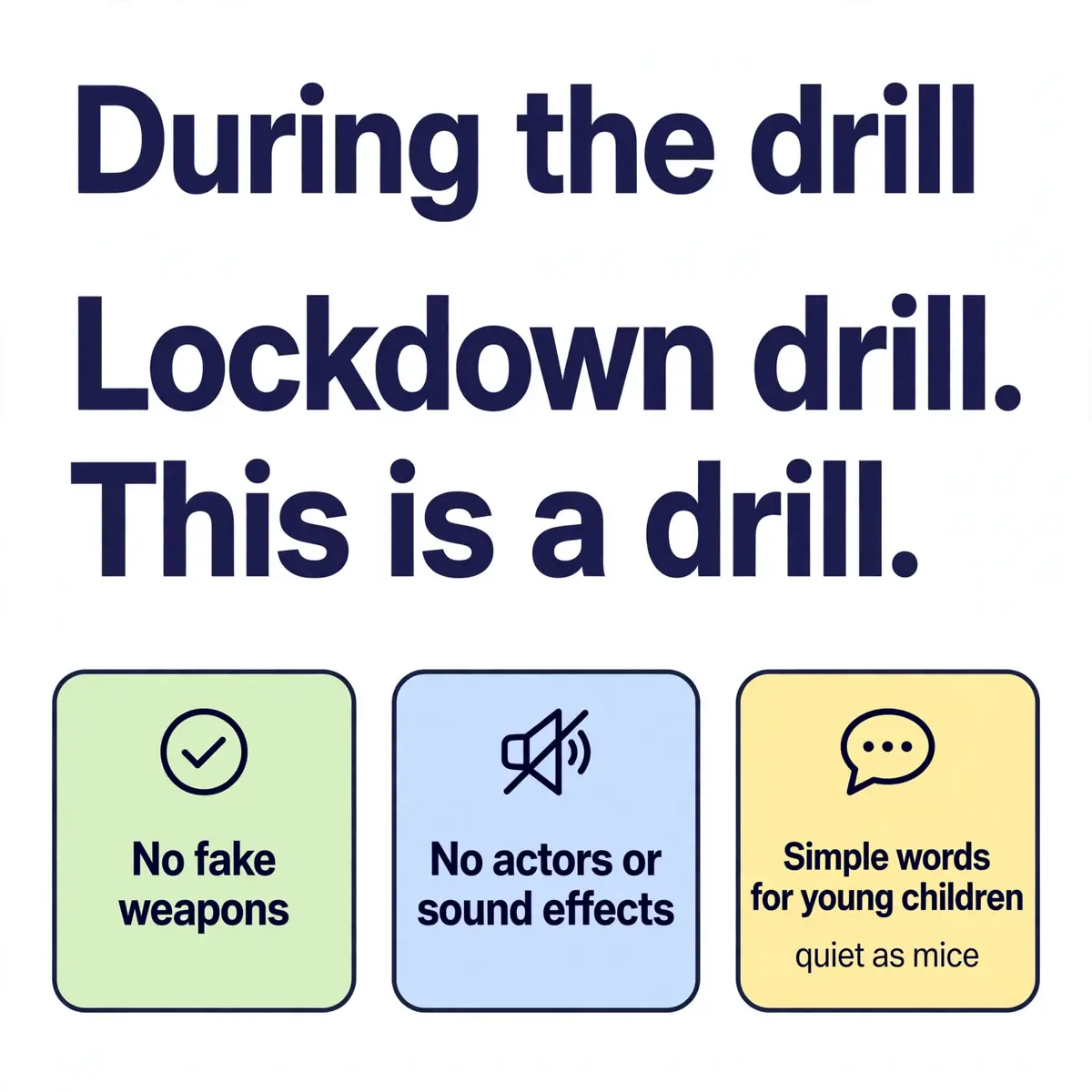
Drills are announced as drills, with plain words: "Lockdown drill. This is a drill." The school should not run unannounced drills that simulate an attack. That means no fake weapons or sound effects, no actors playing intruders, and never telling students it is real. These practices have been widely criticised for causing fear and distress, and school psychology organisations recommend against them. A good lockdown drill teaches the actions, not the fear.
For young children, teachers should use simple language, such as practising being "as quiet as mice" in the safe corner. Some teachers read a short story about the drill the day before, and talk about it afterwards. Students who are anxious should be reassured, and no child should be singled out for struggling to stay quiet. The aim is that every child leaves the drill knowing what to do, not fearing the next one.
After the Drill
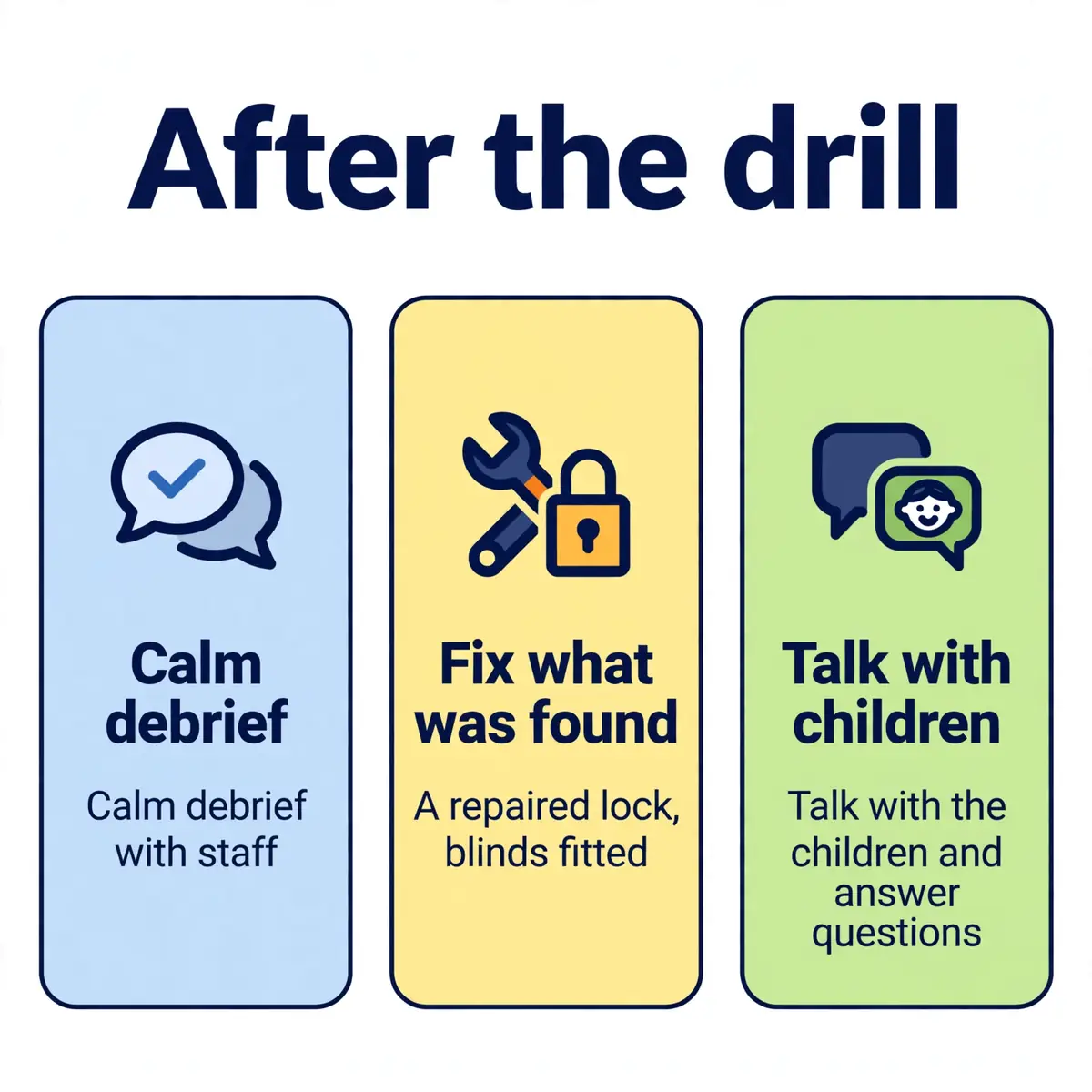
After the drill, hold a short, calm debrief. The headteacher or principal thanks the staff, and any law enforcement officer present gives brief feedback. Problems found during the room checks become work orders and training tasks. Examples are a lock that does not work from inside, a room where children could be seen or heard, or a supervisor who did not know where to take students. The next drill should confirm that each fix is done.
Talk with the children afterwards as well. Ask what they remember, answer their questions honestly, and correct any confusion about the steps. If a child was upset, follow up with them and their family, and note it for the next drill's planning. A drill that produces no corrective actions has tested nothing except the announcement. The debrief is the part that makes the next drill better.
Keeping Children Calm During a Lockdown
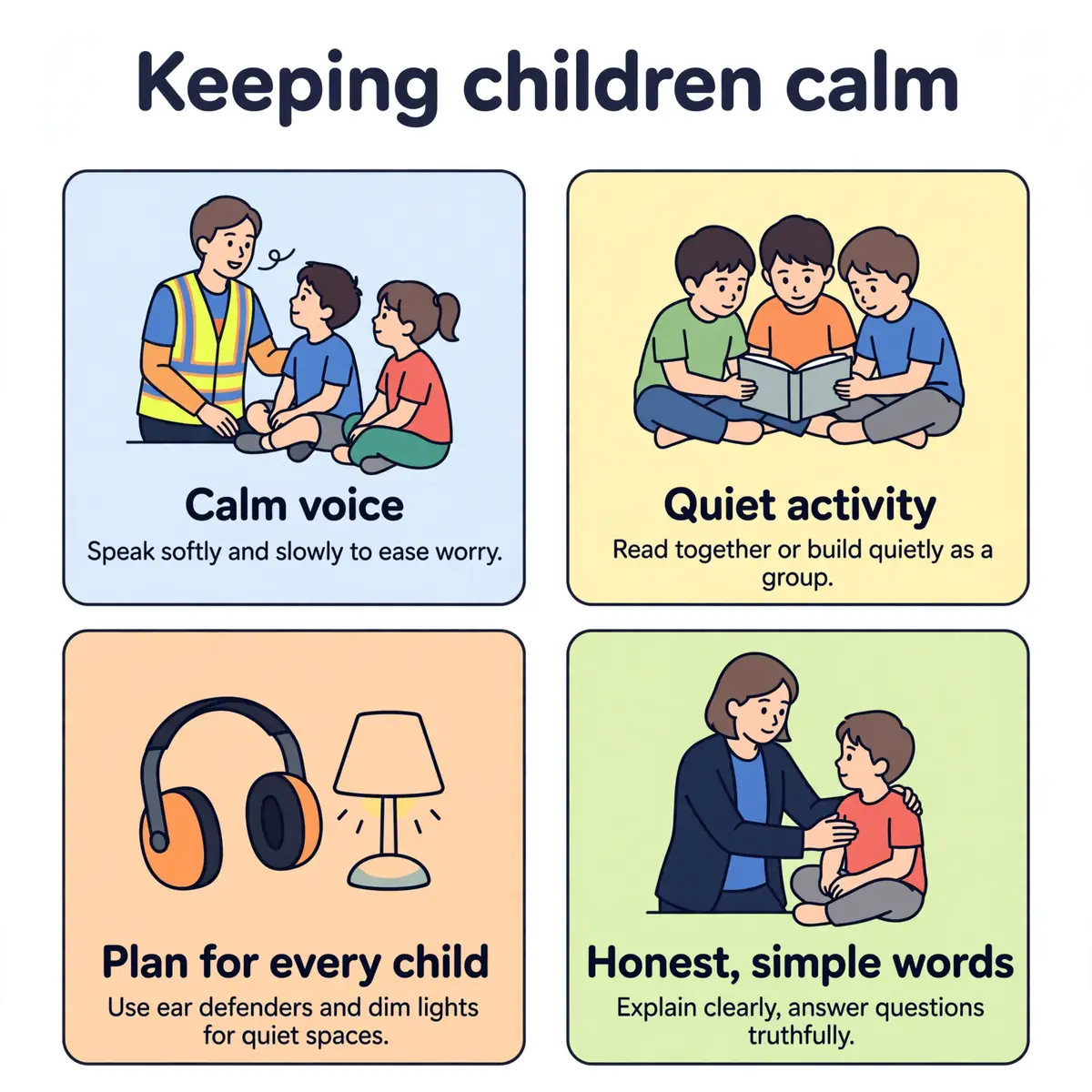
The teacher's calm sets the tone for the room. Children take their cue from the adult. A quiet voice, slow movements and short, clear instructions keep the room settled. A raised voice or hurried movement spreads alarm. Speak only as much as needed, and say what you want children to do, not what you fear might happen.
For young children, keep them seated in the safe zone with a quiet activity. A whispered story or a silent counting game can hold their attention. Reassure them in simple words that the adults are keeping them safe and that they are doing exactly the right thing by staying quiet. Do not speculate about what is happening outside the room, and do not answer questions you cannot answer truthfully.
Some children need more than reassurance. Students with special educational needs and disabilities, including autism, may find a dark, silent room distressing. Their plans should account for that in advance. In the United Kingdom, the Department for Education's guidance notes that younger children or those with special needs may be fearful of dark rooms. Plans may instead dim the lights and provide ear defenders to help children stay quiet. Individual plans, agreed with families and support staff before any drill, are what make the difference in a real lockdown.
TipPractise a quiet activity your class can do in the safe zone, so it is familiar before it is ever needed for real.
What Parents Should and Should Not Do
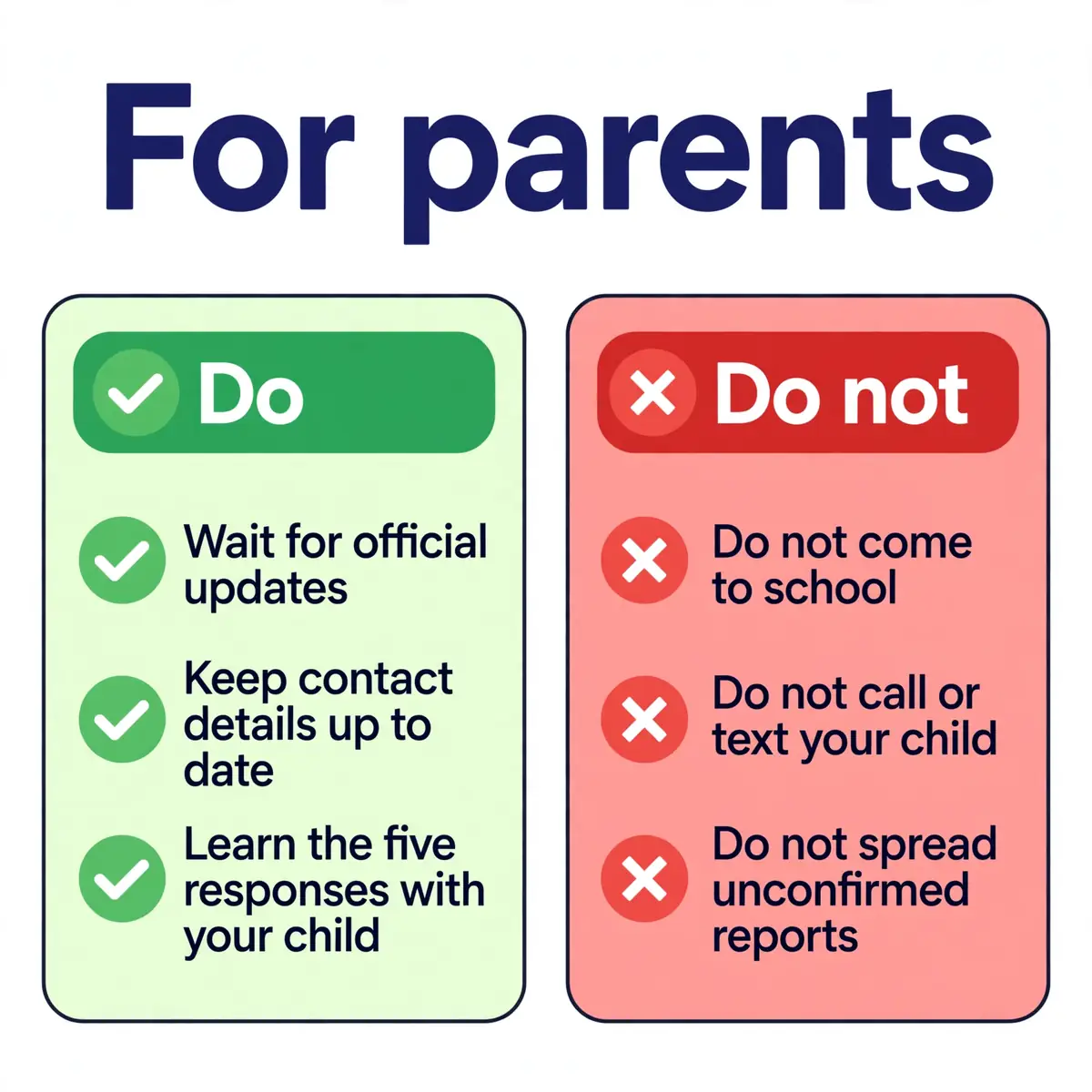
During a lockdown, the school's whole attention is on the children inside. The Texas School Safety Center's parent guide sets out the same point: parents help most by staying away and waiting for official information. Coming to the school adds people and vehicles to a scene that law enforcement is trying to control, and it can delay the response. There may also be times when collecting a child from class or school is not allowed at all, for safety reasons.
- Do wait for official updates from the school or district, and follow the instructions in them.
- Do keep your contact details up to date with the school, with a working mobile number and email address.
- Do learn the five SRP actions with your child, so a message naming one of them makes sense at once.
- Do not come to the school during a lockdown or try to enter the building.
- Do not call or text your child during the incident. Incoming calls or texts can reveal a child's location and distract them at the worst moment.
- Do not spread unconfirmed reports on social media. Wrong information creates panic and sends families to the wrong place.
After the all-clear, follow the school's reunification instructions. Bring identification, expect to wait, and collect your child from the designated location, not from the classroom. Afterwards, talk with your child about what happened in simple, honest words. Tell the school if your child seems anxious or unsettled in the days that follow. Children often need a few days to settle, and the school would rather hear about it early.
After a Lockdown: Review and Support
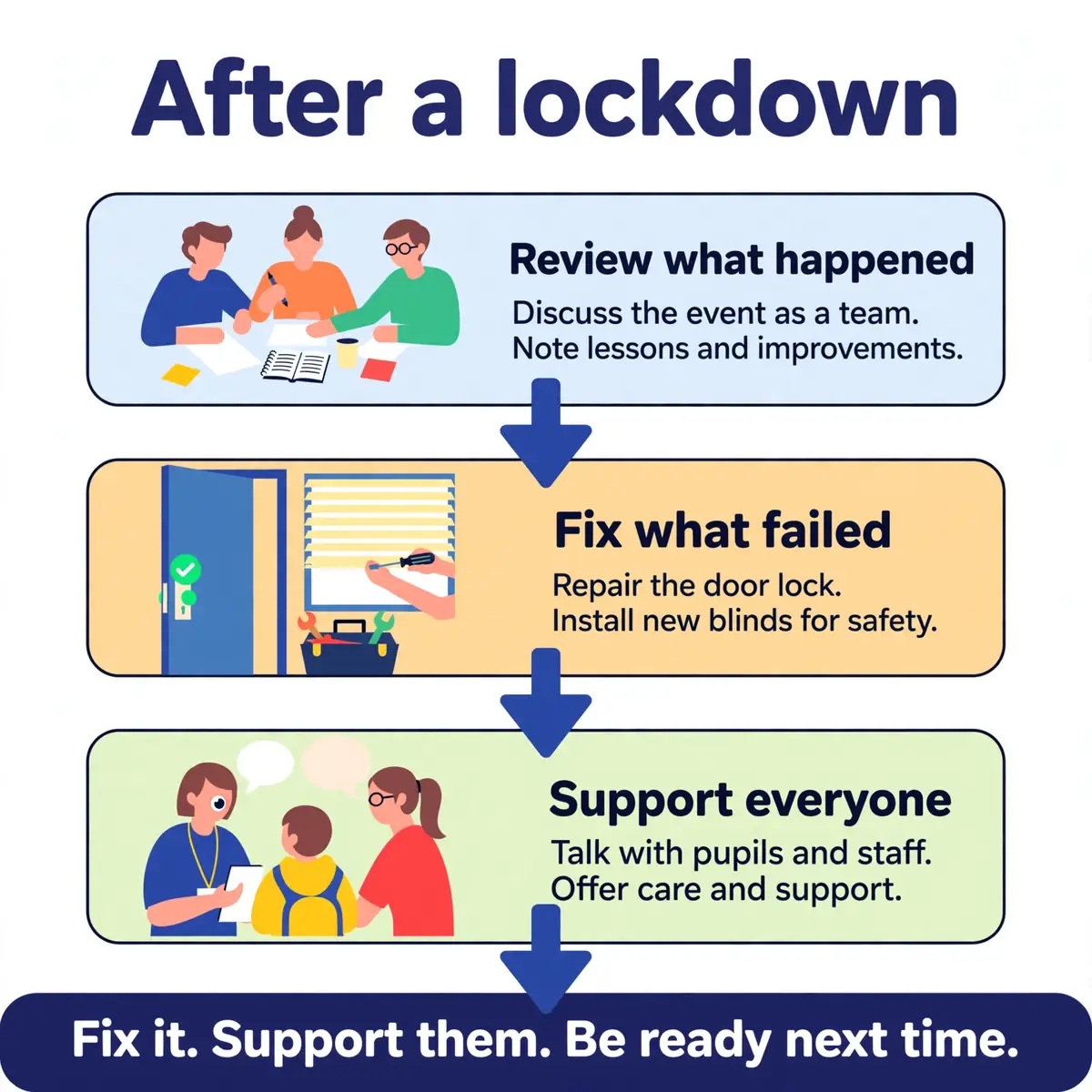
Whether the lockdown was real or a drill, the work is not finished when the rooms are released. The school should record what happened, the times decisions were made, and which rooms had problems. A short debrief with staff, held the same day, catches details that are forgotten by the next morning. The Department for Education's guidance includes post-incident reviews and post-incident welfare as part of the plan, not as an afterthought.
The review should ask what worked and what failed. Did every door lock? Could any room be seen or heard? Did the announcement reach the playground and the portable classrooms? Did the office account for every student and visitor? Each finding becomes a fix: a lock replaced, blinds fitted, a radio added, a procedure rewritten. The next drill should confirm that the fix is done, so the same problem is not found twice.
Support matters as much as repairs. Lockdowns can produce anxiety, stress and traumatic symptoms in some students and staff, and can cost teaching time. Counselling should be available before, during and after a drill, not only for children who visibly react. Teachers should watch for changes in behaviour in the days after a real lockdown. Reluctance to come to school, trouble sleeping, or fear of loud noises are examples. Pass any concerns to the school's mental health staff. Normal routines, honestly answered questions and a calm return to class help most children settle.
Finally, tell families what happened, as far as it is appropriate to do so, and what has changed as a result. Parents who hear the facts from the school do not have to fill the gaps from rumour. A short, factual message, sent the same day, protects trust. It keeps the focus where it belongs: on the children, and on being ready if it ever happens again. The safety rules at school that children learn every day are part of the same habit of preparation. So are the back-to-school safety checks that keep the building itself safe.
Frequently Asked Questions
How is a Lockdown Different from a Lockout?
A lockdown answers a threat inside the building: lock room doors, lights off, out of sight, silence. A lockout, called Secure in the Standard Response Protocol, answers a threat outside the building. Get inside, lock the outside doors, and carry on with normal activities indoors. The two are sometimes confused because both involve locks, but the threat is on opposite sides of the door.
Can a Teacher Call a Lockdown, or Only the Headteacher?
Any member of staff who sees or hears a threat can call a lockdown. Do not wait for permission or certainty. Lock down the classroom immediately, then tell the office. The headteacher or principal manages the incident once it is called, but the first call belongs to whoever spots the danger.
What Happens If a Child is in the Toilet When a Lockdown is Called?
The child should go to the nearest classroom or lockable space, and the teacher there accepts them. If no classroom can be reached safely, the child should lock themselves in a washroom stall and stay quiet until help arrives. Teachers should check nearby washrooms quickly, but only if they can do so without leaving their own students unsupervised.
Should Children Hide Under Desks During a Lockdown?
Not as a rule. Children should move to the safe zone of the room, the part that cannot be seen from the door window or the hallway. In some rooms that means sitting on the floor against a solid wall, away from windows and doors. The teacher should have identified the safe zone at the start of the year, so children know exactly where to go.
How Often Should Schools Hold Lockdown Drills?
It depends on local rules. In the United States, each state sets its own requirements, and some set a minimum number of drills each school year. In the United Kingdom, schools are expected to test their plans and rehearse the planned responses. Whatever the requirement, drills should be spread through the year, announced in advance, and varied in timing.
What Should Parents Do If a Lockdown Happens While Their Child is at School?
Stay away from the school, wait for official updates, and do not call or text your child during the incident. Follow the school's reunification instructions after the all-clear, bring identification, and collect your child from the designated location. Talk with your child afterwards, and tell the school if they seem anxious in the days that follow.
Sources
- The "I Love U Guys" Foundation — Standard Response Protocol, K12 2025 version 4.2, Instructor Guide
- Texas School Safety Center — A Parent's Guide to School Safety Toolkit, Section 2.4: Standard Response Protocol
- US Department of Education, US Department of Health and Human Services, US Department of Homeland Security, US Department of Justice and Federal Emergency Management Agency — Guide for Developing High-Quality School Emergency Operations Plans (2013)
- National Association of School Psychologists — Mitigating Psychological Effects of School Lockdowns
- National Association of School Psychologists and National Association of School Resource Officers — NASP and NASRO Urge Accuracy With Regard to Lockdown Versus Other Types of Armed Assailant Drills (2020)
- UK Department for Education — Protective security and preparedness for education settings (published April 2024, updated April 2025)
- US Department of Justice, COPS Office — The Role of Law Enforcement in Responding to School-Based Incidents
- San Francisco Unified School District — Emergency Preparedness & Standard Response Protocol