ISO 45001:2018 is the international standard for an occupational health and safety (OH&S) management system. It sets out what an organisation must do to identify hazards, control risks, involve workers and keep improving safety performance. Certification is voluntary, and it is granted by an independent certification body, not by ISO itself.
The requirements sit in Clauses 4 to 10 of the standard. They cover context, leadership and worker participation, planning, support, operation, performance evaluation and improvement. Each clause is explained below, followed by a comparison with OHSAS 18001 and the full certification process.
What is ISO 45001?
ISO 45001 is the first occupational health and safety standard published by the International Organization for Standardization (ISO). It was published in March 2018 and replaced OHSAS 18001, the British specification most of the world had used until then. The standard gives any organisation, in any sector, a single framework for running health and safety as a managed system. It replaces a set of separate tasks with one system.
What the standard certifies
ISO 45001 certifies a management system, not a safety record. An auditor checks whether the organisation identifies hazards, assesses risks, applies controls in the right order, involves workers and learns from incidents. A low accident rate alone earns no certificate, and a certificate does not mean the workplace is accident-free.
The system follows the Plan-Do-Check-Act cycle. The organisation plans its controls, puts them into practice, checks whether they work, and acts on what the checks find. That cycle repeats, so the system is expected to improve year after year rather than sit unchanged on a shelf.
Who ISO 45001 is for
The standard applies to organisations of all sizes and sectors, in any country. ISO lists manufacturing, construction, transport, energy, healthcare, public administration and services among its main users. Small firms use the same clauses as large ones, and the system is scaled to the organisation's actual risks, not to its headcount.
Uptake is wide. The ISO Survey 2023 recorded 185,166 valid ISO 45001 certificates worldwide at 31 December 2023. That count is an undercount, because China, the largest contributor in earlier surveys, did not submit data that year. From 2025 the Survey is compiled from IAF CertSearch, the global database of accredited certificates.
The 2024 amendment and the coming revision
Amendment 1:2024 added one sentence to the standard: the organisation must determine whether climate change is a relevant issue. For worker safety, that means heat, extreme weather and changing working conditions. ISO added the same sentence to all its management system standards at the same time.
A full revision is also under way. The draft international standard was balloted from 16 June to 8 September 2026. The new edition is expected in 2027, followed by a transition period of about three years. Until then, ISO 45001:2018 with Amendment 1:2024 is the edition organisations certify against.
The key clauses of ISO 45001
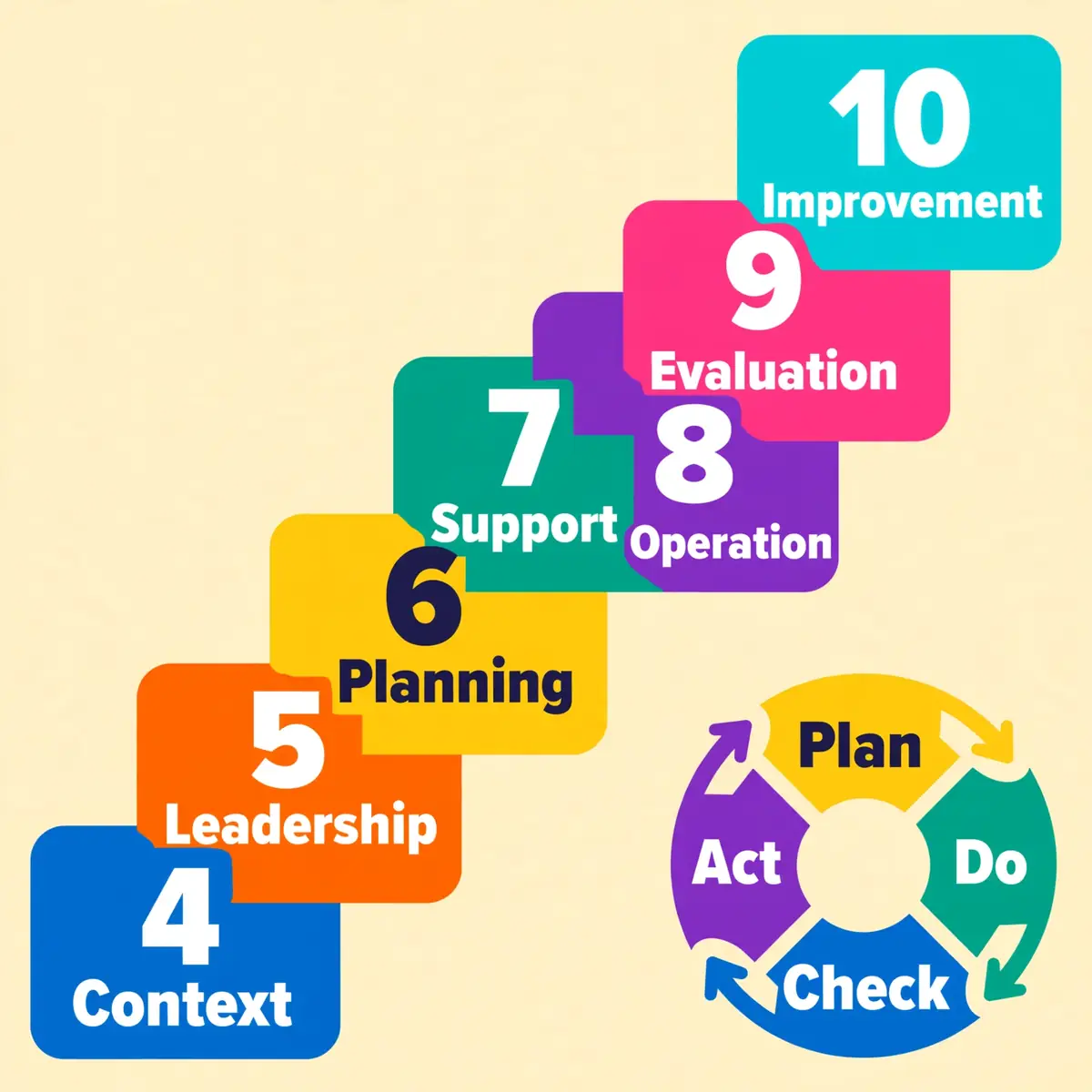
The ISO 45001 requirements are set out in Clauses 4 to 10, while Clauses 1 to 3 cover scope, references and terms. The ISO 45001 clauses follow the same harmonised structure as ISO 9001 and ISO 14001. That shared structure is why many organisations run the three standards as one integrated system.
| Clause | What it covers | What it asks for |
|---|---|---|
| 4 | Context of the organisation | Issues, interested parties and the scope of the system |
| 5 | Leadership and worker participation | Policy, accountability and consultation with workers |
| 6 | Planning | Hazard identification, risk assessment and legal requirements |
| 7 | Support | Resources, competence, awareness and documented information |
| 8 | Operation | Operational controls, change, contractors and emergencies |
| 9 | Performance evaluation | Monitoring, internal audit and management review |
| 10 | Improvement | Incident investigation, corrective action and continual improvement |
Clause 4: Context of the organisation
Clause 4 asks the organisation to look outward before it writes a single procedure. It must identify the internal and external issues that affect worker safety. It must also map the needs of workers and other interested parties, and set the boundaries of the system. The scope must cover every activity under its control or influence that can affect OH&S performance.
Scope is a common audit finding when it is drawn too narrowly. A warehouse left out of scope because it is run by a contractor still counts if the organisation controls the work. If an activity can hurt a worker, the system must cover it.
Clause 5: Leadership and worker participation
Clause 5 puts top management in charge of the system. Senior leaders must take overall accountability for preventing injury and ill health. They set the OH&S policy, assign roles at every level and provide the resources the system needs. The policy carries five commitments, including safe working conditions, legal compliance, hazard elimination and consultation with workers.
Clause 5.4 is the part no other management system standard has. Workers at all levels must be consulted on the policy, roles, legal requirements, objectives and controls. They must also take part in hazard identification, risk assessment, incident investigation and improvement. The organisation must remove barriers such as language, literacy and fear of reprisal, and give workers the time and training to take part.
Clause 6: Planning, hazards and risk
Clause 6 is where the system earns its keep. The organisation must identify hazards in an ongoing, proactive way. That covers routine and non-routine work, how work is organised, workload and psychosocial factors, past incidents, emergencies, contractors and visitors. It then assesses the risks with documented criteria, taking existing controls into account. A sound risk assessment is the evidence that this work was done properly.
- Elimination — remove the hazard entirely.
- Substitution — replace it with something less hazardous.
- Engineering controls — isolate people from the hazard.
- Administrative controls — change how the work is done.
- Personal protective equipment — the last resort, not the first.
Controls follow a mandated order, the hierarchy of controls. A risk assessment that jumps straight to helmets and gloves is the finding auditors raise most often. The clause also requires a legal register: the organisation must identify its health and safety obligations and check compliance against them. PPE requirements sit at the bottom of that order, after the higher controls have been considered.
WarningPersonal protective equipment is the last control in the hierarchy, not the first. An audit finding is almost certain when a risk assessment relies on PPE without showing that elimination, substitution and engineering controls were considered.
Clause 7: Support
Clause 7 covers the resources the system runs on: competent people, awareness, communication and documented information. Workers must be able to identify hazards, and they must know their right to remove themselves from imminent danger. Communication must account for language, literacy and disability, so a procedure nobody can read is not a control.
Training records matter here. Auditors ask workers what the procedures say and check the records behind the answers. In the United States, the rules on OSHA training set a baseline for what workers must be taught about the hazards they face. A certificate on the wall proves nothing if the people doing the work were never trained. Documented information must be controlled, so the current version is the one people actually use.
Clause 8: Operation
Clause 8 turns plans into daily practice. It covers operational controls, management of change, procurement, contractors and outsourcing, and emergency preparedness and response. A new machine, a new chemical or a new contractor must pass through the system before work starts, not after an incident shows the gap.
Emergency plans must be tested, not just written. The clause expects procedures for first aid, evacuation and response to the emergencies the organisation has identified, and drills that prove the plans work. Contractors need induction and supervision, because their workers face the same hazards as direct employees. Regular practice emergency procedures and a stocked first aid kit are part of that preparation.
Clause 9: Performance evaluation
Clause 9 asks how the organisation knows the system works. It must monitor and measure OH&S performance with both leading and lagging indicators. It must also evaluate compliance with its legal obligations, run an internal audit programme and hold a management review. The review must look at audit results, incidents, objectives and the needs of interested parties.
- Audit findings and the status of corrective actions.
- Incident and near-miss trends over the review period.
- Progress against OH&S objectives and targets.
- Changes in legal requirements and interested-party needs.
- Feedback from workers and their representatives.
Internal audits must be done by people who are independent of the work they audit. Findings feed into corrective action, and the results of the review must be communicated to workers, not filed away. A management review that nobody hears about changes nothing.
Clause 10: Improvement
Clause 10 closes the loop. Incidents and near misses must be reported, investigated with worker participation and corrected at the root cause, following the hierarchy of controls. The results feed back into the risk assessments, and workers must be told what changed.
A register with no near misses is not a safe workplace; it is a reporting channel nobody trusts. Auditors read the incident register first, because it shows whether the system learns. Continual improvement is the point of the whole standard: a system that never changes is a system that is not working.
ISO 45001 vs OHSAS 18001
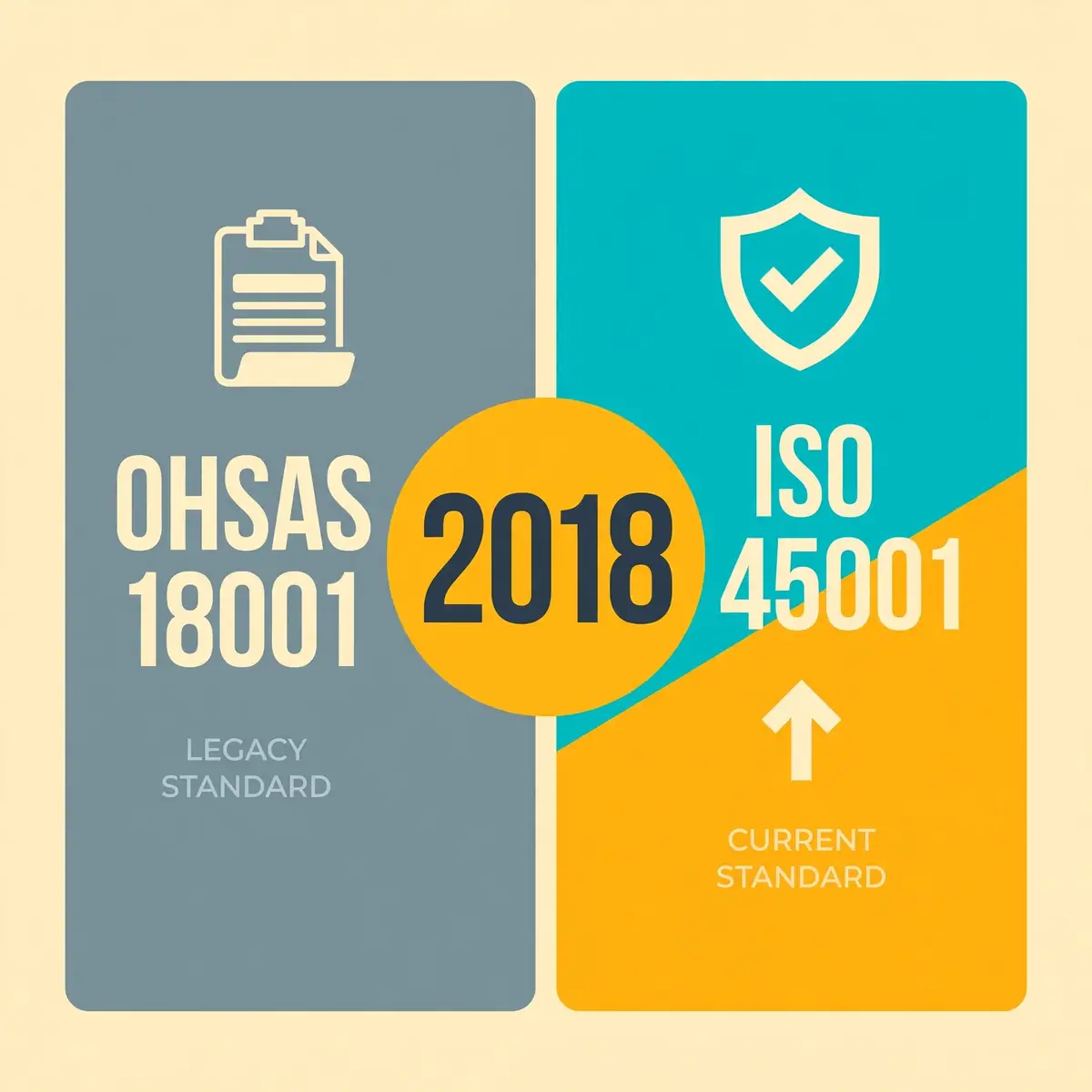
ISO 45001 replaced OHSAS 18001 when it was published in March 2018. OHSAS 18001 certificates had a three-year migration period, originally due to end in March 2021. The International Accreditation Forum extended that deadline by six months because of COVID-19, so accredited OHSAS 18001 certificates stopped being valid after 30 September 2021. The two standards cover the same discipline, but ISO 45001 is substantially more demanding in several areas.
| Aspect | OHSAS 18001 | ISO 45001 |
|---|---|---|
| Context of the organisation | Not required | Mandatory — Clause 4.1 and 4.2 |
| Leadership emphasis | General management responsibility | Top management must demonstrate active, visible commitment (Clause 5.1) |
| Worker participation | Consultation mentioned | Explicit requirement for consultation and participation at all levels (Clause 5.4) |
| Risk and opportunity management | Hazard and risk focus | Broader risk-based thinking, including risks and opportunities beyond hazards (Clause 6.1.1) |
| Structure | OHSAS-specific structure | Harmonised structure, compatible with ISO 9001 and ISO 14001 |
| Contractor management | Limited requirements | Explicit procurement and contractor management requirements (Clause 8.1.4) |
| Management of change | Implied | Explicit process requirement (Clause 8.1.3) |
| Performance evaluation | Basic monitoring | Structured monitoring, measurement, analysis and evaluation (Clause 9.1) |
The practical difference is scope. OHSAS 18001 managed hazards inside the organisation. ISO 45001 manages the interaction between the organisation and its business environment, including contractors, outsourced work and interested parties. An organisation that still holds OHSAS 18001 paperwork has no valid certificate and needs ISO 45001 certification.
Is ISO 45001 mandatory?
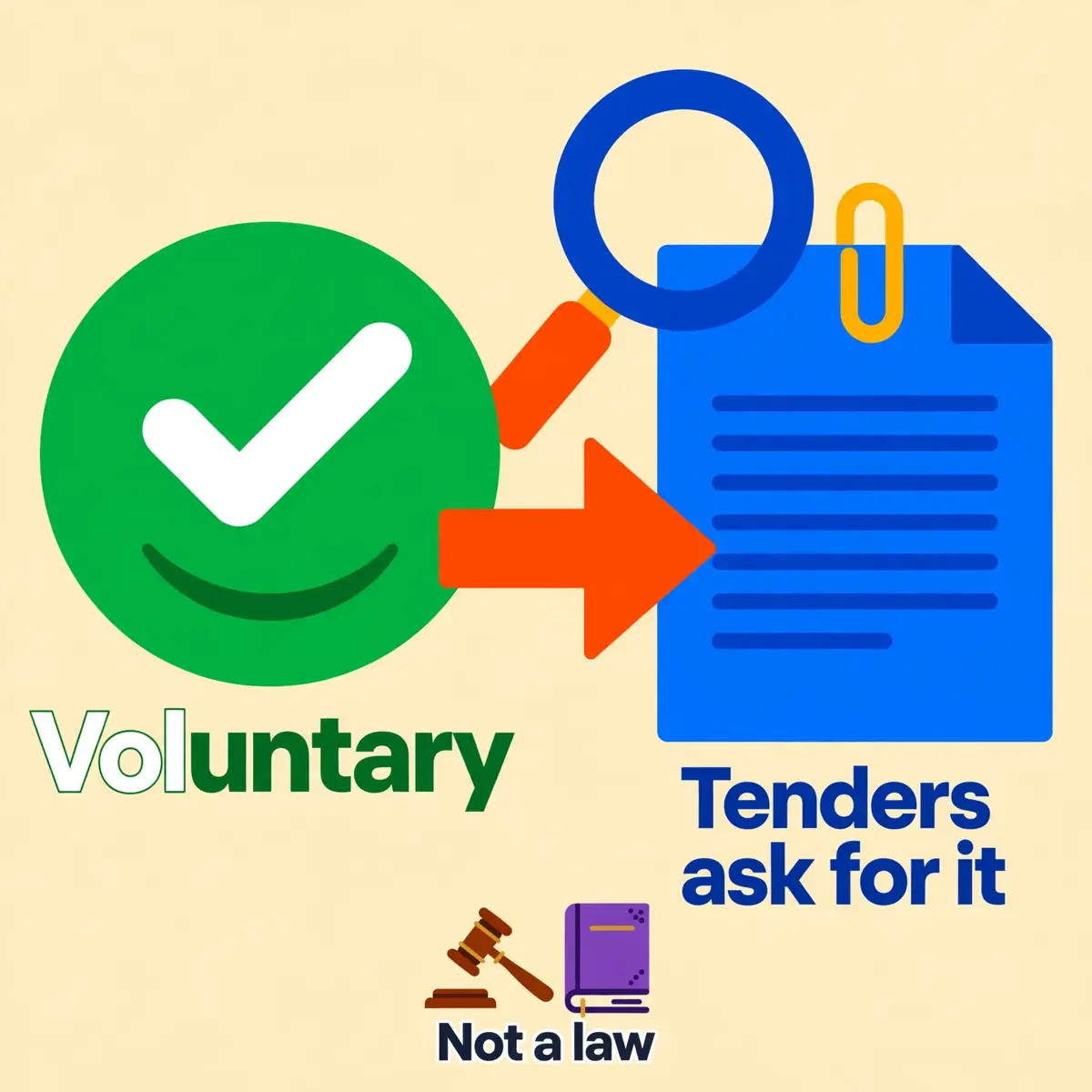
No. ISO 45001 is a voluntary standard, and no law requires an organisation to hold its certificate. Standards and regulations are different things: a standard is a voluntary specification, while a regulation is law. ISO states plainly that certification is voluntary and that organisations choose it when they want independent confirmation that their system meets the standard.
Voluntary does not mean optional in practice. Many tenders, customer contracts and industry prequalification schemes ask for ISO 45001 certification, and a missing certificate can cost a contract. The decision is usually commercial: the standard is adopted because customers and supply chains ask for it.
AlertCertification does not prove legal compliance. The standard requires an organisation to identify its legal obligations and check compliance. The certificate itself is not a legal defence. It does not replace OSHA duties in the United States or health and safety law anywhere else.
When customers and tenders ask for it
Construction, manufacturing, logistics and facilities management are the sectors where the request appears most often. Principal contractors pass the requirement down the supply chain, so a small subcontractor may need certification to bid at all. The certificate must list the scope it covers, so buyers check that the work they are buying is inside it.
A certificate can be checked before it is relied on. IAF CertSearch is the official global database of accredited certificates. It confirms whether a certificate is valid and whether the certification body was accredited to issue it. It also shows whether the accreditation body is a recognised IAF member.
How to get ISO 45001 certification
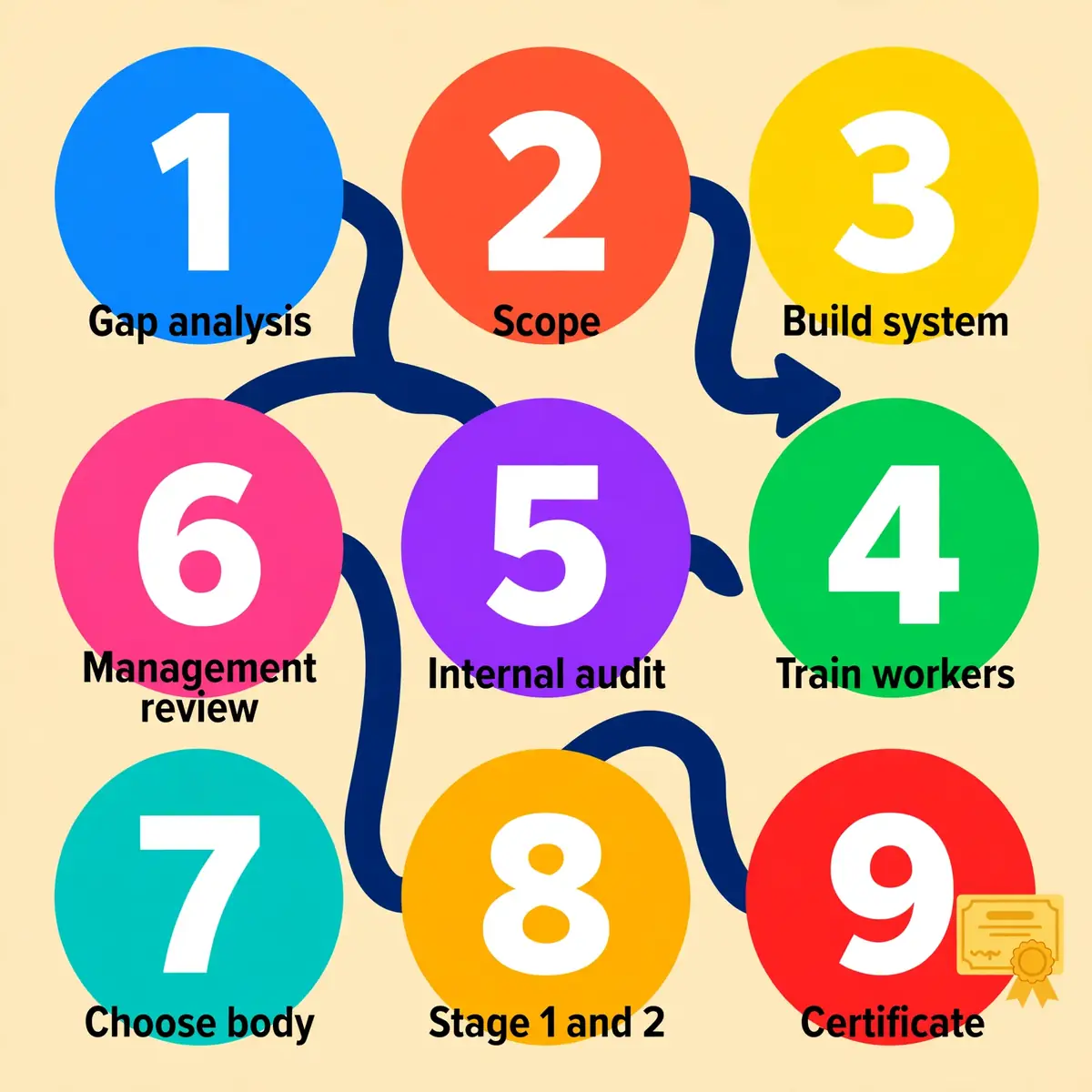
The ISO 45001 certification process follows a fixed path: build the system, run it, check it yourself, then invite an independent certification body to audit it. ISO publishes the standard but certifies nobody. Guidance on the build comes from ISO 45002:2023, the companion ISO 45001 guide to implementation, which explains how each clause can be put into practice with real-life examples.
- Run a gap analysis — compare current practice with Clauses 4 to 10 and list what is missing.
- Define the scope — decide which sites, activities and workers the certificate will cover.
- Build the system — write the policy, hazard register, risk assessments, legal register and procedures.
- Train workers and run the system — give people the competence and time to follow the procedures.
- Run an internal audit — check the system against the standard and record the findings.
- Hold a management review — have top management review performance and approve the next steps.
- Choose an accredited certification body — get quotes from two or three bodies with auditors in your sector.
- Pass Stage 1 and Stage 2 audits — fix the nonconformities the auditors raise.
- Keep the certificate — run surveillance audits and improve the system between visits.
Choose an accredited certification body
Only an accredited certification body can issue a certificate that buyers trust. Accreditation is granted by a national accreditation body, such as UKAS in the United Kingdom or ANAB in the United States. Ask for quotes from two or three bodies, and check that their auditors have experience in your sector.
Price is not the only difference. Audit days, sector experience and the quality of the auditor's feedback vary widely. A body that audits your sector every week will test the system harder than one learning the industry on your time. Verify any certificate a supplier shows you on IAF CertSearch before relying on it.
Stage 1: the readiness review
Stage 1 is a documentation and readiness review, usually one or two days, on site or remote. The auditor checks that the system exists as documented information: the scope, policy, hazard register, risk assessments and legal requirements. Internal audit, compliance evaluation and management review must be planned or already done.
Stage 1 ends with a report, not a certificate. It confirms whether the organisation is ready for Stage 2 and flags the areas that could become findings. Most organisations use the gap between the stages to fix the issues the auditor raised.
Stage 2: the implementation audit
Stage 2 is the certification audit proper, usually two to five days on site depending on the organisation's size. The auditor walks the workplaces and follows hazards into the controls that manage them. Workers are interviewed about consultation and their right to refuse dangerous work, and emergency preparedness is tested.
Findings are graded. Minor nonconformities need a corrective action plan, while major nonconformities must be closed before a certificate is issued. A major nonconformity means the system has a gap that could cause injury. The auditor will not sign off until it is fixed and the fix is checked.
What happens after the audit
When the audit closes with no open major nonconformity, the certification body makes its decision and issues the certificate. The certificate lists the scope of certification and the accreditation body, and it is valid for three years. The organisation can then update tenders and prequalification submissions to show the certificate.
Nonconformities are not a failure on their own. Auditors expect findings; what matters is the response. A corrective action must fix the cause, not the symptom, and the organisation must show the fix worked. Unclosed findings are the usual reason a certificate is delayed.
TipRun the system for at least three months before Stage 1. Auditors want records — incident reports, inspection notes and training completions — and a system with no history gives them nothing to check.
How long does certification take and what does it cost?
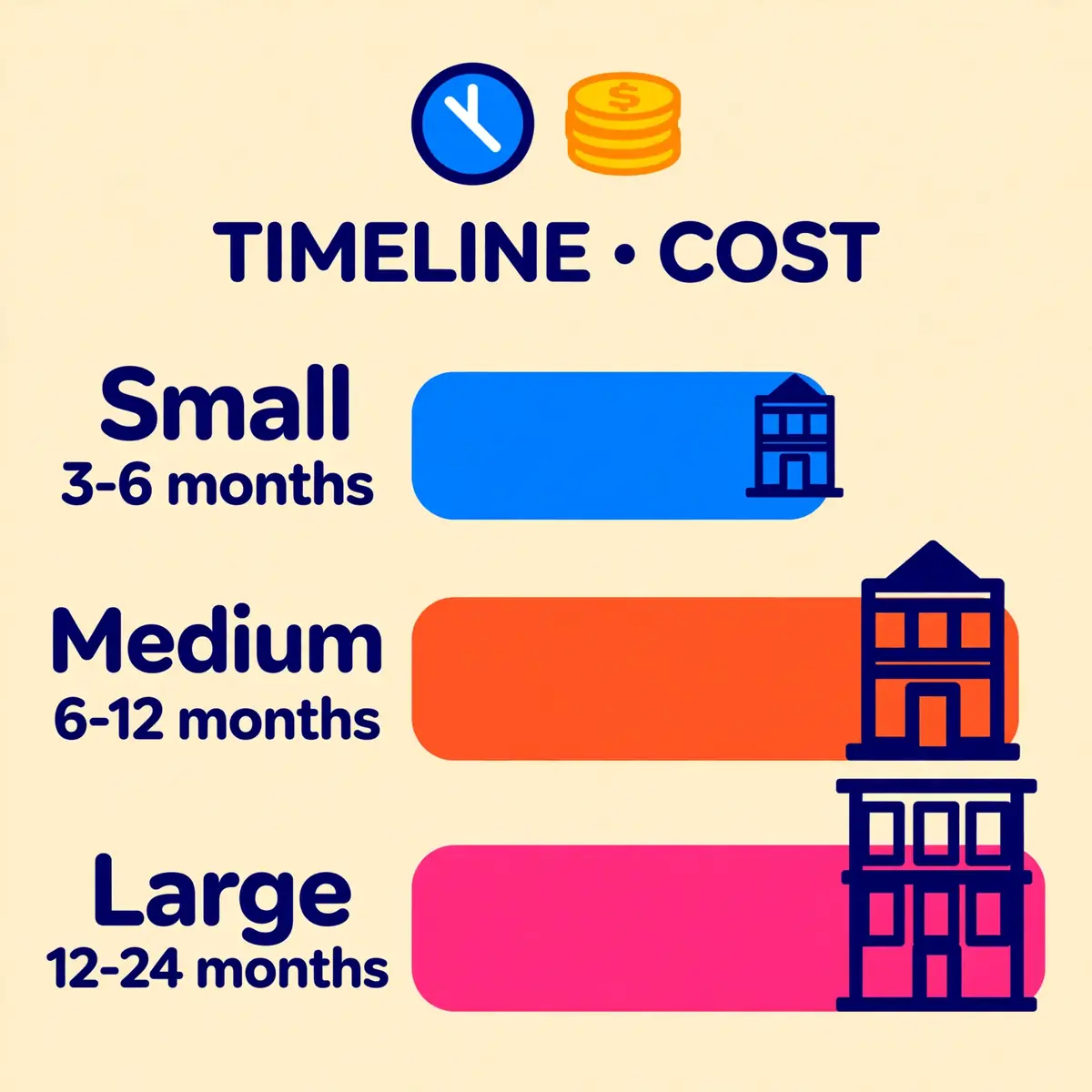
There is no fixed price and no fixed timeline. Both depend on the organisation's size, number of sites, hazard level and how mature its safety practices already are. The figures below are the ranges the certification guides report. A quote from a certification body, based on the real scope, is the only reliable number.
| Organisation size | Typical time to Stage 2 | What shapes the timeline |
|---|---|---|
| Small, under 50 employees | 3 to 6 months | A single site and a short hazard list keep the build quick |
| Medium, 50 to 500 employees | 6 to 12 months | More sites, more workers and more procedures to write and test |
| Large, multi-site | 12 to 24 months | Complex operations and a long gap-analysis list slow the build |
The certification audit itself is short: Stage 1 takes one or two days and Stage 2 takes two to five days, depending on size. The months before it are the real work — hazard identification, worker participation, procedures, training and records. Organisations with a mature safety programme move faster than those starting from a blank page.
What drives the cost
The certification body's fee covers the Stage 1 and Stage 2 audits and each surveillance audit. It is scaled to the number of sites, workers and the risk level in scope. That fee is usually the smaller part of the total. The larger cost is building and running the system: hazard identification, risk assessments, procedures, contractor management, emergency drills, competence and training, monitoring and audits.
- Number of employees — sets the base audit duration.
- Number of sites — more locations mean more audit time and sampling.
- Hazard level — construction, mining and oil and gas need longer audits than offices.
- Existing safety practices — mature procedures shorten preparation.
- Contractors and shift patterns — increase the scope of controls to evidence.
Two choices move the cost more than anything else. Scope, because certifying the sites and activities customers actually ask about costs less than certifying everything at once. And integration. An organisation that also runs ISO 9001 or ISO 14001 can share one context analysis, one audit programme and one management review across all three certificates.
How to keep the certificate
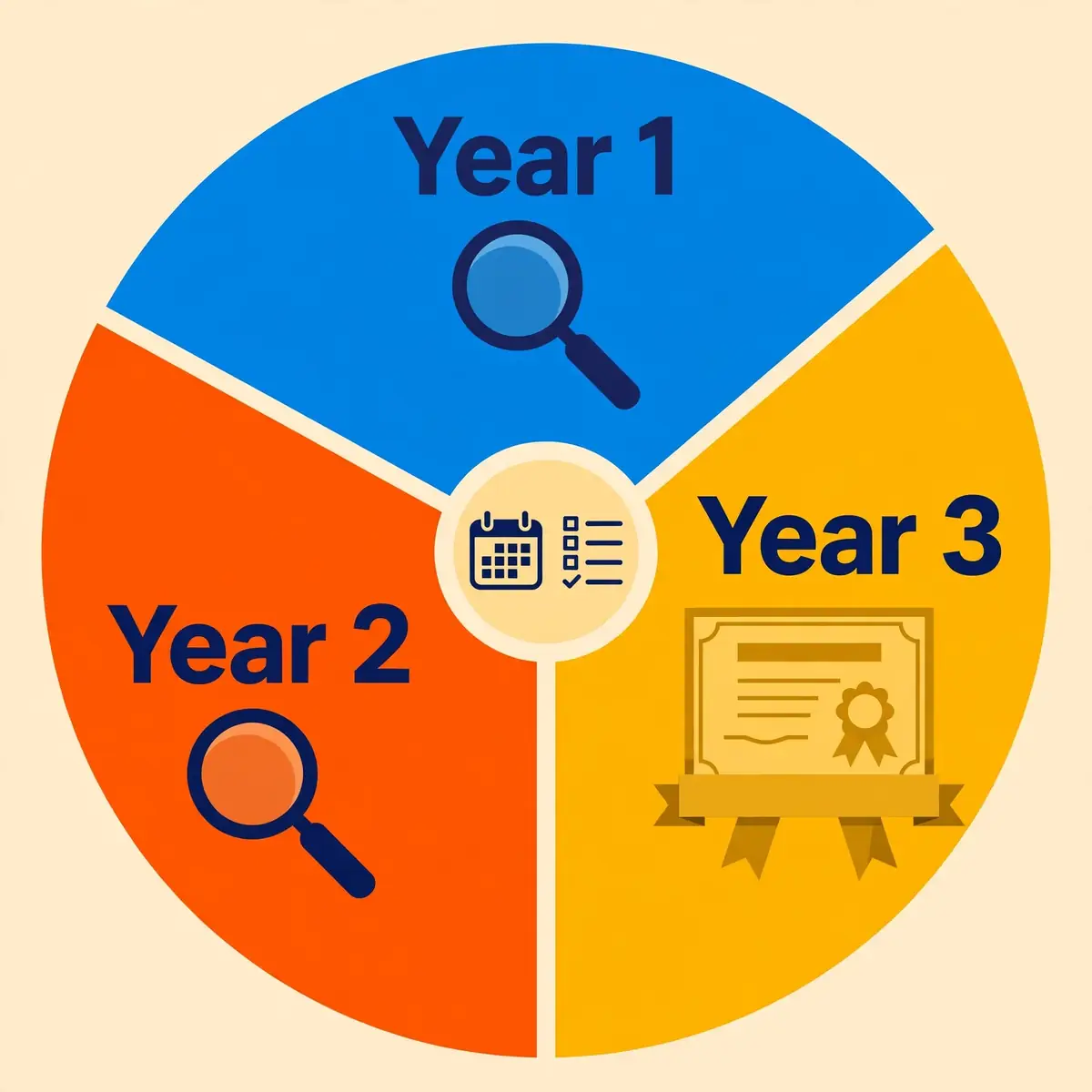
Certification is not a one-time achievement. The system must keep working between audits, or the next visit will find it. The certificate lasts three years, and the certification body checks the system every year in between.
Surveillance audits and recertification
Surveillance audits take place in years one and two, usually one or two days each. They assess continued conformance and progress against improvement objectives, and each visit focuses on different areas. The recertification audit, before the certificate expires, reviews the full system again, in a scope similar to the original Stage 2 audit.
A successful recertification extends the certificate for another three years. A failed surveillance audit can suspend or withdraw the certificate, and a withdrawn certificate must be disclosed to customers who relied on it. The safest way to pass is to treat every month as audit month, not just the month the auditor visits.
Common nonconformities that cost certificates
The same findings appear again and again. Risk assessments that were never updated when a new machine arrived. Contractors who were never inducted. Near misses that were reported and never investigated. Training records that do not match the people doing the work. Each one is a Clause 6, 7, 8 or 10 gap, and each one is preventable.
- Risk assessments not updated after a change in work, equipment or layout.
- Worker consultation that exists on paper but never happened in practice.
- Incident investigations that stop at the immediate cause and never reach the root cause.
- Corrective actions closed without checking whether they worked.
- Legal registers that list the law but were never checked for compliance.
The pattern behind most of them is a system that was built for the audit and then left alone. The standard asks for a system that runs every day, and the surveillance audit is designed to catch the difference. Organisations that keep the system current rarely fail, while those that scramble in the week before the audit usually do.
Frequently Asked Questions
What is ISO 45001 in simple terms?
ISO 45001 is the international standard for managing occupational health and safety as a system. It tells an organisation how to find hazards, control risks, involve workers and keep improving. An independent body can certify that the system meets the standard.
Is ISO 45001 mandatory?
No. Certification is voluntary, and no law requires it. Many tenders and customer contracts ask for it, so organisations often adopt it for commercial reasons rather than legal ones.
How long does ISO 45001 certification take?
Small organisations typically reach Stage 2 in three to six months. Medium-sized ones take six to twelve months, and large multi-site organisations take twelve to twenty-four months. The time depends on how mature the organisation's safety practices already are.
How much does ISO 45001 certification cost?
There is no fixed price. The certification body charges for audit days, scaled to headcount, sites and hazard level, and the larger cost is building and running the system. Quotes from two or three accredited bodies give the only reliable figure.
Can a small business get ISO 45001 certified?
Yes. The standard applies to organisations of all sizes, and the system is scaled to the organisation's actual risks. Small firms with fewer than 50 employees commonly certify in three to six months.
Does ISO 45001 replace OSHA compliance?
No. ISO 45001 is a voluntary international standard, and OSHA is mandatory federal law in the United States. Clause 6.1.3 requires organisations to identify and meet their legal obligations, so certification supports compliance but never substitutes for it.
Will ISO 45001 change in 2027?
A revised edition is expected in 2027, after a draft ballot in 2026, with a transition period of about three years. ISO 45001:2018 with Amendment 1:2024 remains the edition organisations certify against until the new edition is published.