
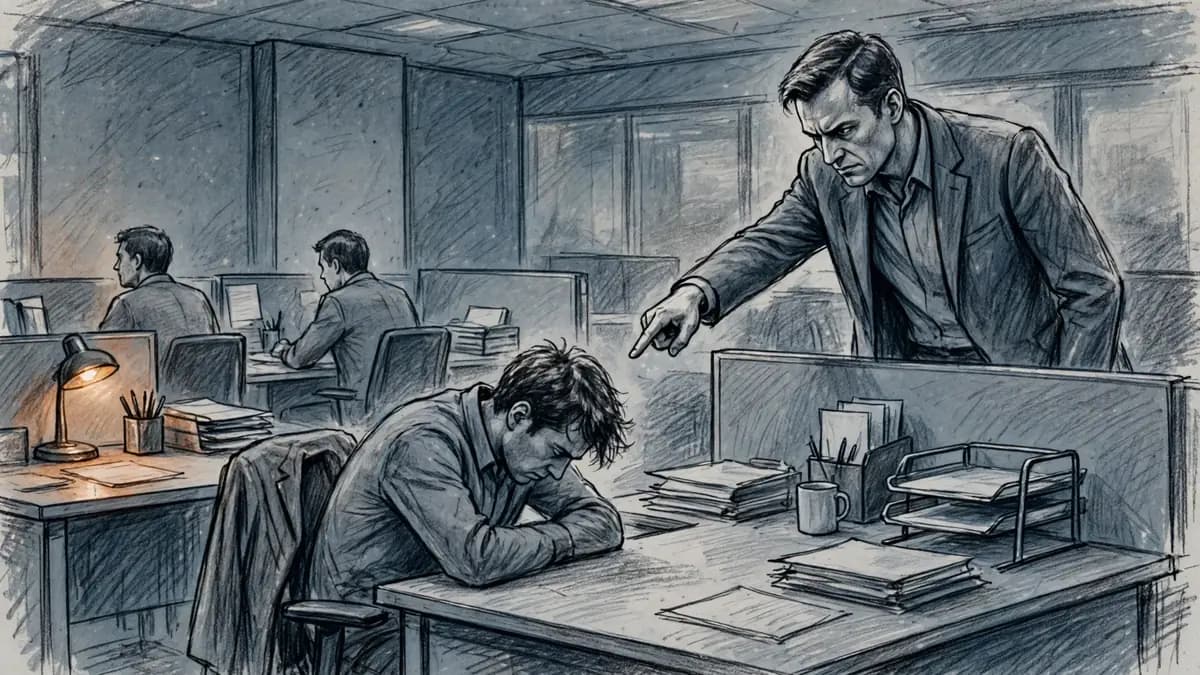
Workplace bullying is repeated, health-harming mistreatment at work. It takes the form of verbal abuse, behaviour that feels threatening, intimidating or humiliating, work sabotage, or a mix of all three. One sharp word on a bad day is not bullying. A pattern that wears a person down, week after week, is.
The signs are often easy to miss. Much bullying happens behind closed doors, in private messages, or through small acts that look harmless on their own. Targets often doubt themselves before they doubt the bully. That doubt is part of the harm, and it is why naming the pattern early matters so much.
Stopping bullying takes more than a quiet word. It takes a clear record, a report through the proper route, and managers who act on what they find. Employers who wait for a formal complaint often wait too long. The steps below work for targets, for witnesses, and for the managers who have to fix it.
What Counts as Workplace Bullying
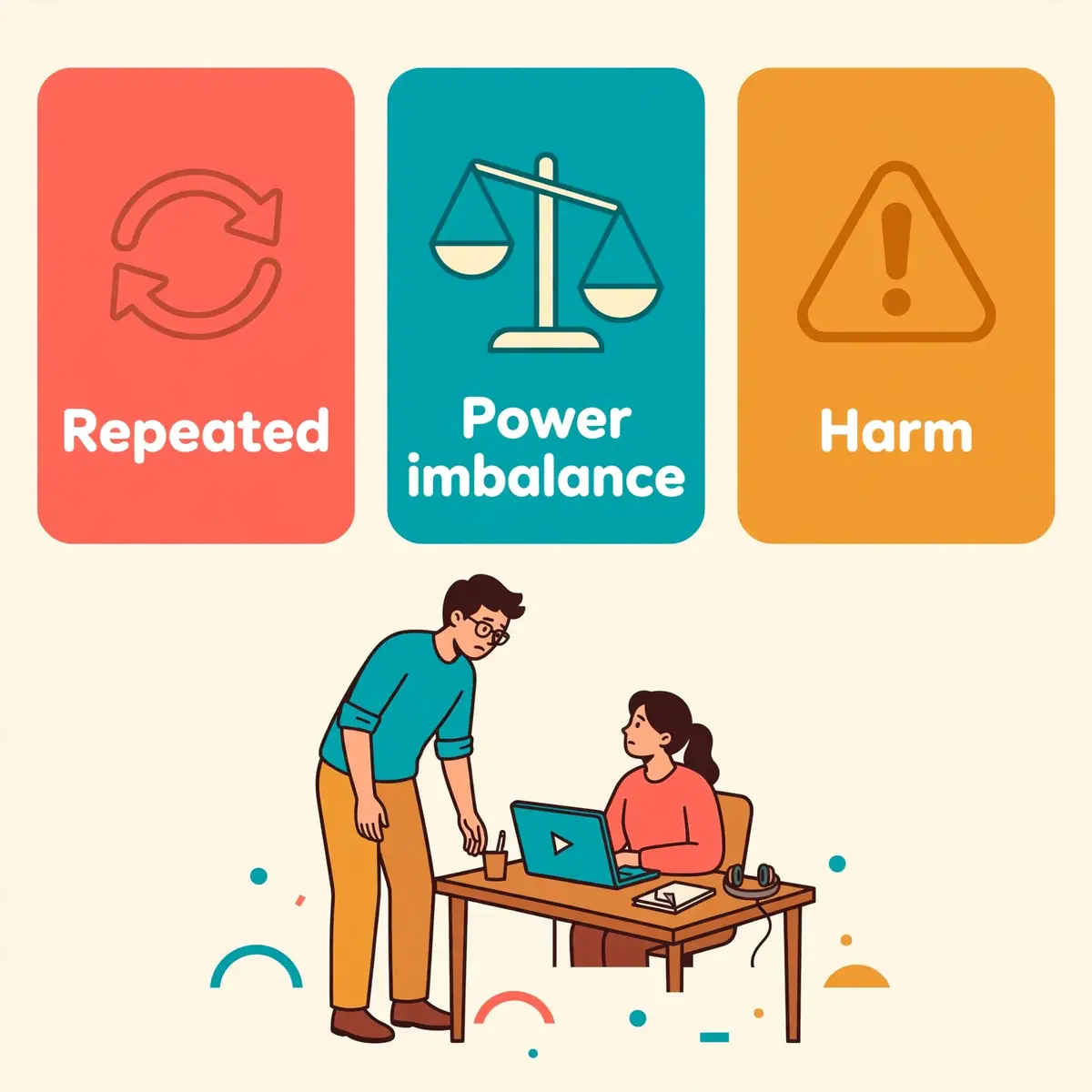
The Workplace Bullying Institute defines bullying as repeated, health-harming mistreatment of an employee by one or more people. It takes the form of verbal abuse, conduct that feels threatening, intimidating or humiliating, work sabotage, or a mix of these. The definition matters because it draws a line. Rudeness is unpleasant. Bullying is a pattern that damages health.
Bullying is also a psychosocial hazard, not just a people problem. It arises from social factors at work, in the same way that noise or dust arises from physical factors. That is why it belongs in a occupational hazard assessment, and why safety teams should treat it with the same seriousness as any other hazard.
The Three Tests for Bullying
Three tests separate bullying from ordinary conflict. First, the behaviour repeats. A single argument, even a heated one, does not meet the test. Bullying is a pattern that continues over weeks or months. Second, there is a power imbalance. The target cannot easily defend themselves, because the other person holds rank, seniority, specialist knowledge or the backing of a group.
Third, the behaviour causes harm. It damages health, confidence or the ability to do the job. All three tests must be present. A manager who sets a hard deadline is not bullying. A manager who sets impossible deadlines, week after week, for one person only, and then mocks the failure, is.
TipJudge the pattern, not the single incident. Write down each event with its date and you will see the pattern clearly.
WHO Bullies, and WHO Gets Targeted
Most bullying runs from the top down. Bosses are the most common perpetrators, and the Workplace Bullying Institute found that pattern in survey after survey. A supervisor controls shifts, appraisals, promotions and references. That control is the power imbalance, and it makes the target's position hard to escape.
Peers bully too, often in groups. A clique can freeze one person out of conversations, decisions and social contact. Subordinates can bully a new manager by withholding information or refusing to cooperate. Anyone can be a target. New starters, apprentices, lone workers and people who speak up about safety are at higher risk, because they have less protection and fewer allies.
Bullying can also come from outside the organisation. Customers, clients and members of the public can shout at, threaten or humiliate staff, and the effect on health is the same. The employer still has a duty to protect the worker. That duty includes clear rules on abusive customers, the right to step away, and a report that is acted on.
Bullying Online and Outside the Office
Bullying does not stop at the office door. It follows people into email, messaging apps, video calls and social media. A humiliating comment in a group chat reaches the whole team at once. A message sent late at night keeps the target awake. Work from home has not removed bullying; it has moved some of it onto screens.
Online bullying leaves a trail, and that trail helps the target. Screenshots, message times and email headers are hard evidence. Save them at once, before they can be deleted or edited. The same record that proves the pattern also proves when each incident happened.
The Signs of Workplace Bullying
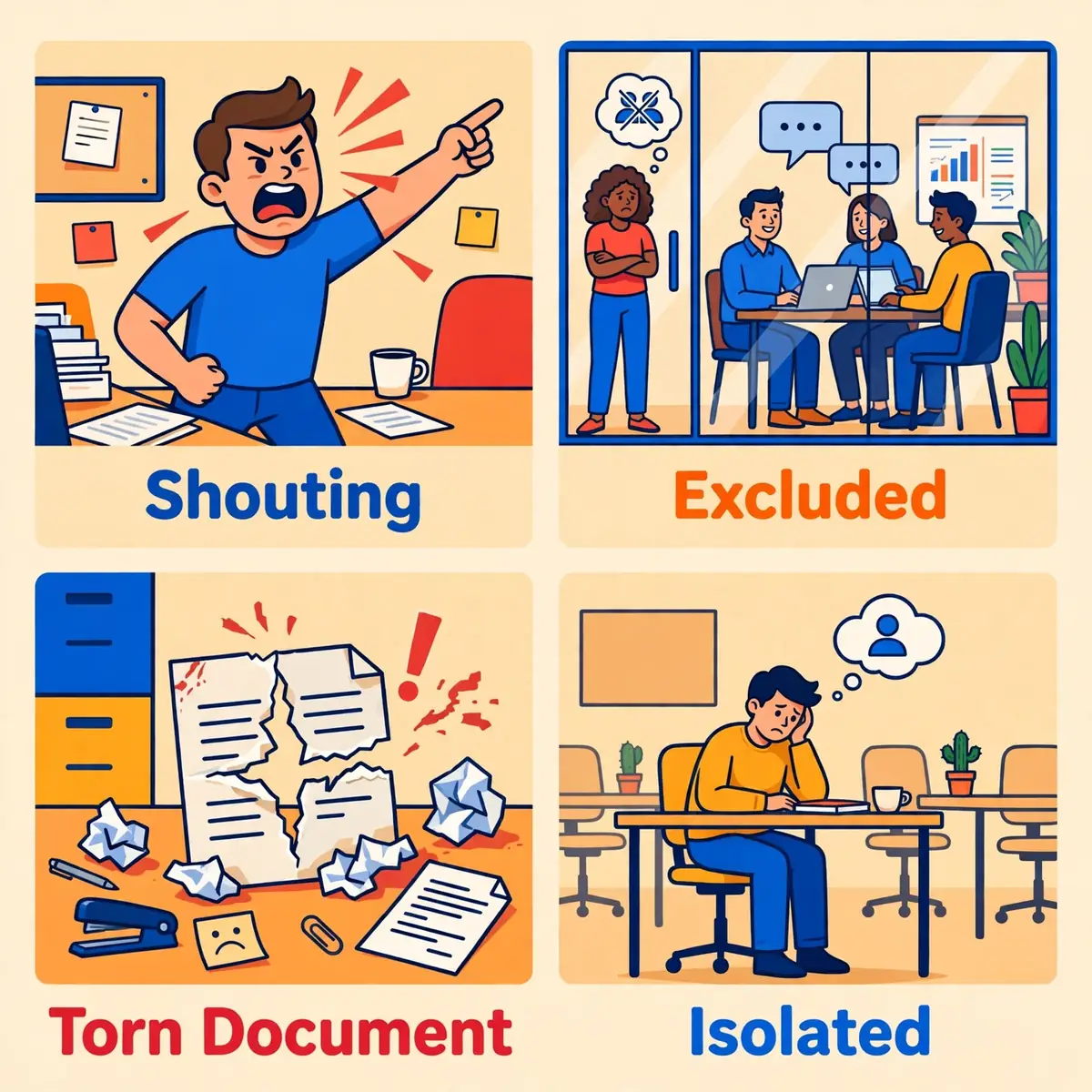
Bullying shows itself in many forms, and the obvious ones are only the start. Shouting and threats are easy to spot. The quieter forms — exclusion, withheld information, impossible deadlines — do as much damage and are harder to prove. Knowing the full range of workplace bullying examples helps targets and witnesses name what is happening.
Watch for change over time. A person who was confident and engaged, and who now dreads Mondays, avoids meetings and stops speaking up, may be telling you something. The signs below fall into four groups. One sign on its own may mean little. Several together, repeated over weeks, mean a lot.
Verbal Bullying
Verbal bullying is the most common form. It includes shouting, insults, sarcasm, snide remarks and personal attacks. It also includes unfair criticism that never stops, however good the work is. The target cannot win, because the criticism is not about the work. It is about power.
Other verbal signs are quieter. A person is talked over in every meeting, or their ideas are dismissed and then repeated by someone else. Rumours spread about them. They are mocked for their accent, their age, their appearance or the way they work. Each remark looks small. Together they form a steady drip of humiliation.
Exclusion and Isolation
Exclusion is bullying by absence. The target is left off meeting invites, email chains and shift plans. They learn about decisions after they are made. Colleagues stop talking to them at lunch, or go silent when they walk in. The message is clear: you do not belong here.
Isolation works because it cuts off support. A person with no allies finds it harder to check whether their treatment is normal. They also find it harder to report, because they fear no one will back them. Managers should treat a sudden change in who gets invited, informed or consulted as a warning sign worth a quiet check.
Work Sabotage
Work sabotage attacks the job itself. Information the target needs is withheld, or the wrong information is given on purpose. Deadlines shift without warning. Work is removed without cause, or piled on until failure is certain. A finished task is criticised in public and then redone by someone else.
Sabotage is easy to hide behind ordinary management. A missed deadline can be blamed on the target. A lost document can be called an accident. The test is the pattern. When the same person keeps losing the same information, or keeps getting the same impossible deadlines, look for the hand behind it.
WarningSabotage often looks like poor performance. Check the record before you judge the worker.
Subtle Signs That Are Easy to Miss
Some bullying is designed to be deniable. The bully "forgets" to pass on a message, then apologises with a smile. They change the subject when the target speaks, or cancel one-to-one meetings again and again. They set a task, then change the requirements halfway through. Each act has a ready excuse.
Gaslighting is the most damaging subtle form. The bully denies what happened, or claims the target is overreacting. Over time the target starts to doubt their own memory and judgement. That doubt is the goal. A written record breaks it, because dates and facts do not change when memory is questioned.
What Bullying is Not
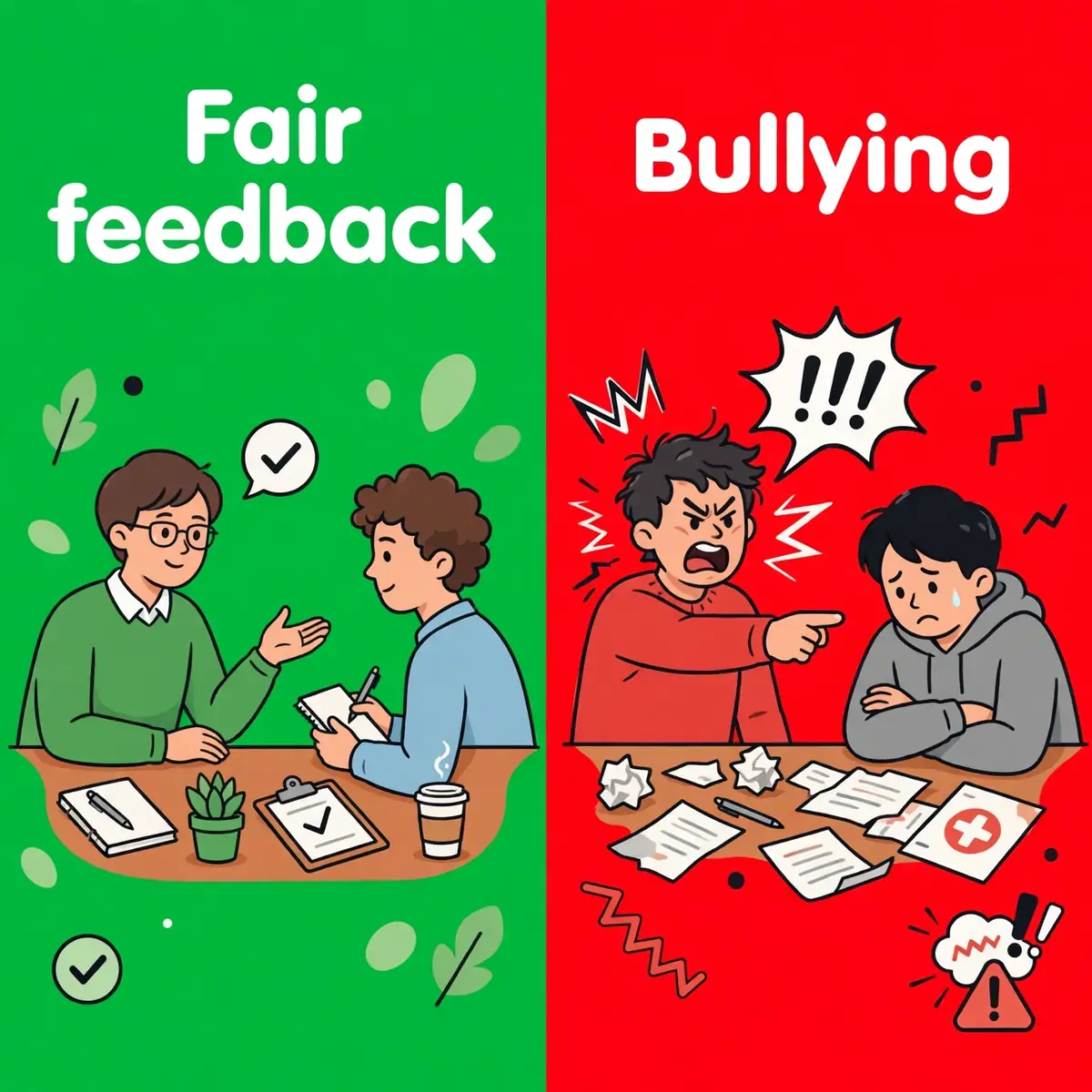
Not every hard moment at work is bullying, and saying so matters. If every firm decision is called bullying, real bullying gets harder to see. Managers must be able to manage. Colleagues must be able to disagree. The line sits in how the behaviour is done, how often it happens, and what it is meant to achieve.
The Canadian Centre for Occupational Health and Safety puts it plainly: reasonable management action, done fairly, is not bullying. A fair appraisal, a lawful instruction, or a change of duties for a real business reason are part of normal work. Bullying is different in intent and in pattern.
Firm Management and Honest Feedback
A manager may set high standards, give critical feedback and hold people to deadlines. None of that is bullying when it is done fairly, in private, and with a clear reason. Feedback that names the work, explains what must change and offers support is management. Feedback that attacks the person, in public, again and again, is not.
The test is the treatment of others. If one worker gets calm, private feedback and another gets shouted at for the same mistake, the difference is the problem. Fair management applies the same standards to everyone. Bullying singles one person out.
Conflict and Disagreement
Two people can disagree strongly without bullying. A heated debate about a design, a rota or a budget is normal work. Both sides speak, both are heard, and the matter ends when the decision is made. Bullying is one-sided. One person holds the power, and the other cannot answer back without risk.
Conflict becomes bullying when it stops being about the work. Personal attacks, threats and exclusion are not part of a disagreement. If the argument follows the person home, repeats the next day, and leaves them afraid to speak, it has crossed the line.
A Single Bad Day
A single rude remark, a lost temper or a thoughtless joke is not bullying on its own. Everyone has bad days. What matters is what happens next. A person who apologises, corrects the behaviour and does not repeat it has not bullied anyone.
But a single serious incident can still need action. A threat of violence, a sexual comment or a public humiliation that leaves a lasting effect should be dealt with at once, even if it happened once. The law and most policies treat very serious single acts as misconduct in their own right.
AlertA single threat of violence is not a pattern, but it is still serious. Report it at once and do not wait for it to happen again.
How Bullying Affects Your Health
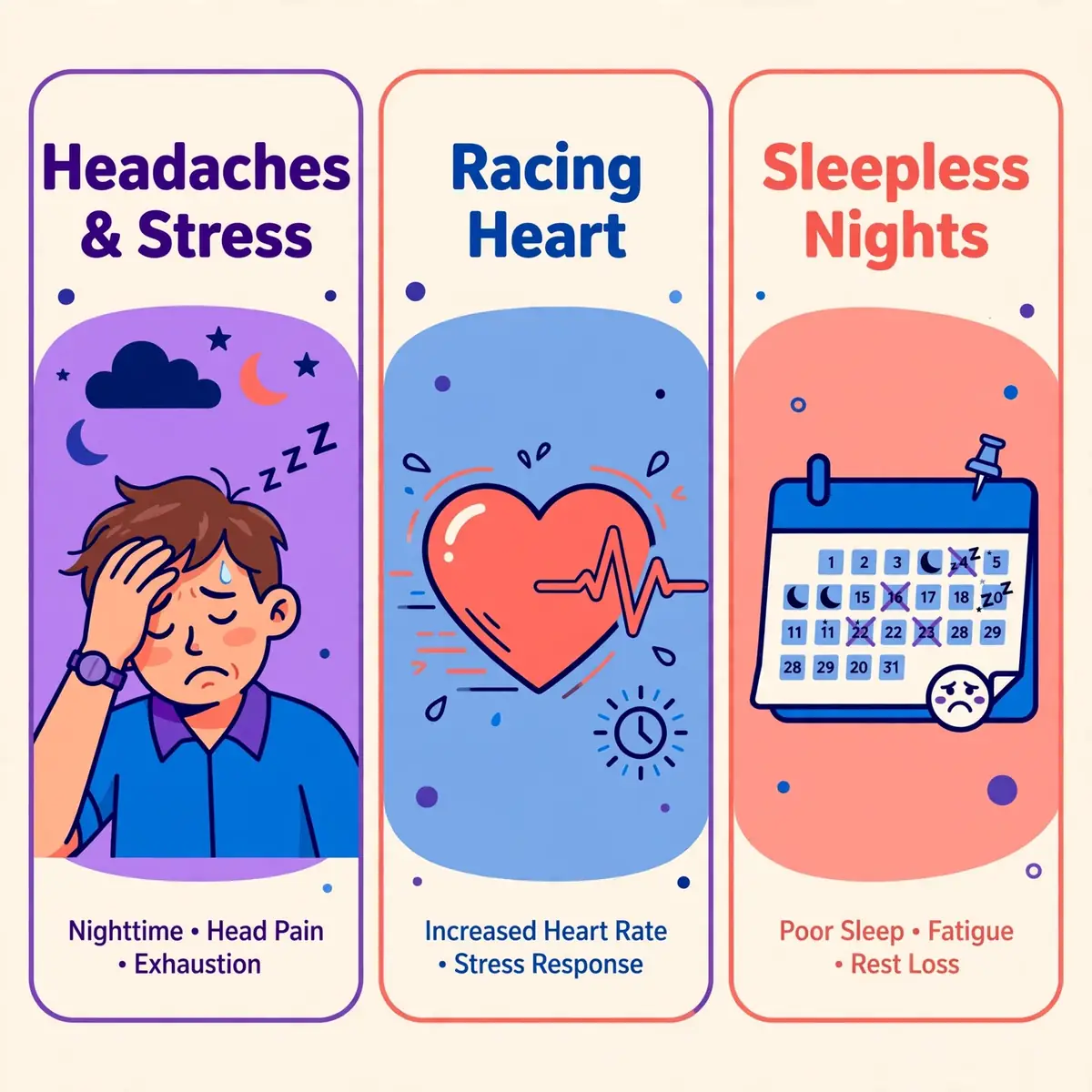
Bullying harms health in the same way as any other workplace hazard. The harm is not only emotional. It shows up in the body, in sleep, in appetite and in the ability to think clearly. The effects often start small and grow. By the time a target seeks help, they may have been coping for months.
The effects do not stop at the office door. Stress carried home affects family, sleep and rest. That is why bullying is a health and safety issue, not a personality clash. Employers have a duty of care, and the harm is the evidence that the duty matters.
Mental Health Effects
Targets of bullying commonly report stress, anxiety, low mood and a loss of confidence. They may feel shame, anger, confusion and helplessness, often all at once. Some develop depression or anxiety that needs professional care. The Canadian Centre for Occupational Health and Safety lists shock, frustration, a sense of vulnerability and loss of confidence among the first reactions.
Over time the damage deepens. A person who is mocked every day starts to believe the mockery. They stop trusting their own judgement. They may withdraw from friends and family, and dread going to work. Research cited by Verywell Mind found that victims of bullying, and those who witness it, are more likely to be prescribed medicines such as antidepressants, tranquillisers and sleeping pills.
Physical Health Effects
The body keeps the score. Targets report headaches, muscle tension, stomach pains, high blood pressure and changes in appetite. Sleep is often the first thing to break: trouble falling asleep, waking in the night, or dreading the morning. Poor sleep then makes the next day harder, and the cycle tightens.
These are not minor complaints. High blood pressure, ulcers and panic attacks are all listed among the health risks of bullying. A person who is unwell cannot work safely. On a site or in a plant, a tired and distracted worker is a risk to themselves and to others. That is one more reason bullying belongs on the safety agenda.
Effects on Confidence and Thinking
Bullying attacks the way a person thinks. Targets report trouble concentrating, trouble making decisions and trouble remembering routine tasks. They spend work time avoiding the bully, rehearsing conversations, and worrying about the next incident. That mental load leaves less room for the job itself.
Confidence falls fastest when the bullying is subtle. A person who is excluded or undermined may not know why they feel small. They may blame themselves. Naming the pattern restores a measure of control, because the problem moves from inside the person to outside them, where it can be dealt with.
TipIf sleep, appetite or mood have changed since the behaviour started, note the dates. Health changes are strong evidence of harm.
How Bullying Affects Work and the Wider Team
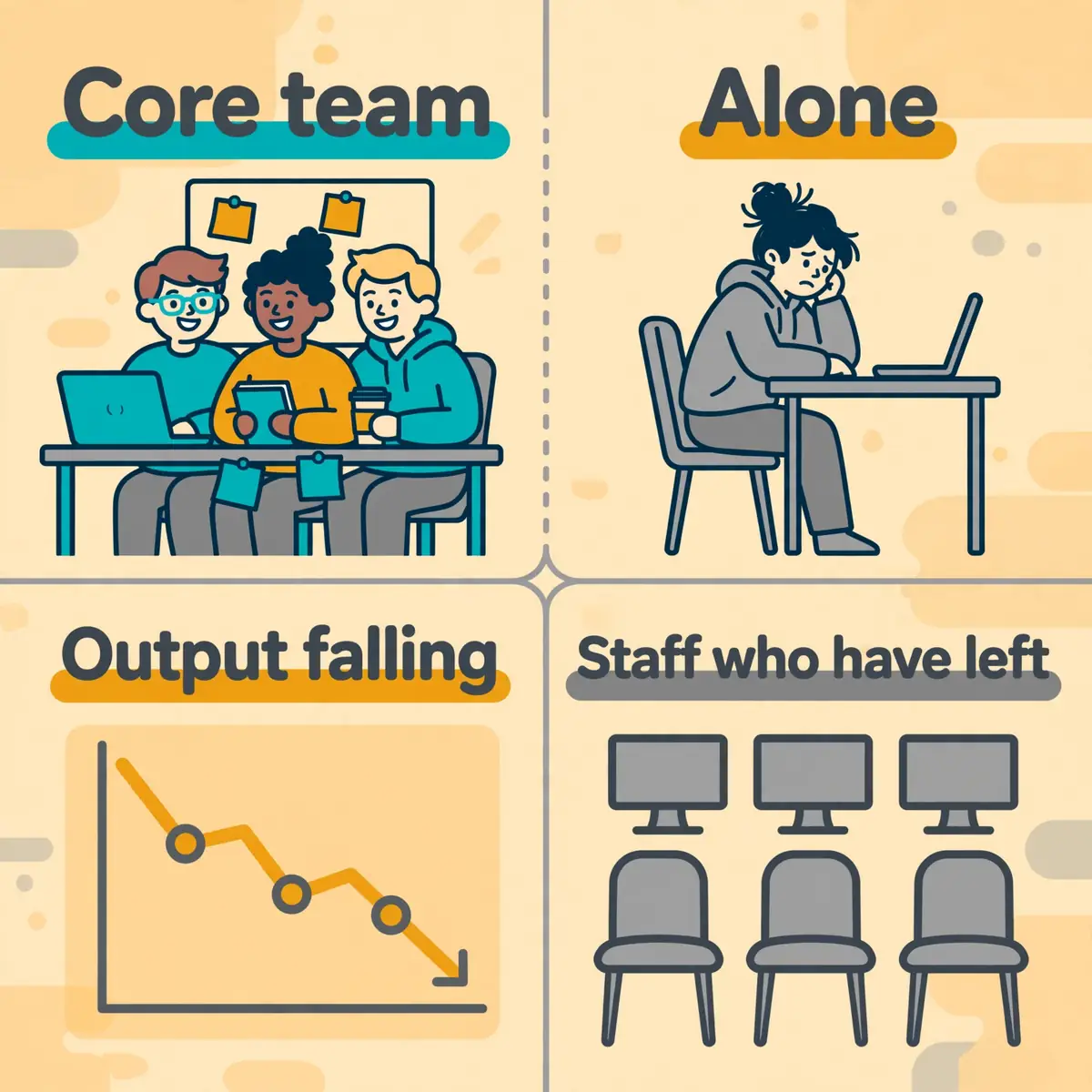
Bullying costs the target their performance before it costs the employer anything visible. Concentration drops, mistakes rise, and the target avoids the tasks, meetings and people where the bully operates. Good workers start doing safe, small work instead of the work they are best at.
The damage spreads. Witnesses lose trust in the team and in management. Some leave. Others stay quiet and do less. The organisation pays in absence, turnover, recruitment and training, and in the loss of people who were doing good work. Bullying is expensive, and the bill arrives slowly.
Performance and Absence
A bullied worker cannot perform at their best. The mental discomfort alone reduces output, and the time lost to avoidance, rumination and self-defence adds to it. Targets take more sick leave, arrive late, or leave early to avoid the bully. Some ask for a transfer. Some resign.
Absence is often the first hard number a manager sees. A team with high absence and high turnover, while its output holds, is a classic signal of bullying. The output holds because the remaining staff cover the gaps. The cost shows up later, in burnout and resignations.
Effects on Witnesses
Witnesses are not bystanders in the harmless sense. They watch a colleague being humiliated and wonder whether they are next. That fear changes how they work. They stop raising concerns, stop challenging bad decisions, and stop helping the target in case they become a target too.
The health effects reach witnesses as well. The Workplace Bullying Institute found that 19% of adult Americans had witnessed bullying at work, and research shows witnesses share some of the same health risks as targets. A team that watches bullying and does nothing learns that speaking up is unsafe.
Effects on the Organisation
For the employer, bullying means a hostile environment, lower morale, more sick leave, more health claims and more staff turnover. Recruitment and training costs rise as people leave. The risk of legal action rises too, especially where the bullying touches a protected characteristic. Reputation suffers when word gets out, and in a small industry word always gets out.
There is also a safety cost. A workforce that fears speaking up will not report hazards, near misses or faulty equipment. Silence is the most dangerous side effect of bullying, because it hides the next accident. Stopping bullying is, in that sense, a safety control.
How Common is Workplace Bullying
Workplace bullying is common, and it is under-reported. Targets often stay silent because they fear retaliation, doubt they will be believed, or believe nothing will change. The numbers below come from the largest surveys, and they agree on one point: in any sizeable workforce, bullying is happening now.
Survey figures vary because surveys ask the question in different ways. Some ask people to label themselves as bullied. Others list behaviours and count who experienced them. The second method finds more cases, because many targets do not use the word bullying for what happened to them.
The United States Figures
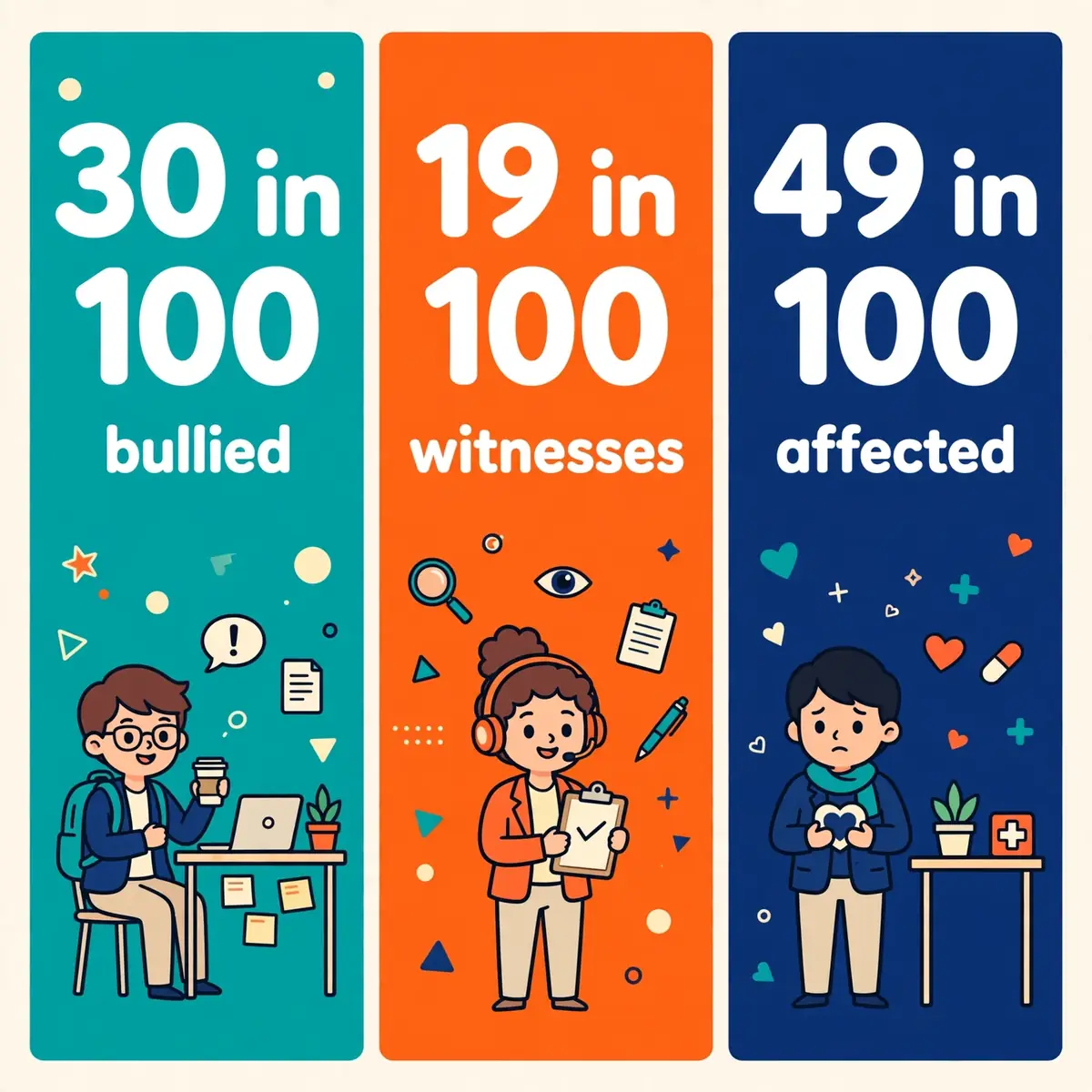
The Workplace Bullying Institute ran its fifth national survey in January 2021, with Zogby Analytics and a representative sample of 1,215 adults. It found that 30% of adult Americans had directly experienced abusive conduct at work, and a further 19% had witnessed it. Together, 49% of adults were affected. Among employed Americans the figures were higher: 39% had suffered abusive conduct, 22% had witnessed it, and 61% were affected.
The same survey found that 73% of employed Americans were aware that bullying happens at work. Awareness is high and reporting is low. That gap is the problem. Most people know bullying exists. Far fewer believe their employer will act on it.
The Wider Picture
Medical News Today cites worldwide studies showing that about 15% of workers experience workplace bullying, with the highest rates in the public sector — education, health and social care, and public administration. The figure is lower than the United States survey figures, because it counts people who label themselves as bullied, which is the stricter test.
Remote work has not removed the risk. Bullying now arrives by email, chat and video call, and remote workers report it too. Distance does not protect a target. It only changes the channel.
AlertIn any team of twenty people, the survey figures suggest several have been bullied or have watched it happen. Assume it is present until the evidence says otherwise.
Why So Few Cases Are Reported
Targets stay silent for good reasons. They fear losing their job, their shifts or their reference. They fear the bully will hear about the report and make things worse. They fear being labelled as difficult, or being told the problem is their performance. In the 2021 survey, targets reported a high chance of losing their job when they were bullied.
Under-reporting also comes from the top. Many employers have no clear route for reporting bullying, or they route it through the very manager who is doing the bullying. A report that goes nowhere teaches the whole team that reporting is pointless. Fixing the route is the first step to fixing the numbers.
What the Law Says About Bullying
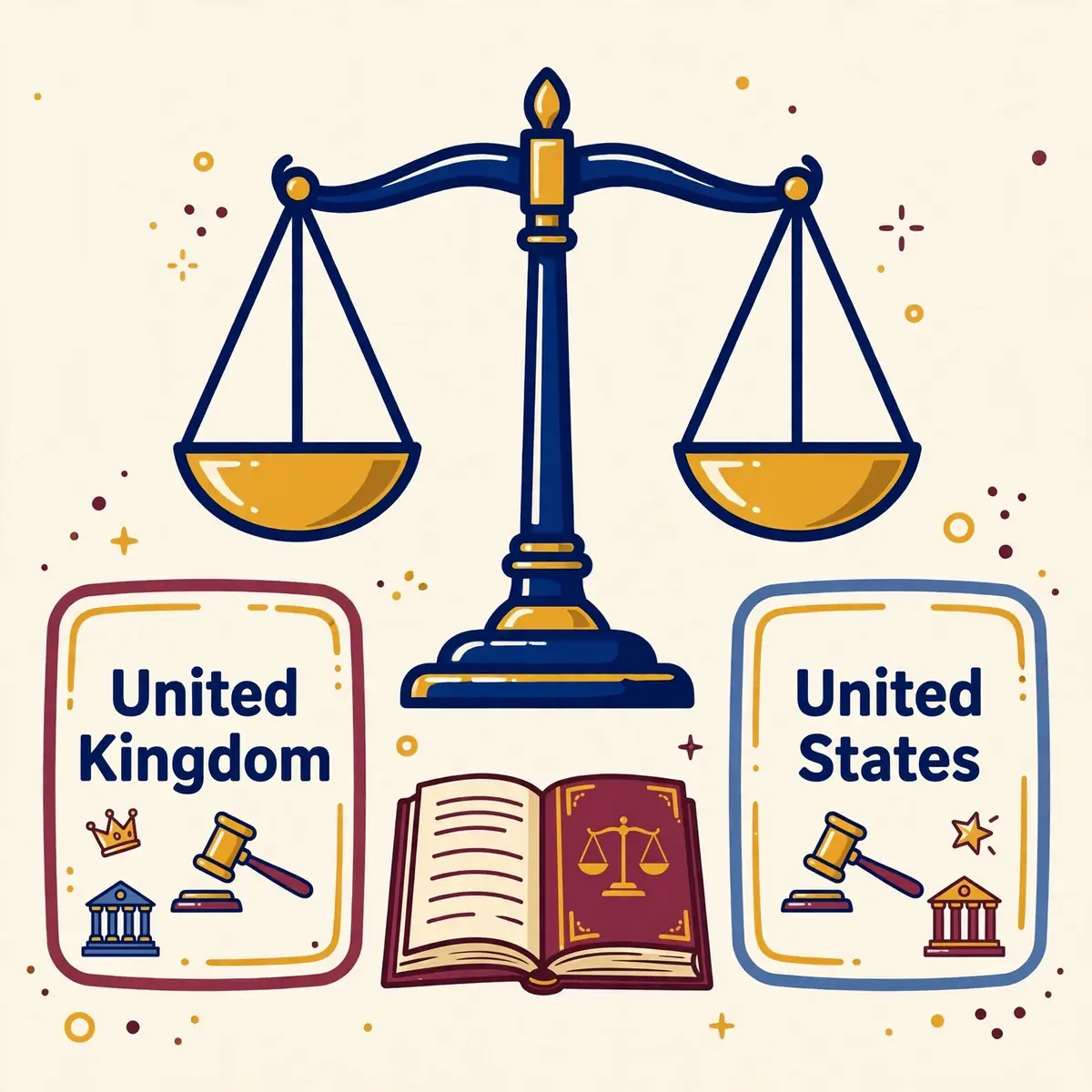
The law on bullying depends on where you work, and the differences matter. In some places bullying is unlawful in its own right. In others it is only unlawful when it crosses into harassment or another legal wrong. Knowing which side of the line you are on decides what remedy is available.
The practical point is the same everywhere. An employer has a duty to provide a safe workplace, and that duty covers mental health as well as physical health. A policy is not a favour. It is part of that duty.
The United Kingdom
In the United Kingdom, bullying itself is not against the law, but harassment is. GOV.UK states this plainly: "Bullying itself is not against the law, but harassment is." Harassment is unlawful under the Equality Act 2010 when it relates to a protected characteristic, such as race, sex, disability, age, religion or sexual orientation.
Other laws can still apply. Repeated harassment can be an offence under the Protection from Harassment Act 1997. An employer that ignores complaints may face a constructive dismissal claim under the Employment Rights Act 1996. The Health and Safety Executive is not the body that investigates bullying; it refers cases to Acas (the Advisory, Conciliation and Arbitration Service), to the Equality and Human Rights Commission where a protected characteristic is engaged, and to the police for violence.
The United States
In the United States there is no federal law against bullying on its own. Bullying becomes actionable under federal law only when it is tied to a protected category, such as race or sex, under Title VII of the Civil Rights Act of 1964. That is the line drawn in workplace harassment law, and it leaves a large gap.
Some states have tried to close the gap. Tennessee's Healthy Workplace Act covers public employers, and California has required supervisor training on abusive conduct since 2015. No state has yet passed a general Healthy Workplace Bill giving bullied workers a private right of action. Employers can still act: a civility policy can ban behaviour the law does not reach.
Canada and the International Picture
In Canada, occupational health and safety law includes a duty of due diligence: employers must take all reasonable precautions to prevent injuries and incidents. The Canadian Centre for Occupational Health and Safety notes that harassment and violence laws in each jurisdiction describe the roles of workplace parties, and definitions of harassment and violence often include bullying by name, or imply it.
Internationally, ISO 45003:2021 gives guidance on managing psychosocial risk, including bullying, harassment and victimisation, within an occupational health and safety management system based on ISO 45001. It is guidance, not a certifiable standard, but it puts bullying on the same footing as any other workplace hazard. The International Labour Organization's Convention 190, on violence and harassment in the world of work, points the same way.
WarningLegal advice is not a substitute for action at work. If the behaviour may be unlawful, get advice early, before memories fade and records disappear.
What to Do If You Are Being Bullied
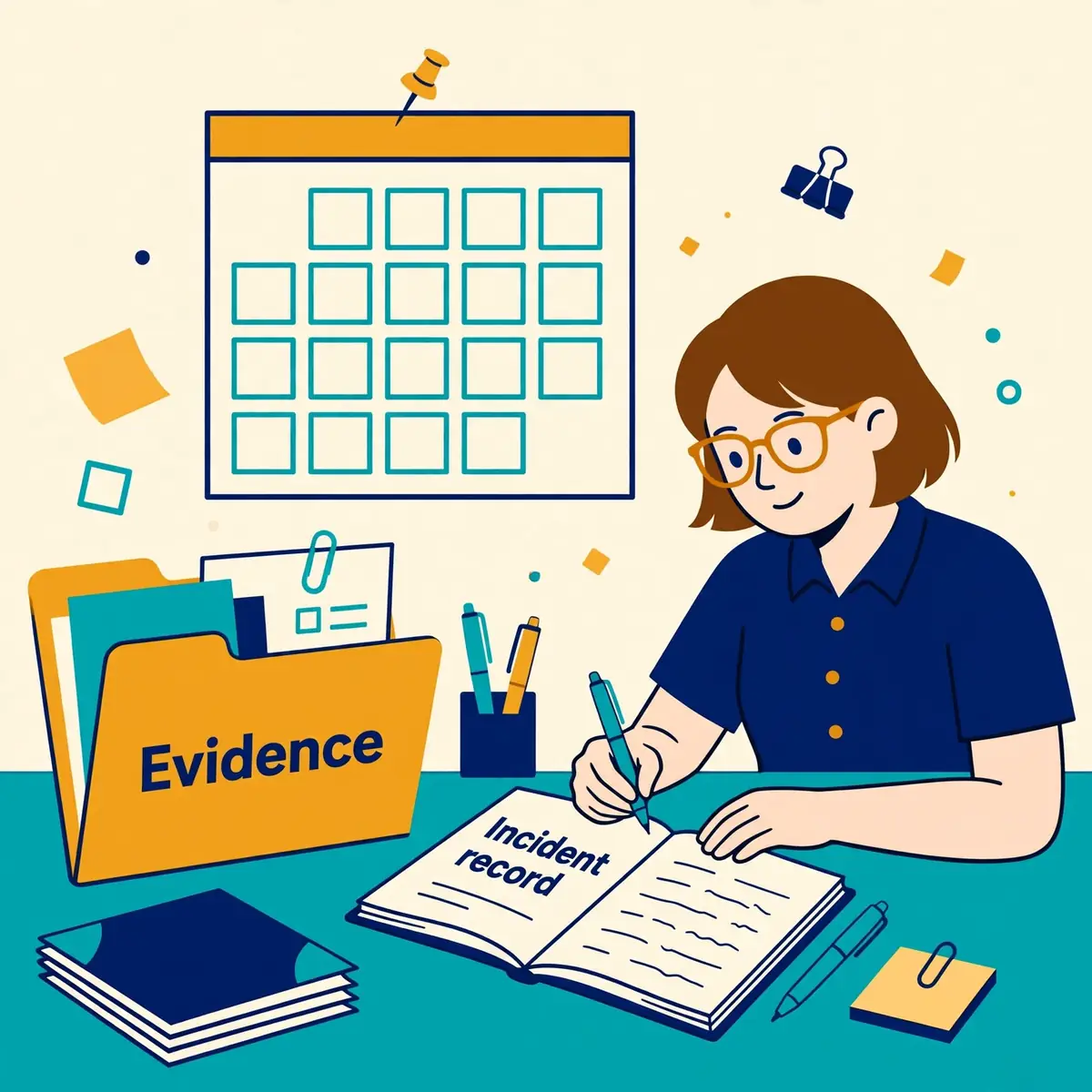
If you are being bullied, the first step is to name it. That sounds simple, and it is hard. Targets often blame themselves first. A written record changes that. It turns a feeling into facts, and facts are what managers, HR and, if needed, a tribunal will ask for.
Do not try to win the argument in the moment. Stay calm, stay professional, and do not retaliate. Retaliation gives the bully something to report about you. The steps below are in order, and each one makes the next one stronger.
Keep a Record from Day One
Start a private log at once. For each incident write down the date, the time, the place, what was said or done in the bully's own words, and who else was present. Keep emails, messages and screenshots. Note how each incident affected your health, your sleep or your work. Store the log outside work, where no one else can reach it.
A good record has a pattern a stranger can see. Dates show repetition. Witness names show it was not private. Health notes show harm. Acas advises employees to keep a record of what happened, and the Workplace Bullying Institute gives the same advice. A log is the single most useful thing a target can do.
Set a Boundary, Once, Clearly
If it is safe to do so, tell the person plainly that the behaviour is not acceptable. Use short, factual language. Name the behaviour, not the person: "When you shout at me in the meeting, I cannot do my job. Stop." Say what you will do if it happens again, such as raising it with your manager. Then follow through.
Do not get drawn into a debate about whether it was bullying. You do not need the bully to agree. You need the behaviour to stop, and you need a record that you asked. If the person is your manager, or if speaking to them feels unsafe, skip this step and go straight to reporting.
Report It Through the Proper Route
Check the staff handbook for the reporting route, and follow it. In the United Kingdom, GOV.UK advises employees to try to sort the problem out informally first. If that does not work, talk to a manager, the human resources department or a trade union representative. If that fails, make a formal complaint under the grievance procedure.
If your manager is the bully, report above them, or to HR directly. Put the complaint in writing, attach the log, and keep a copy. Ask for a written acknowledgement and a date for the next step. If the employer does nothing, Acas offers free, confidential advice on the helpline 0300 123 1100, and in the United States an employee assistance programme or an employment lawyer can advise on the next step.
TipReport in writing, not only in conversation. A spoken complaint can be forgotten or denied. A written one has a date.
Look After Your Health
Bullying harms health, so protecting health is part of the response. Talk to your doctor if sleep, appetite or mood have changed. Use the employee assistance programme if one exists. Tell a trusted person outside work what is happening, so the secret does not sit only with you.
Do not make big decisions while the bullying is at its worst. Leaving the job may be the right choice in the end, but it should be a choice, not a flight. Get advice first, keep the record, and let the employer carry the cost of the behaviour, not you.
What to Do If You See a Colleague Being Bullied
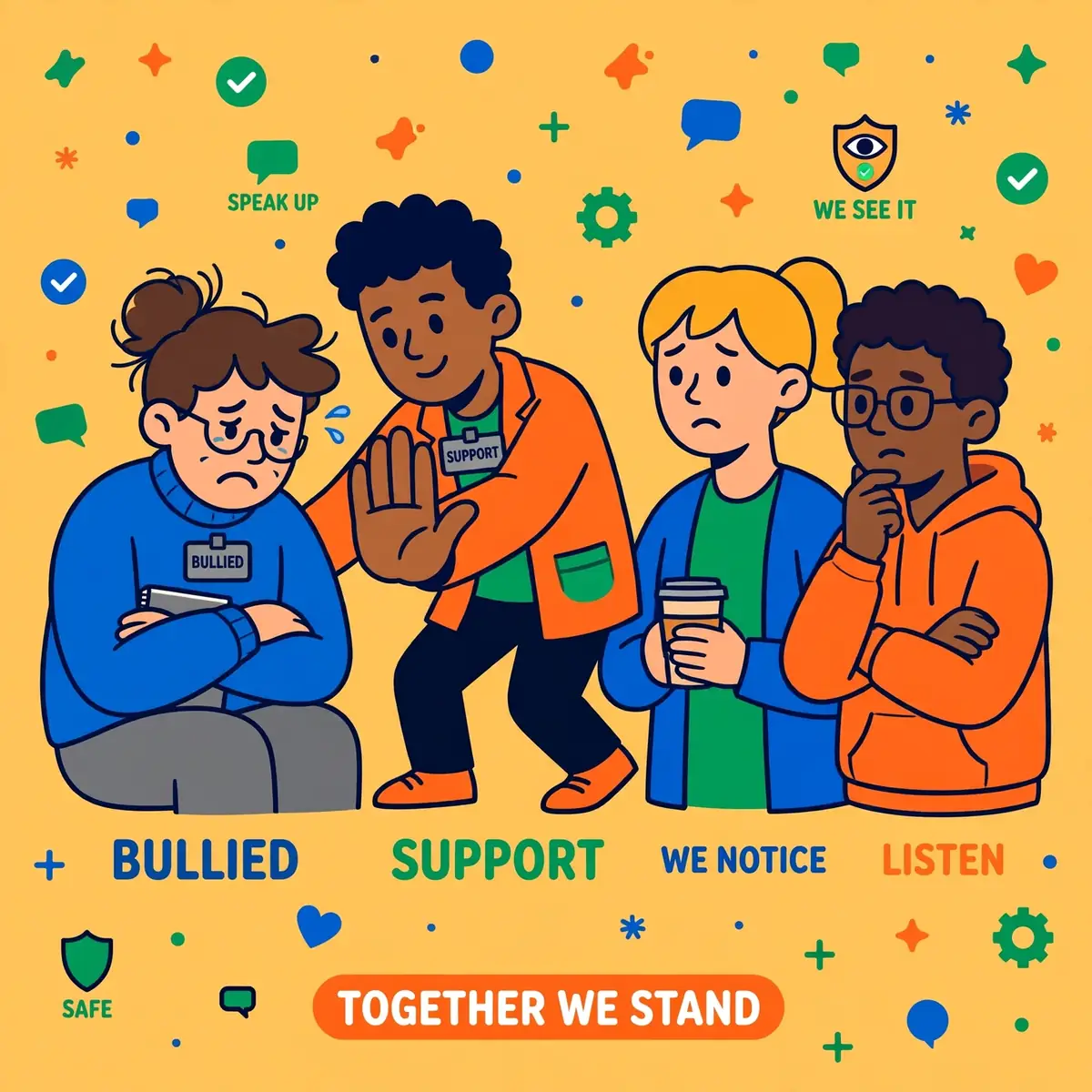
Witnesses matter more than they think. Most bullying happens in front of someone, and the bully counts on silence. A witness who speaks up changes the maths. The target is no longer alone, and the bully can no longer claim that no one saw it.
Speaking up does not mean starting a fight. Small, calm actions work best. The goal is to support the target, interrupt the behaviour, and make sure the incident is recorded. What you do in the first minute often decides what happens next.
Support the Target in Private
Talk to the target away from the bully. Tell them what you saw, in plain words. Ask how they are, and whether they want help. Many targets doubt themselves, and hearing "I saw it too" is often the moment the pattern becomes real to them.
Offer practical help, not just sympathy. Offer to be a witness, to help write the record, or to go with them when they report. Do not promise what you cannot do, and do not act without their agreement. The target decides how far the matter goes.
Interrupt the Behaviour Safely
If it is safe, interrupt the incident in the moment. A calm sentence works: "That is not how we speak to each other here." Or redirect the meeting: "Let us get back to the agenda." You do not need to accuse anyone. You need to break the moment and show the room that the behaviour is noticed.
Do not put yourself at risk. If the bully is aggressive, or if you could lose your own job, step back and report instead. A witness statement written the same day is worth as much as an interruption, and it carries less risk.
Report What You Saw
Witnesses can report, and they should. Write down what you saw, with the date, time, place and exact words, and give it to the target or to HR. A report from a witness is hard to dismiss, because it does not come from the person with the complaint.
If your workplace has a confidential reporting route, use it. If it does not, say so to a manager. A reporting route that witnesses will not use is a route that does not work, and fixing it is a management job.
WarningSilence is not neutral. A team that watches bullying and says nothing teaches the bully that the behaviour is accepted.
What Managers and Employers Must Do
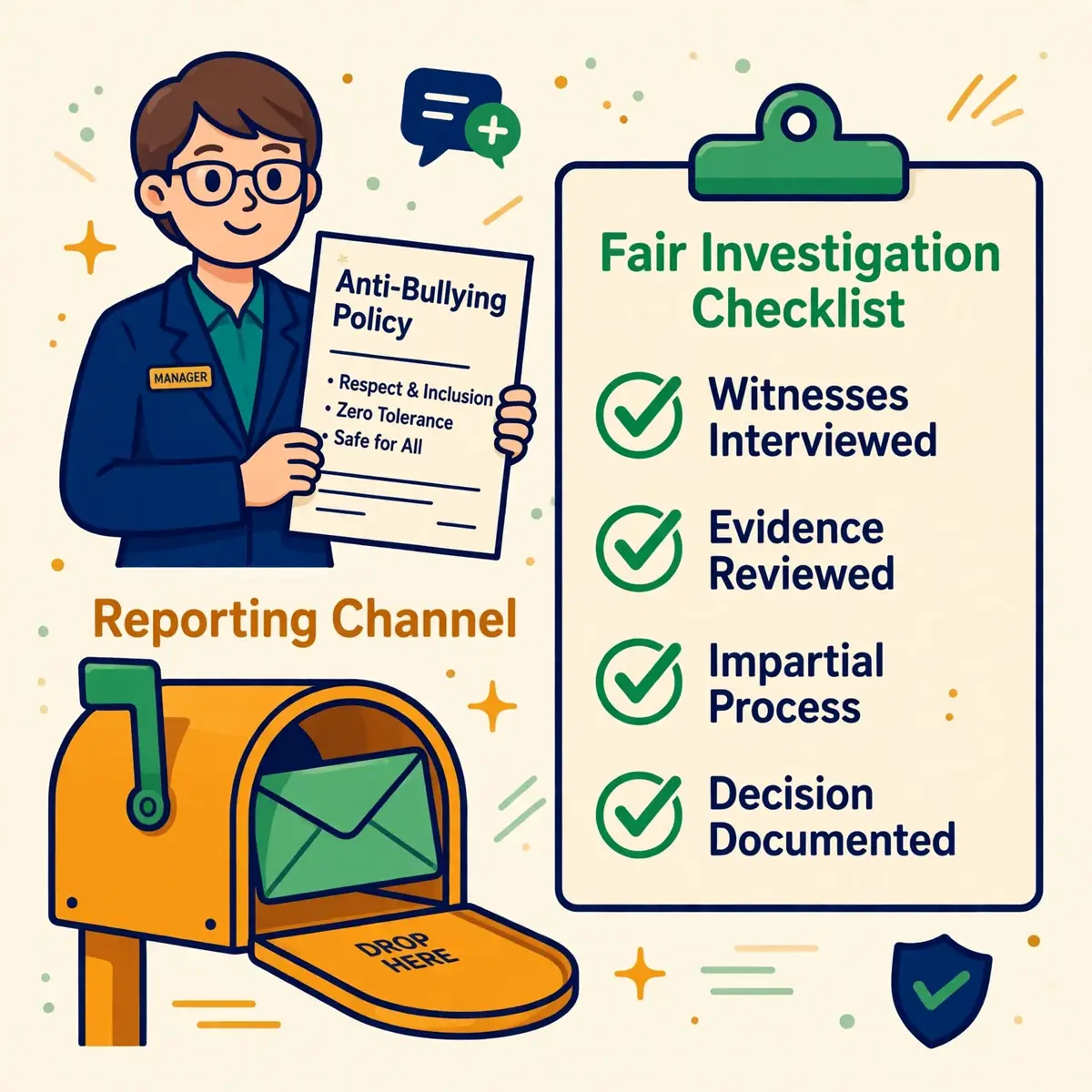
Employers own the problem. A policy that sits in a drawer does not stop bullying. Managers who look away do not stop it either. Stopping bullying is a management task, with the same discipline as any other safety task: define it, measure it, act on it, and check that the action worked.
Employers also carry the legal risk. In the United Kingdom they are responsible for preventing bullying and harassment and can be liable for harassment their employees suffer. In the United States, the Society for Human Resource Management (SHRM) notes that experts recommend a bullying policy even though the law does not require one. Good practice is the same in both places: act early, act fairly, and write it down.
Write a Policy People Can Use
A bullying policy should define bullying in plain words, give examples, and set out the reporting route. It should name who handles a complaint, how long each stage takes, and what happens to the person found to have bullied. SHRM recommends exactly this: a definition, examples of behaviour, and a reporting procedure, with a list of the behaviour the employer wants to see.
Keep the policy short and easy to find. A ten-page document no one reads is worse than useless, because it lets managers claim the problem was handled. Test the policy by asking a new starter where to report bullying. If they cannot answer, the policy has failed.
Investigate Fairly and Act Promptly
Every report deserves a prompt, impartial investigation. Acas advises managers to take any complaint seriously and look into it as soon as possible. Interview the target, the witnesses and the accused separately. Judge the pattern, not the reputation of either side. Do not force the target into mediation with the bully; mediation assumes equal power, and bullying removes it.
Act on what the investigation finds. That may mean training, a formal warning, a move to another team, or dismissal for serious cases. Tell the target what happened, in writing, and check back with them after a month to make sure the behaviour has stopped and no retaliation has followed. A case is not closed until the follow-up is done.
Treat Bullying as a Safety Hazard
Bullying is a psychosocial hazard, and it belongs in the risk assessment. ISO 45003:2021 gives guidance on managing psychosocial risk within a system based on ISO 45001, and ISO 45001 clause 6.1.2.1 already requires hazard identification to consider social factors, naming bullying among them. A management system with no bullying exposure in its risk assessment has a gap, not a judgement call.
Measure the hazard like any other. Anonymous surveys, absence and turnover data by team, and exit interviews all show where bullying sits. The Health and Safety Executive advises treating even a small number of reports seriously, because a single report can point to a team-wide problem. Review the data with senior managers, and put the findings in front of the board.
AlertNever route a complaint through the manager accused of bullying. The target will not report, and the report will not be believed.
How to Stop Bullying for Good
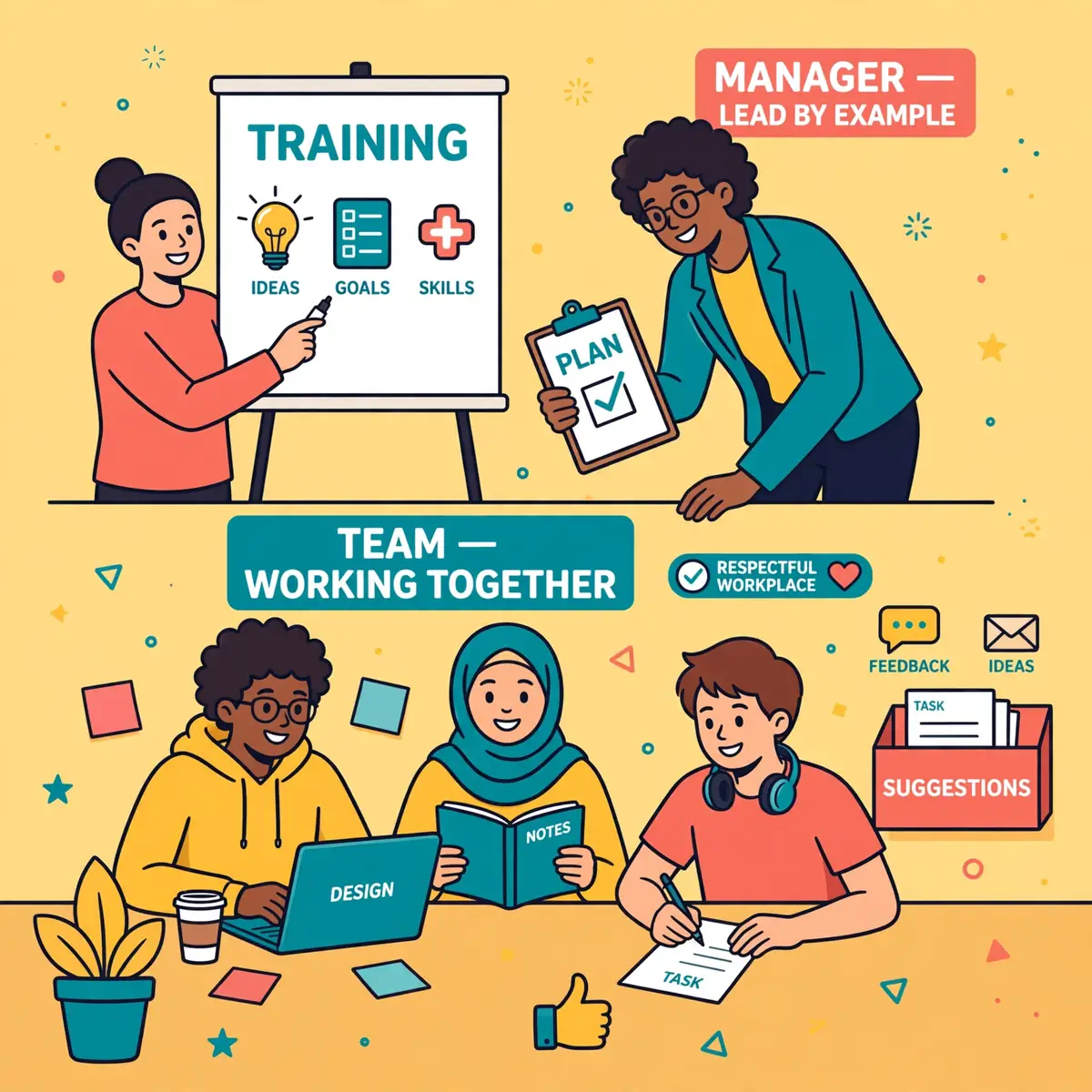
Stopping one case is not stopping bullying. Prevention means changing the conditions that let bullying grow: unclear expectations, unchecked power, weak reporting routes and leaders who model the wrong behaviour. The work is slow, and it is the only approach that lasts.
Prevention is also cheaper than intervention. Verywell Mind makes the point directly: it is always in the employer's interest to confront bullying early, because prevention costs less than dealing with the damage. The steps below work in any size of organisation.
Train Everyone, Starting at the Top
Training should teach people to recognise bullying, including the subtle forms, and to know the reporting route. Managers need extra training, because most bullying comes from bosses. They must learn what fair management looks like, how to give critical feedback without humiliation, and how to handle a complaint without taking sides.
Training only works if leaders follow it. A manager who shouts in meetings while the policy says otherwise teaches the team that the policy is a fiction. OSHA training sets the same principle for safety: the standard is what leaders do, not what the poster says.
Build the Controls in Hierarchy Order
Prevention works best as a set of controls, in the same order as any safety control. The hierarchy of controls starts with the strongest measures: remove the hazard where possible, then engineer it out, then set rules, and only then rely on personal behaviour. For bullying, the strongest controls are structural.
Structural controls include clear job roles, fair workload and deadlines, transparent promotion and appraisal rules, and a reporting route that does not pass through the accused. Administrative controls include the policy, training and regular surveys. The weakest control is asking targets to be resilient. Resilience is not a control.
Measure, Review and Keep Going
Run an anonymous survey at least once a year, and ask directly about bullying. Track absence, turnover and grievances by team, and look for clusters. Review the policy every year, and after every serious case. Publish the results inside the organisation, so staff can see that reports lead to action.
Leadership sets the tone. Senior managers should state plainly that bullying is not accepted, and then act when a senior person is the problem. Nothing kills a policy faster than a rule that stops at the top. A respectful workplace is built by what leaders do when the bully is one of their own.
TipReview the policy after every serious case. Each case teaches something about the route, and the route should improve each time.
Frequently Asked Questions
What is the Difference Between Bullying and Harassment?
Bullying is repeated, health-harming mistreatment, such as verbal abuse, intimidation, humiliation or work sabotage. Harassment is unwanted conduct tied to a protected characteristic, such as race, sex, disability or age, and it is unlawful under the Equality Act 2010 in the United Kingdom and under Title VII in the United States. Bullying becomes harassment when it relates to a protected characteristic.
Is Workplace Bullying Illegal?
It depends on where you work. In the United Kingdom, bullying itself is not against the law, but harassment is, and other laws can apply, such as the Protection from Harassment Act 1997. In the United States, no federal law bans bullying on its own; it is only unlawful when tied to a protected category. In both places, employers still have a duty to provide a safe workplace.
What Are the First Signs of Workplace Bullying?
Early signs include being shouted at or criticised unfairly, being left out of meetings and decisions, having information withheld, getting impossible deadlines, and having work sabotaged or taken away. Subtle signs include being talked over, having ideas dismissed and then repeated by someone else, and having responsibilities changed without reason. A pattern over weeks is the key test.
How Do I Report Workplace Bullying?
Keep a written log of each incident with dates, times, exact words and witnesses. Then follow the reporting route in the staff handbook: try to resolve it informally if that is safe, then talk to a manager, HR or a trade union representative. If that fails, make a formal written complaint under the grievance procedure. If your manager is the bully, report above them or to HR directly.
What Should I Do If My Boss is the Bully?
Do not report to the person bullying you. Report to HR, to a manager above them, or through a confidential reporting route. Put the complaint in writing, attach your log, and keep a copy. If the employer does nothing, get outside advice: Acas in the United Kingdom on 0300 123 1100, or an employee assistance programme or employment lawyer in the United States.
Can Bullying Happen When Working from Home?
Yes. Bullying can happen by email, messaging apps, video calls and social media, and remote workers report it at similar rates to office workers. Online bullying leaves a trail of messages, screenshots and timestamps, so save the evidence at once. Report it through the same route as office bullying.
Sources
- Workplace Bullying Institute — 2021 WBI U.S. Workplace Bullying Survey
- GOV.UK — Workplace bullying and harassment
- Acas — Handling bullying and discrimination
- HSE — Guidance for dealing with bullying and harassment results from running the Stress Indicator Tool
- HSE — Resources and useful links (work-related stress)
- Canadian Centre for Occupational Health and Safety — Bullying in the Workplace
- SHRM — Experts Recommend Workplace Bullying Policies
- SHRM — Workplace Bullying and Harassment: What's the Difference?
- ISO — ISO 45003:2021, Psychological health and safety at work