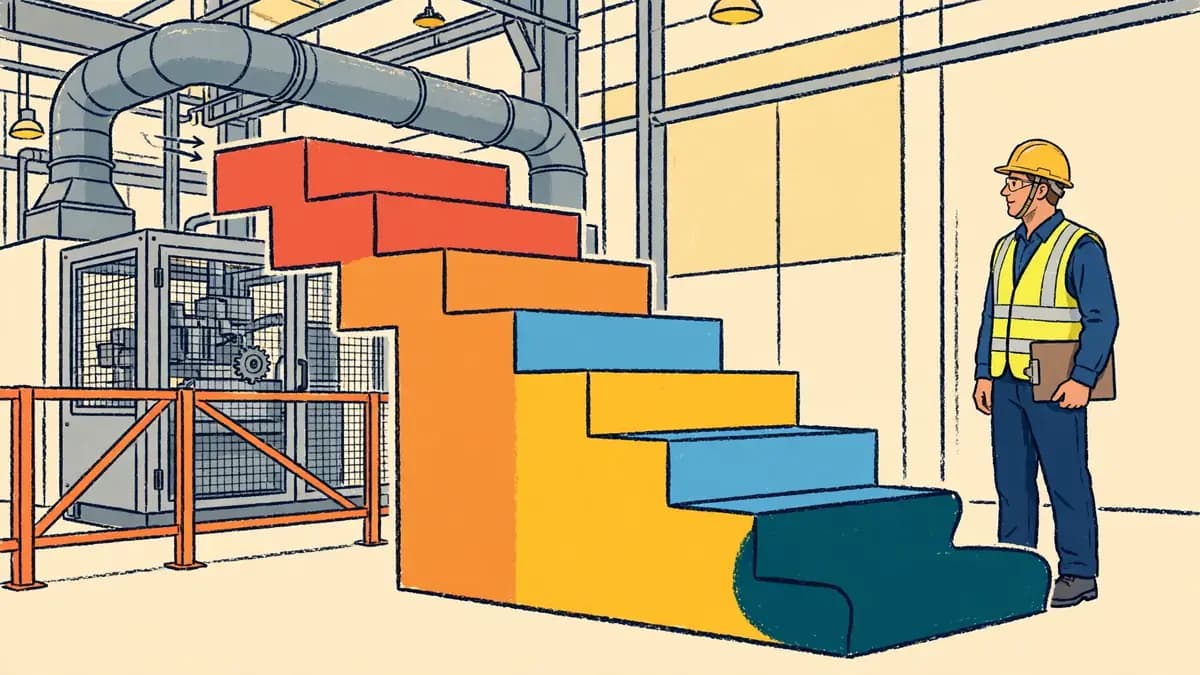
The hierarchy of controls ranks five ways of dealing with a workplace hazard, from most to least effective. The five are elimination, substitution, engineering controls, administrative controls, and personal protective equipment, known as PPE. Start at the top and work down, using the highest control that is feasible for the hazard in front of you. PPE sits last because it protects only the person wearing it, and only while it is worn correctly.
The order matters because the top levels change the hazard or the workplace itself, so they keep working when nobody is watching. The bottom two levels depend on people doing the right thing every time, on every shift. A guard fitted once protects the night shift as well as the day shift, while a rule protects only the shift that follows it.
What is the hierarchy of controls?
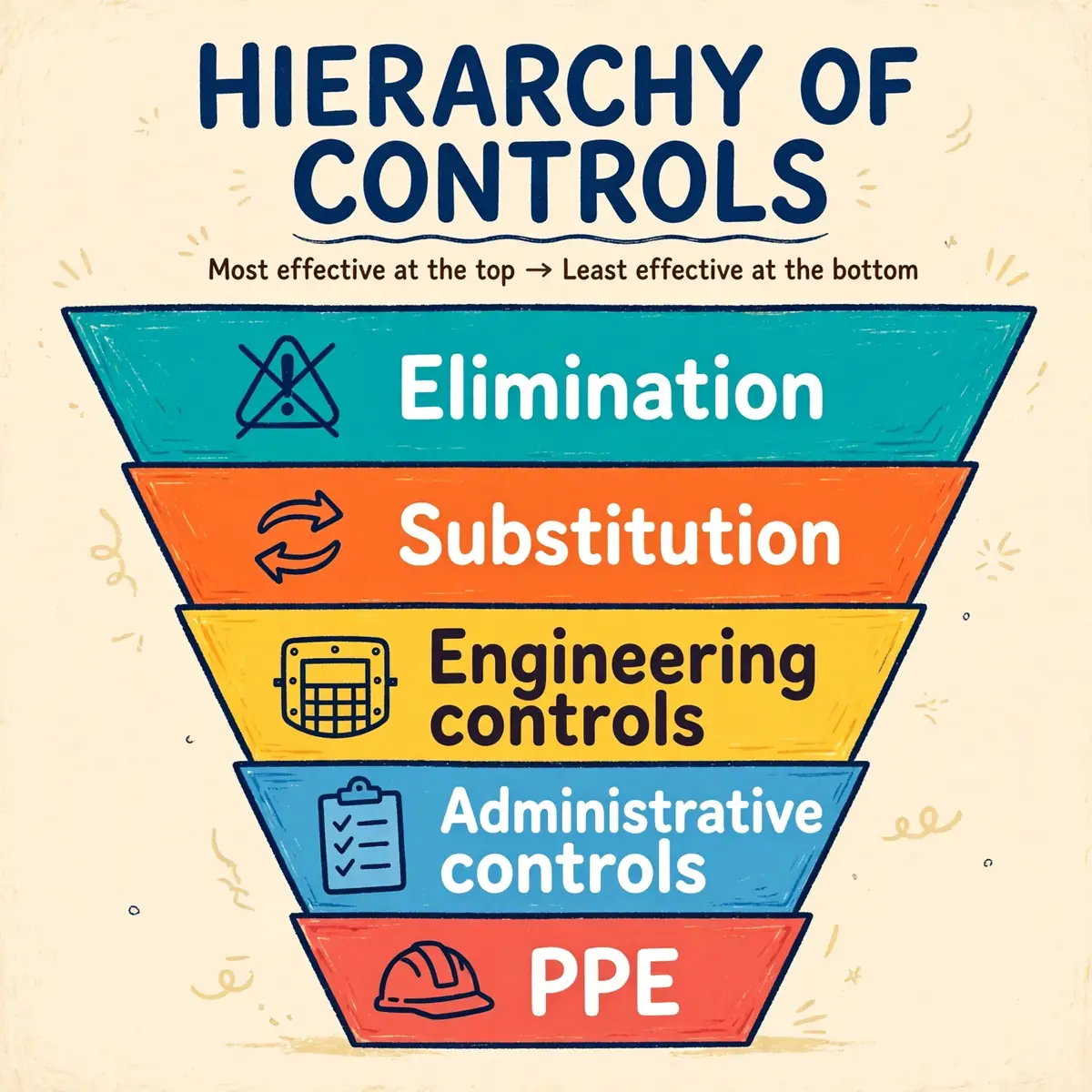
The hierarchy of controls is a way of deciding which actions will best control exposure to a hazard. It lists five levels of action in a preferred order, based on general effectiveness. The order is the point: a control higher on the list protects workers more reliably than one lower down. The framework comes from the US National Institute for Occupational Safety and Health, known as NIOSH. The same five levels appear in guidance and standards around the world.
Supervisors and safety officers use the hierarchy after a hazard has been found, usually during a risk assessment. The hazard itself is the starting point, and the question is always the same: what do we do about it? Working down the list gives a defensible answer, because it shows that stronger options were considered before weaker ones were accepted. That record matters when an auditor, an inspector, or an injured worker asks why a particular control was chosen.
Why the order is ranked by effectiveness
NIOSH puts elimination, substitution, and engineering controls at the top for one reason: they control exposures without significant human interaction. Once a hazard is designed out, a safer material is chosen, or a guard is fitted, the protection keeps working during a rush. It also works on the night shift, and when the most experienced person is on leave. No one has to remember anything for the control to work.
Administrative controls and PPE sit at the bottom because they need significant and ongoing effort from workers and their supervisors. Training, procedures, signs, and equipment only protect people when they are followed and used correctly, every time. A single missed step can leave a worker exposed. That is why these levels are treated as backstops for the risk that remains, not as the plan itself.
Where the hierarchy fits in safety work
The hierarchy is used at the control-selection stage of managing an occupational hazard. Hazard identification comes first. Then the hierarchy decides how the hazard will be dealt with, and then the chosen controls are put in place, checked, and revisited. Skipping the ranking step is a common failure. A risk assessment that names three controls and lands on PPE, with no evidence that anything higher was weighed, has skipped the decision the hierarchy exists to force.
- Find the hazard first, through inspection, incident records, and talking to the workers who do the job.
- Work down the five levels and note a possible control at each one before choosing.
- Record why the chosen level is the highest feasible option for that hazard.
- Check the control after it is fitted, and check it again after any change to the work.
The 5 levels at a glance
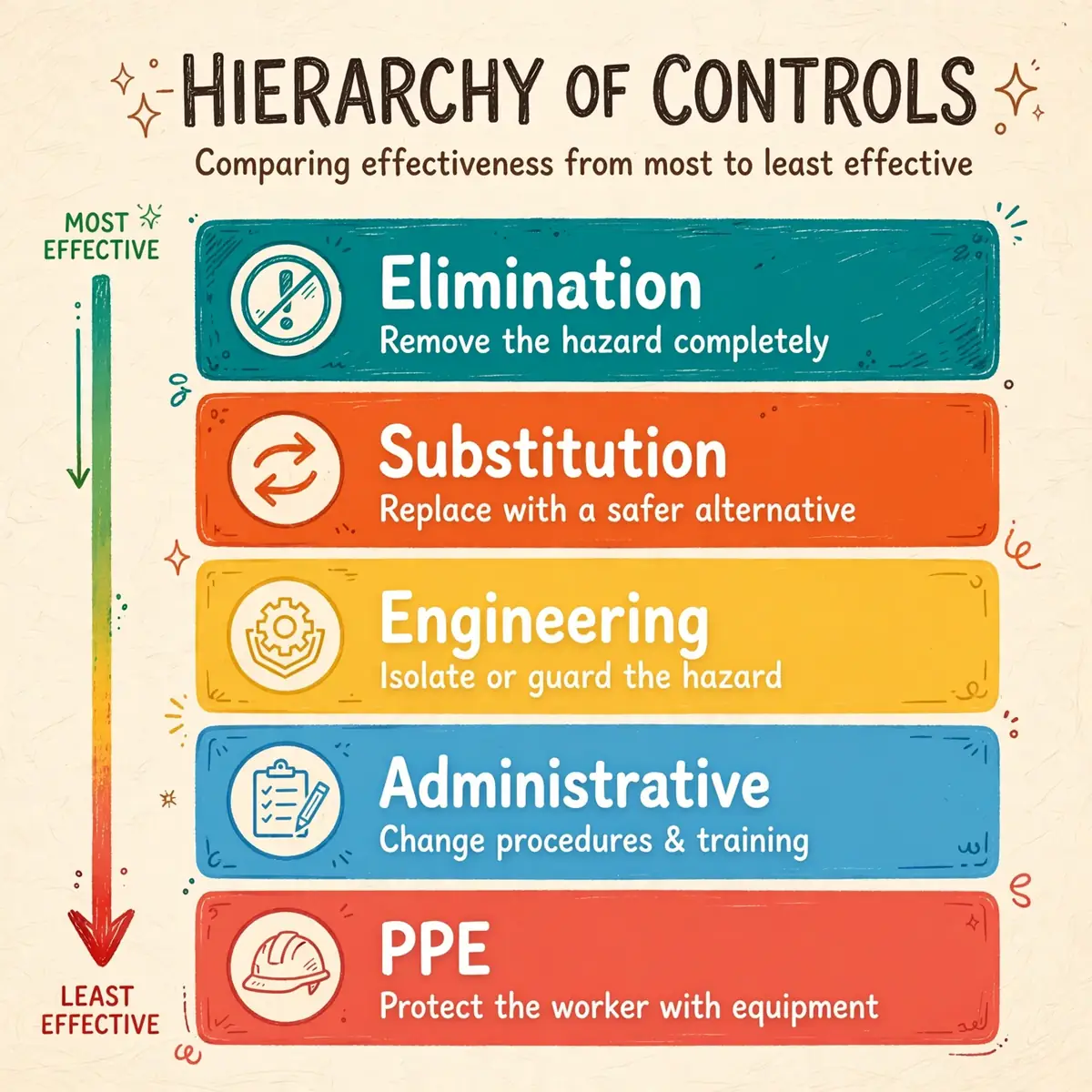
Each level acts on something different. The top two act on the hazard itself. Engineering controls act on the path between the hazard and the worker. Administrative controls act on how people work, and PPE acts only on the individual worker. Reading the table from top to bottom shows effectiveness falling as dependence on human behaviour rises, which is the logic behind the whole framework.
| Level | What it does | Depends on people | Example |
|---|---|---|---|
| 1. Elimination | Removes the hazard completely | None, the hazard is gone | Do the task at ground level instead of at height |
| 2. Substitution | Replaces the hazard with something less hazardous | Very low | Water-based cleaner instead of a solvent-based one |
| 3. Engineering controls | Isolates people from the hazard | Low once installed, needs maintenance | Machine guard or local exhaust ventilation |
| 4. Administrative controls | Changes how people work | High, needs consistent action every shift | Job rotation, training, permit systems |
| 5. Personal protective equipment | Protects the individual worker | Highest, every worker every time | Respirator, hearing protection, gloves |
How to read the comparison
Cost follows a pattern that surprises people who only look at the purchase price. Engineering controls usually cost more upfront than administrative controls or PPE. Their long-term operating costs tend to be lower, especially when they protect several workers at once. A ventilation system fitted once serves everyone in the room. PPE must be bought, fitted, and replaced for every worker, every time it wears out.
PPE can seem cheap because the unit price is low. NIOSH notes that it can be costly over time, particularly when used for multiple workers on a daily basis. The same applies to administrative controls: a procedure costs little to write. Training every new starter, supervising compliance, and refreshing the training year after year adds up. Cost is a real factor in choosing controls, but it is weighed after effectiveness, not before it.
Elimination: remove the hazard
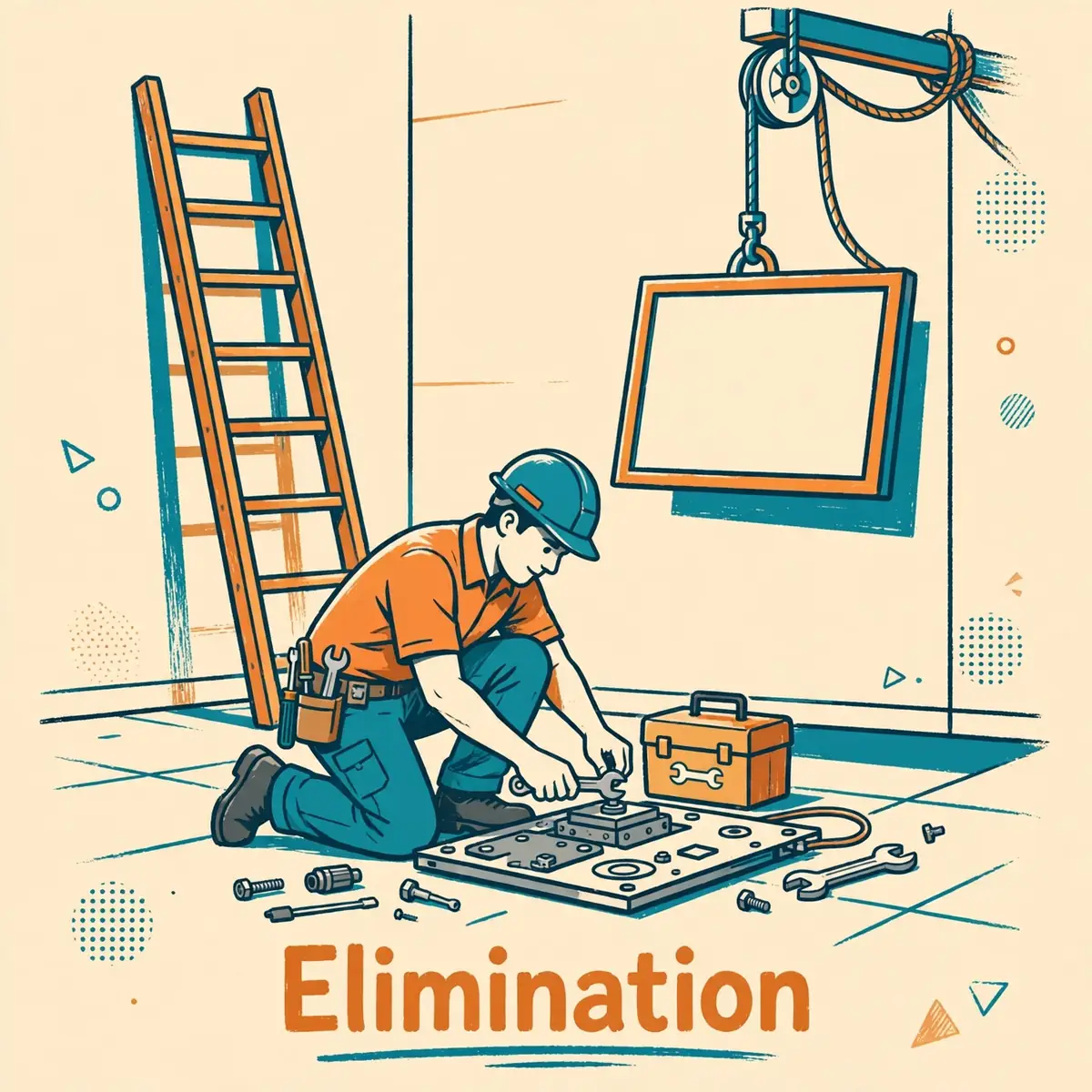
Elimination removes the hazard at the source. Changing the work process to stop using a toxic chemical, a heavy object, or a sharp tool removes the exposure entirely. NIOSH calls it the preferred solution because no exposure can occur. There is nothing left to fail, nothing left to enforce, and nothing left to maintain. If a task at height can be done at ground level, the fall hazard is gone, not managed.
Elimination is often easiest at the design stage, when a building, a process, or a job is still on paper. Designing a maintenance point at ground level costs little, while rebuilding a platform after the plant is running costs a great deal. The same applies when selecting new equipment or procedures. That is the moment to ask whether the hazard needs to enter the workplace at all.
What elimination looks like in practice
Elimination is usually a change to the work itself rather than a new piece of equipment. The hazard disappears because the task, the material, or the process that created it is no longer there. Supervisors who ask "can we stop doing it this way" at the start of a risk assessment often find an answer that is surprisingly simple.
- Assemble a display at floor level and raise it with a pulley instead of climbing a ladder to hang it.
- Stop using a hazardous cleaning solvent and clean with a method that needs no chemical at all.
- Remove an old, unused heater from a storeroom so nobody can switch it on by mistake.
- Cancel a task that adds no value, such as cutting packaging by hand when suppliers can ship in returnable trays.
Limits to watch for
Elimination is not always possible. A business cannot eliminate forklifts, heavy loads, or work at height when those things are the work itself. Elimination can be the most difficult action to adopt in an existing process. Retrofitting a production line to remove a hazard is disruptive and expensive. The best opportunities come at the design stage or when equipment is being replaced.
When elimination is not possible, the hierarchy does not stop: it moves to the next level. The effort is not wasted, because the attempt is recorded and shows that the strongest option was considered first. An auditor who sees elimination ruled out with a reason is looking at a sound decision. An auditor who sees no mention of it at all is looking at a gap.
Substitution: replace the hazard
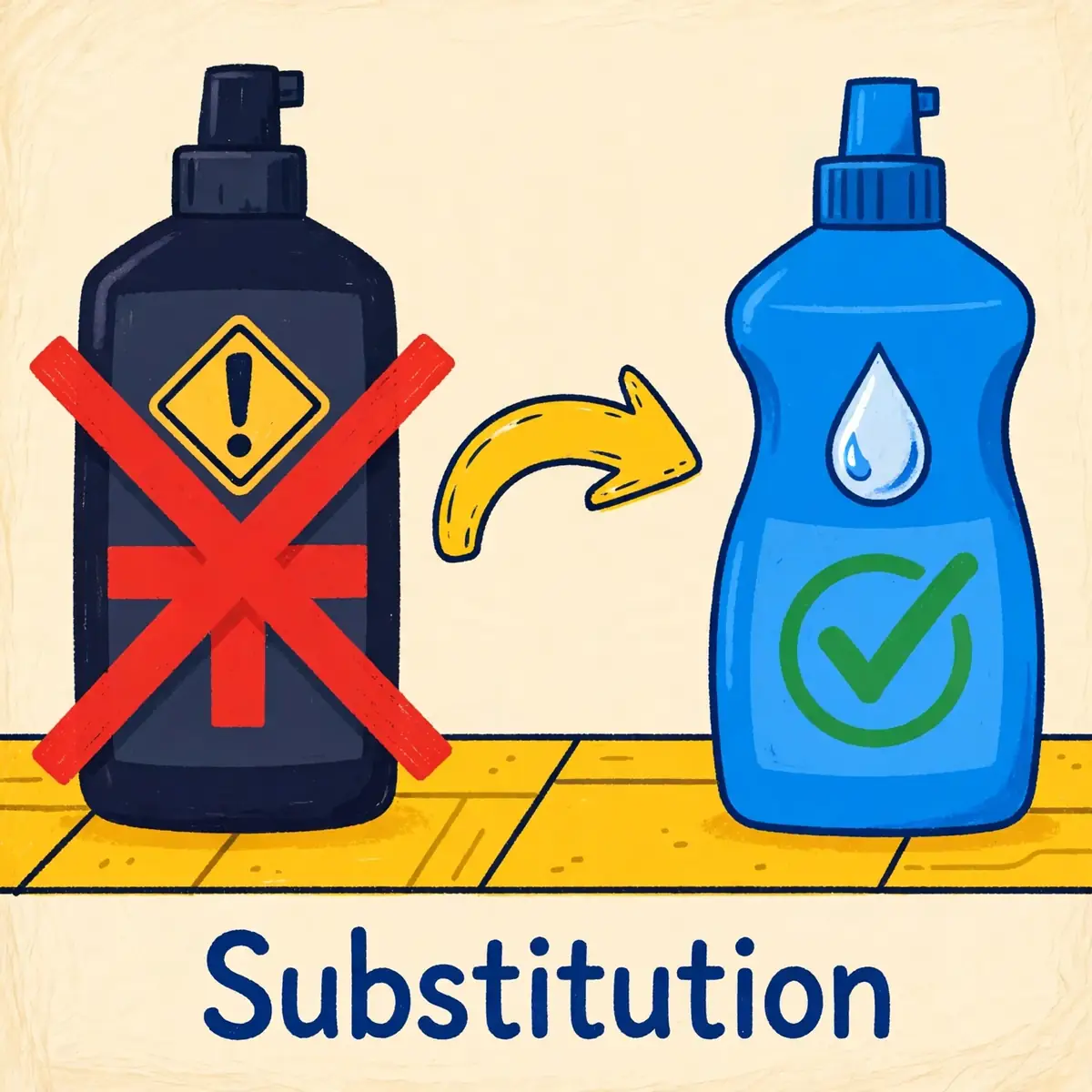
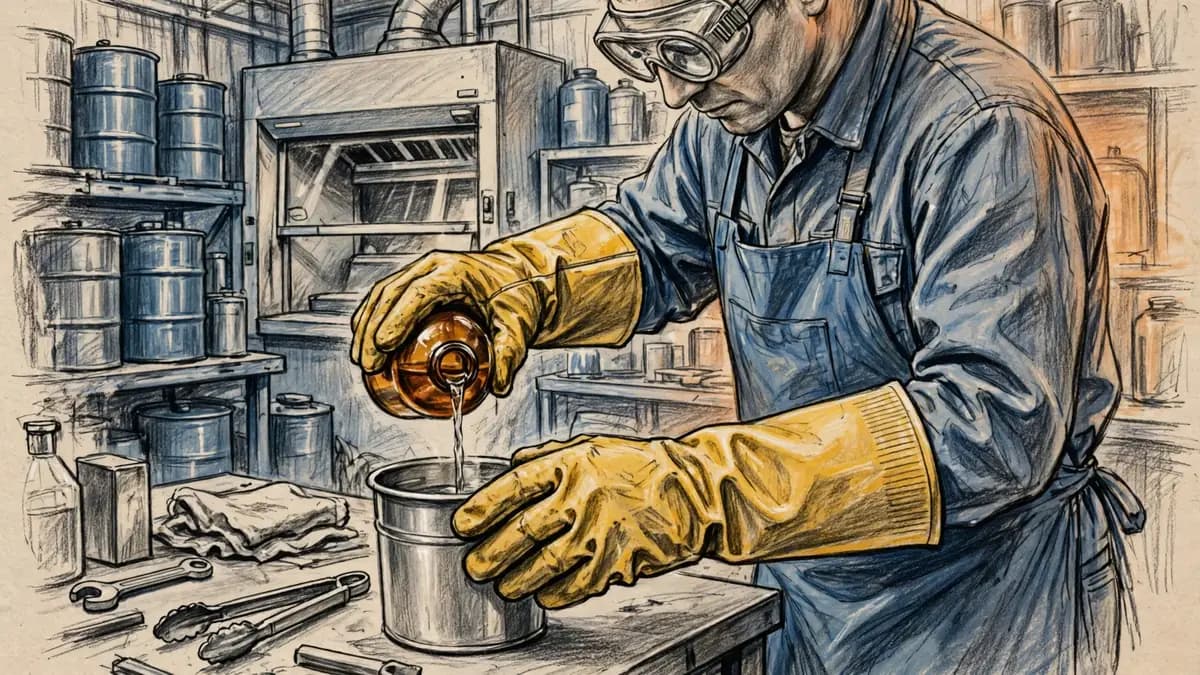
Substitution means using a safer alternative to the source of the hazard. The job still gets done, but with less risk. NIOSH gives the example of plant-based printing inks as a substitute for solvent-based inks. The printed product is the same, while the fumes workers breathe are far less harmful. A heavy manual part can be replaced by a lighter design, and a noisy process can be replaced by a quieter one.
Substitution keeps the work and lowers its inherent risk, which makes it the natural second step when the hazard cannot be removed outright. It is usually cheaper and easier than redesigning a process, and it is often available where elimination is not. The change can be as small as ordering materials cut to size so nobody cuts them on site. It can also be as large as replacing a propane forklift with an electric one for indoor work.
Examples of substitution
Substitution applies to materials, equipment, and processes alike. The test is always the same: does the replacement do the same job with less danger? When the answer is yes, the substitution is worth making. The old hazard leaves the workplace along with the material or process it came from.
- Swap a solvent-based cleaner for a water-based cleaner that does the same job.
- Use pellets instead of fine powder so far less dust rises into the air.
- Order smaller bags of material so each lift is lighter and strains fewer backs.
- Replace a fixed-blade box cutter with a self-retracting safety knife.
- Lower the pressure, voltage, or temperature a process needs to run.
Check the replacement for new risks
A substitute can introduce a hazard of its own, which is the common trap with this level. NIOSH warns that the potential new risks of a substitute must be compared with the original risks. The review should consider how the substitute will combine with other agents in the workplace. A water-based cleaner that reacts with another chemical on site may be worse than the solvent it replaced.
WarningNever accept a substitute on the safety data sheet alone. Check how it behaves with the other materials, processes, and people in the actual workplace before it goes into general use.
Effective substitutes reduce the potential for harmful effects and do not create new risks. That check belongs in the risk assessment, written down, before the change is made. If the substitute fails the check, it is not a control at all, and the hierarchy moves on to engineering controls instead.
Engineering controls: isolate people from the hazard
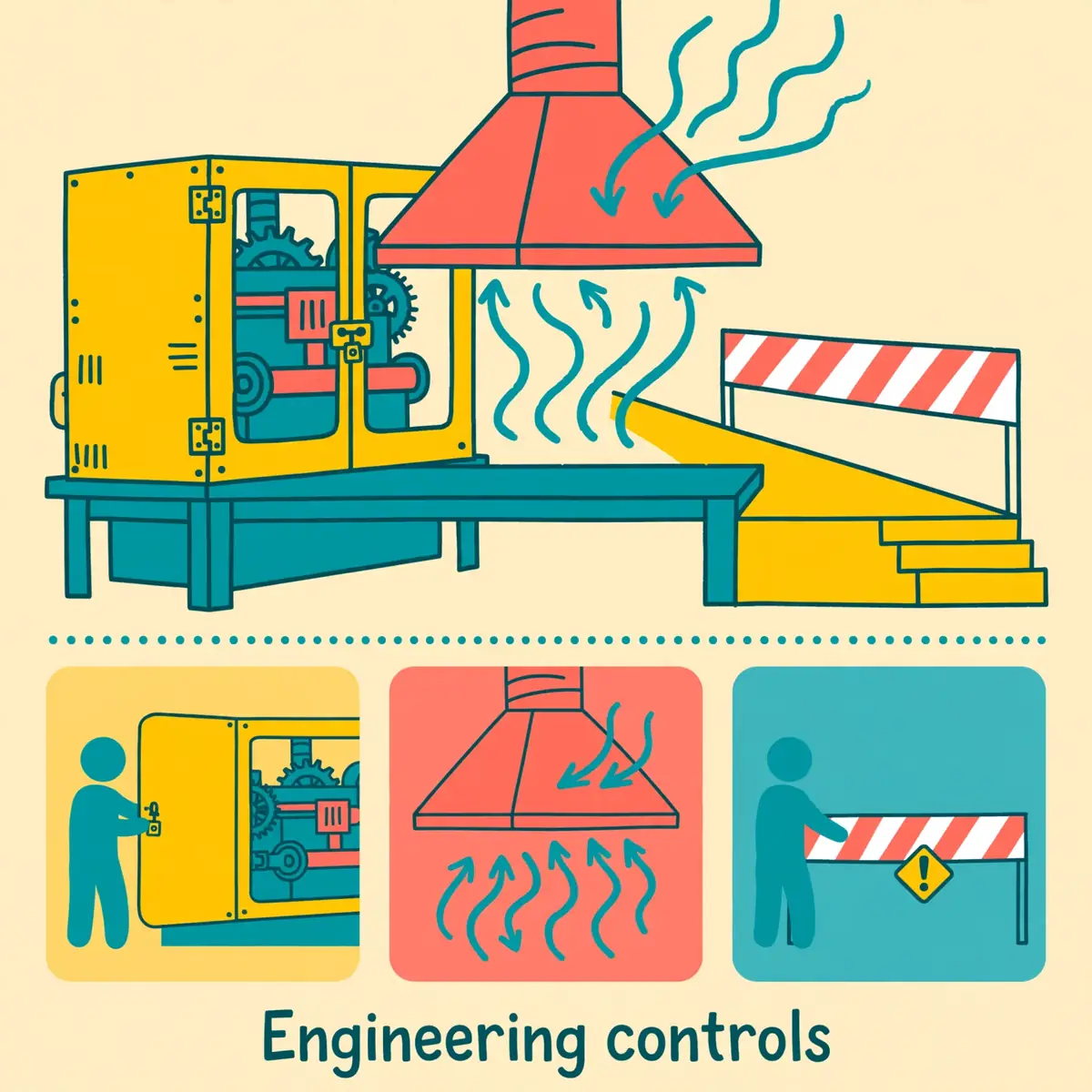
Engineering controls reduce or prevent hazards from coming into contact with workers. They are physical changes to the equipment, the workspace, or the process: machine guards, local exhaust ventilation, noise enclosures, interlocks, barriers, and guardrails. The hazard is still there. A reliable physical layer stands between it and the worker, so the protection does not depend on behaviour the way procedures and PPE do.
Engineering controls are the first level that can be applied to an existing process without changing what the business makes or does. A guard can be fitted to a machine that is already running. Ventilation can be added to a room that is already in use. A barrier can separate pedestrians from vehicles in a warehouse that cannot be redesigned. That practicality is why engineering controls are the workhorse of most control programmes.
What good engineering controls look like
NIOSH lists five marks of the most effective engineering controls, and they make a useful checklist when a control is being specified or inspected. A control that meets all five will protect workers with almost no effort from them. A control that meets only one or two may look protective on paper and fail in practice.
- Part of the original equipment design, rather than bolted on as an afterthought.
- Removes or blocks the hazard at the source before it reaches the worker.
- Prevents users from modifying or interfering with the control.
- Needs minimal user action for the control to work.
- Operates correctly without interfering with the work process or making it harder.
Cost and maintenance
Engineering controls can cost more upfront than administrative controls or PPE. NIOSH notes that long-term operating costs tend to be lower, especially when they protect multiple workers. A noise enclosure around one loud machine protects everyone nearby at once. Hearing protection must be supplied, fitted, and replaced for each person, and it only works while it is worn.
Maintenance is the weak point. A guard removed for maintenance and never refitted protects nobody. A ventilation system installed and never inspected degrades quietly until exposure creeps back up. Every engineering control needs an inspection and maintenance schedule, and the schedule needs an owner who is expected to follow it.
Administrative controls: change how people work
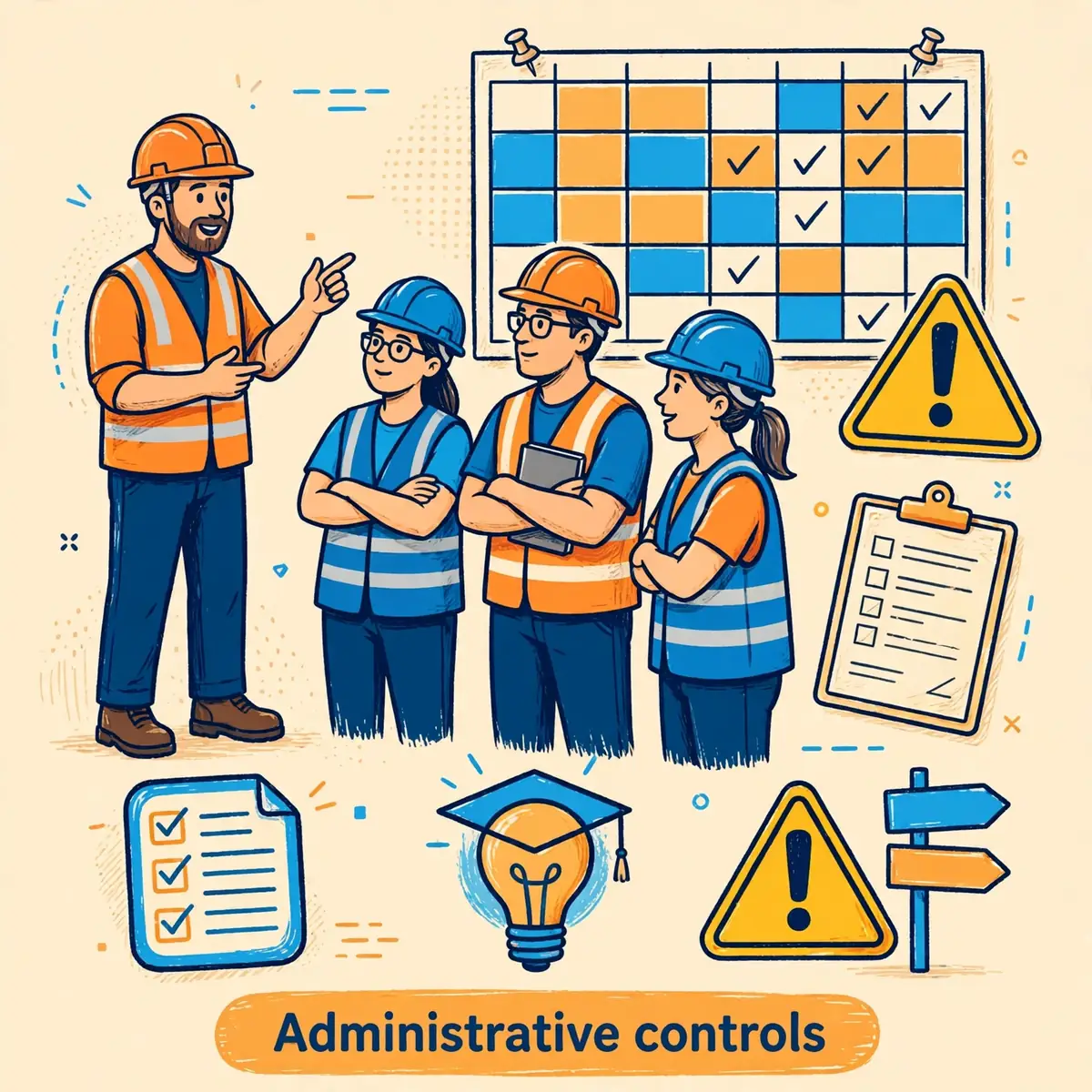
Administrative controls establish work practices that reduce the duration, frequency, or intensity of exposure to hazards. They change how people work rather than removing the hazard itself. Training, procedures, job rotation, rest breaks, limiting access to hazardous areas, and adjusting line speeds are all administrative controls. NIOSH lists all of these as administrative controls, and they are often used together with higher-level controls rather than on their own.
These controls are the most familiar in daily safety work, because they are the easiest to write down. A new procedure, a toolbox talk, or a warning sign can be produced in an afternoon. A guard or a ventilation system takes weeks. That speed is useful when a hazard needs an immediate response. It is also the reason administrative controls are overused: they feel like action while leaving the hazard untouched.
Common administrative controls
Administrative controls fall into three groups. Procedures tell people what to do, training teaches them how, and warnings remind them at the moment of risk. All three are needed together, because a procedure nobody has been trained on is as useless as training that contradicts the written procedure.
- Safe work procedures, equipment inspections, planned maintenance, and checklists.
- Lockout/tagout, permit-to-work systems, and pre-task and post-task reviews.
- Training in hazard communication, confined space entry, and safe work procedures.
- Job rotation and changed schedules to limit how long each worker is exposed.
- Warnings such as signs, alarms, labels, mirrors, and flashing lights.
Why they rank below physical controls
Administrative controls rely on people knowing the rule, remembering it, and following it under pressure, which is why they rank below engineering controls. A worker who is tired, rushed, or new to the job is the person most likely to skip a step. That is exactly when the hazard is most dangerous. Procedures and training reduce exposure, but they do not remove the hazard or put anything physical between the worker and it.
Even so, administrative controls are often necessary. Higher-level controls usually need procedures, training, and maintenance to support them. A local exhaust system needs training, periodic inspection, and preventive maintenance, all of which are administrative controls. The hierarchy does not forbid them; it ranks them below the controls that work without constant human effort.
Personal protective equipment: the last line
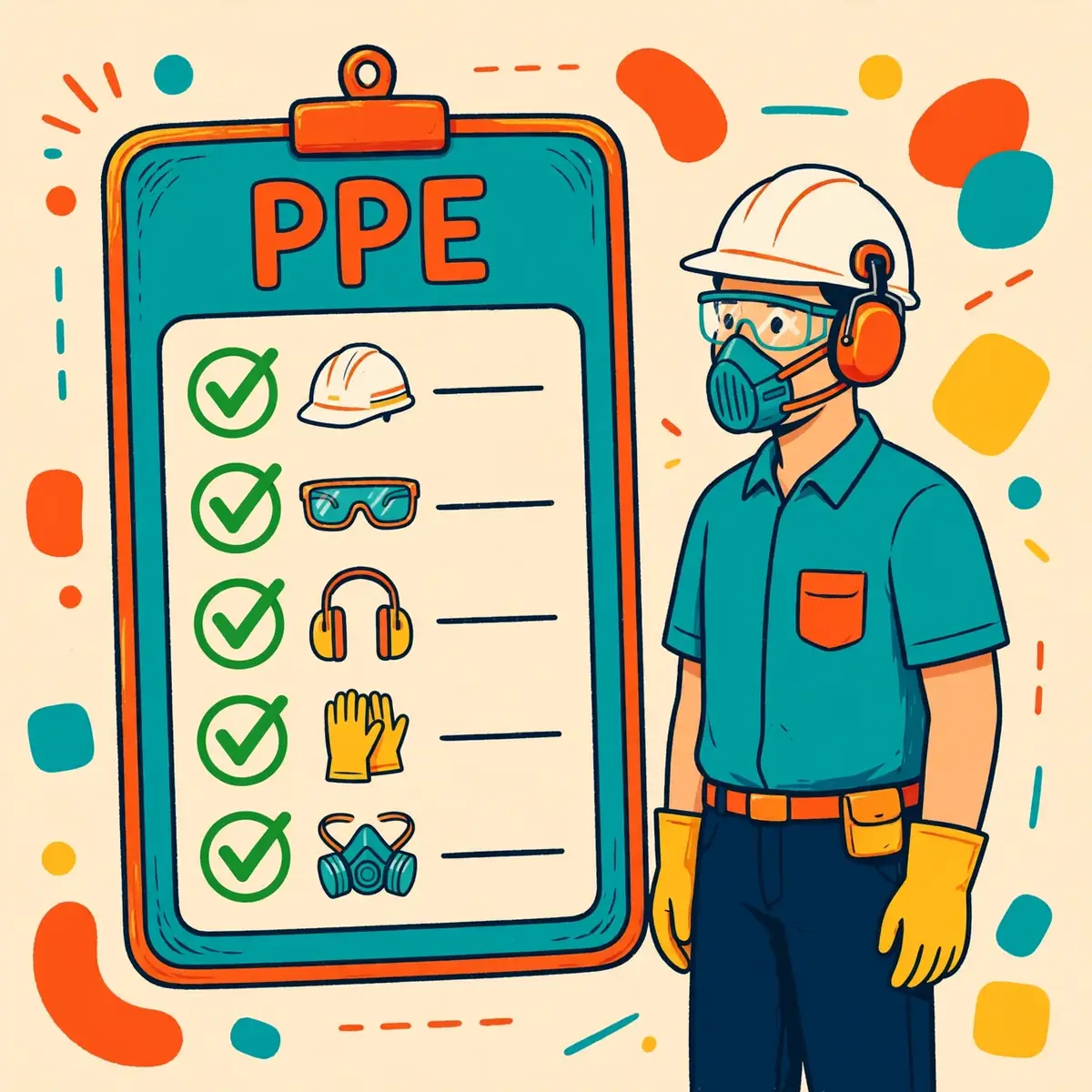
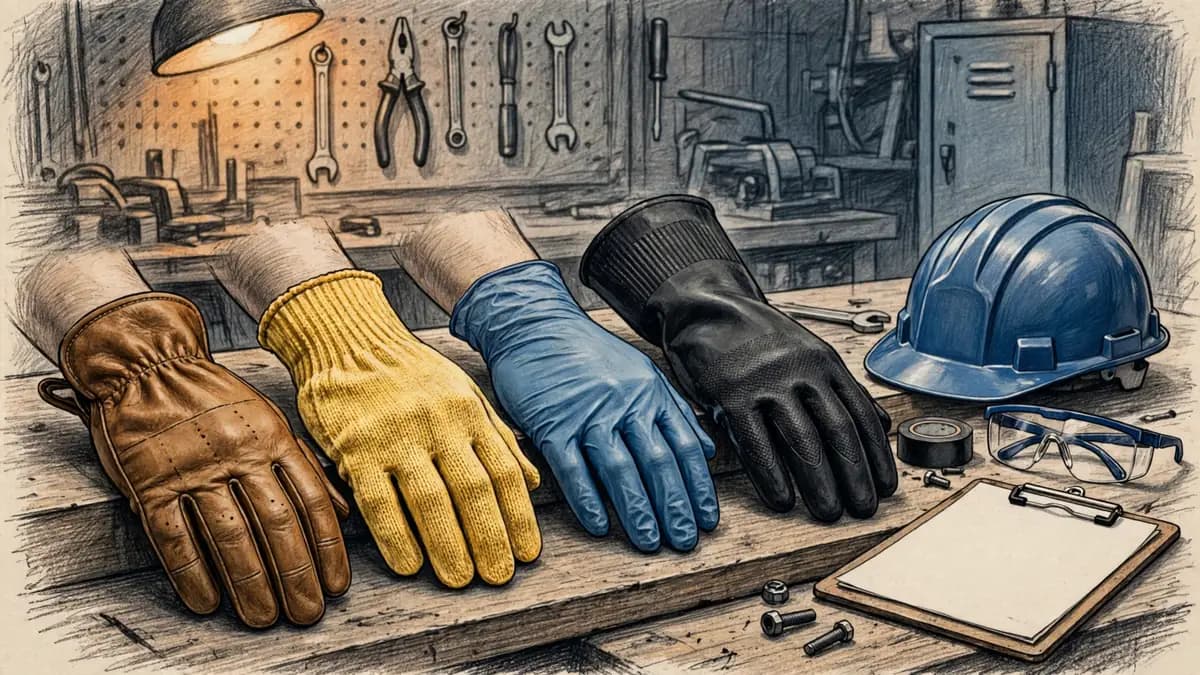
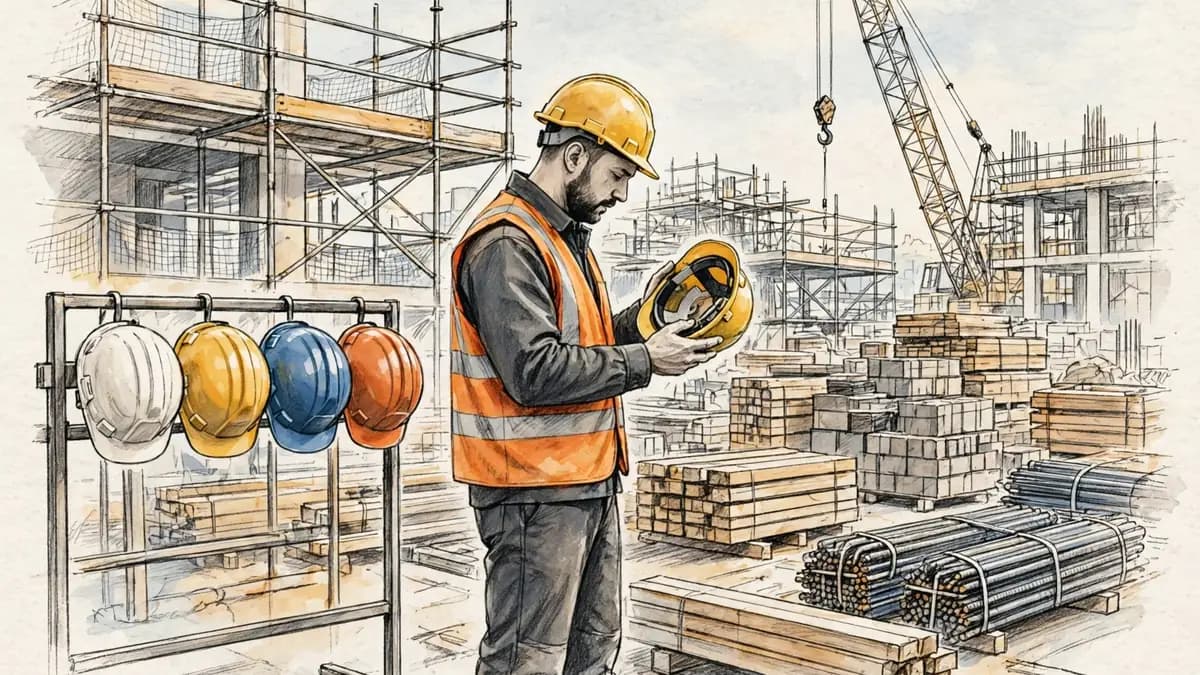
Personal protective equipment, known as PPE, is equipment worn to minimise exposure to hazards. Hard hats, safety glasses, gloves, hearing protection, and respirators are the familiar examples, and PPE also includes protective clothing, safety footwear, and fall protection. PPE does not control the hazard and does not restrict contact with it. It only reduces the harm to the person wearing it when exposure happens.
PPE sits at the bottom of the hierarchy. It only protects one person, and only when it is chosen correctly, fits, is worn properly, and is in good condition. If a glove tears or a respirator is not fit-tested, exposure is immediate, and nobody else in the room is protected at all. That dependence on every worker, on every shift, is why PPE is the last resort rather than the first response.
What a PPE programme includes
Handing out equipment is not a PPE programme. NIOSH sets out five elements that a programme should include, and each one needs to happen for the equipment to protect anyone. Employers who skip the assessment or the training have bought equipment, not protection, and the gap usually appears only after an incident.
- Workplace hazard assessment, to identify what the PPE must protect against.
- PPE selection and use, matched to the hazard, the task, and the wearer.
- Inspection and replacement of damaged or worn-out PPE before it fails.
- Employee training in fitting, wearing, cleaning, and storing the equipment.
- Programme monitoring, to check the equipment is still effective in use.
When PPE is the right answer
PPE is the right answer when other controls cannot reduce the exposure to a safe level, and employers must provide it in those cases. NIOSH lists three situations: while other controls are still under development, when other controls cannot sufficiently reduce the hazardous exposure, and when PPE is the only control option available. Interim PPE while a guard is being manufactured is a proper use of the lowest level.
Employers should not rely on PPE alone when other effective control options are available. PPE requirements start with the hazard assessment. The equipment must match the hazard: steel toe boots protect against falling objects and crushing. They do nothing against a chemical splash or a loud noise. Choosing PPE without the assessment is guessing, and guessing is not a control programme.
How to apply the hierarchy in a risk assessment
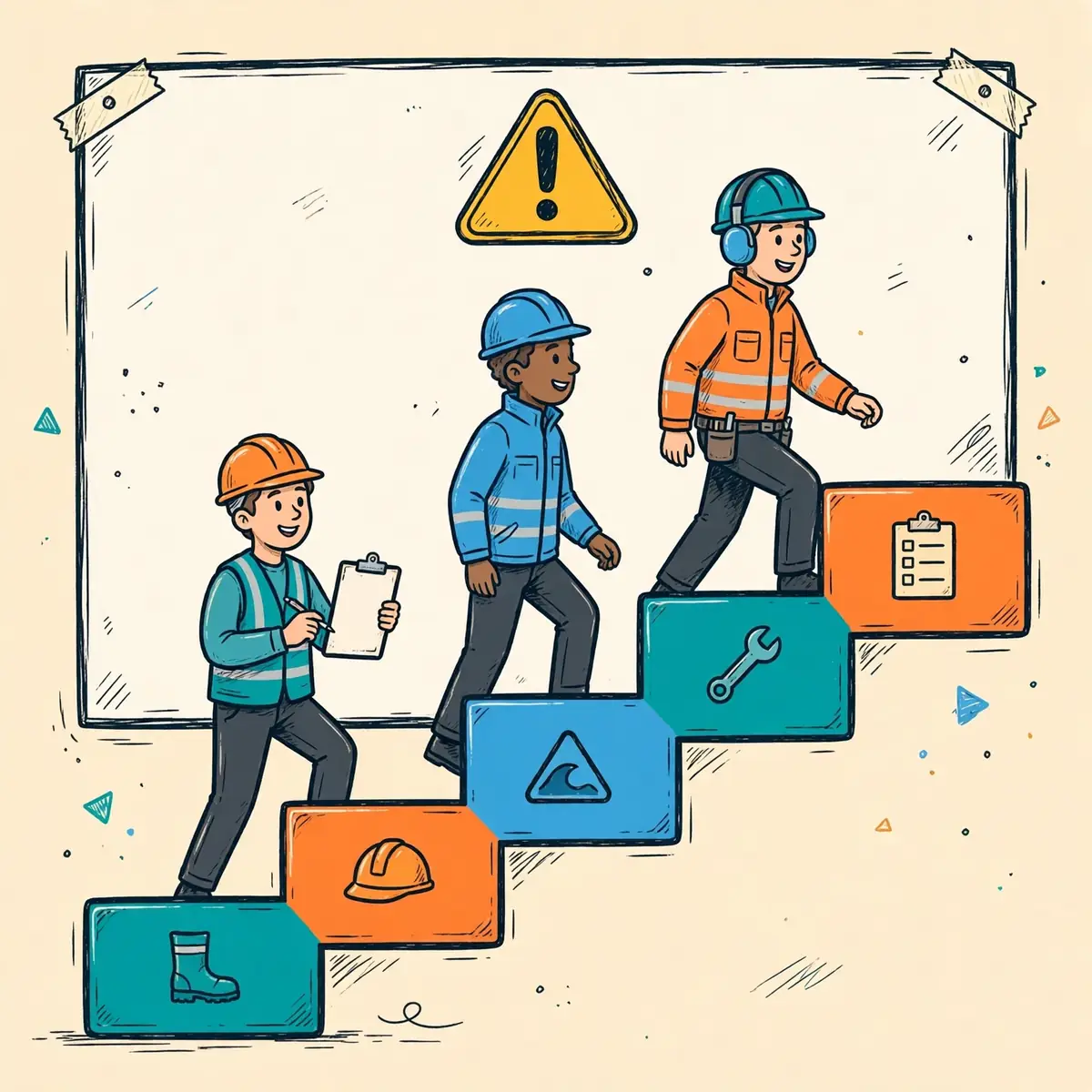
Knowing the five levels is not the same as using them. The hierarchy earns its place when it is worked through in order. For a named hazard, with the workers who face it, the decision is written down. The Occupational Safety and Health Administration (OSHA) provides a worksheet for exactly this purpose in its Recommended Practices for Safety and Health Programs, and the steps below follow its approach.
Start with one hazard at a time. A risk assessment that tries to rank controls for ten hazards at once usually ends with a list of PPE for all of them. The discussion never stays on one hazard long enough to work down the levels. One hazard, five levels, one decision, and then the next hazard.
Work through the levels in order
Brainstorm a possible control at each level before choosing any of them. The point of the exercise is to force the stronger options onto the table, even when they look difficult. The obvious move is often a sign and a reminder near the bottom of the list. Write the options down, test them, and then choose the highest one that is feasible.
- Identify the hazard with the workers and their representatives, and agree what exposure looks like.
- Brainstorm a control at each of the five levels, even if the top ones look difficult.
- Test each option for feasibility, using the checks in the next section.
- Choose the control that sits highest on the hierarchy and is feasible.
- Use lower-level controls as interim measures while the permanent control is put in place.
- Give every control an owner, a due date, and a date to check that it works.
Test whether a control is feasible
Feasibility is not a feeling. OSHA sets out eight checks for deciding whether a control can protect workers and be implemented successfully. A control that fails one of these checks is not feasible, and the reason should be recorded so the decision can be defended later. Cost is one of the eight, not the whole test.
- Right for the hazard it is meant to control.
- Appropriate, given how likely injuries or illnesses are.
- Consistent with employer policies, laws, and regulations.
- Not too burdensome to workers who must live with it.
- Recognised as appropriate practice in the industry.
- Effective, reliable, and durable in daily use.
- Readily available when it is needed.
- Cost-effective in the short term and the long term.
TipKeep the rejected options in the record with one line each saying why they were ruled out. That note is what turns a choice into evidence that the hierarchy was actually followed.
Combining controls and checking they work
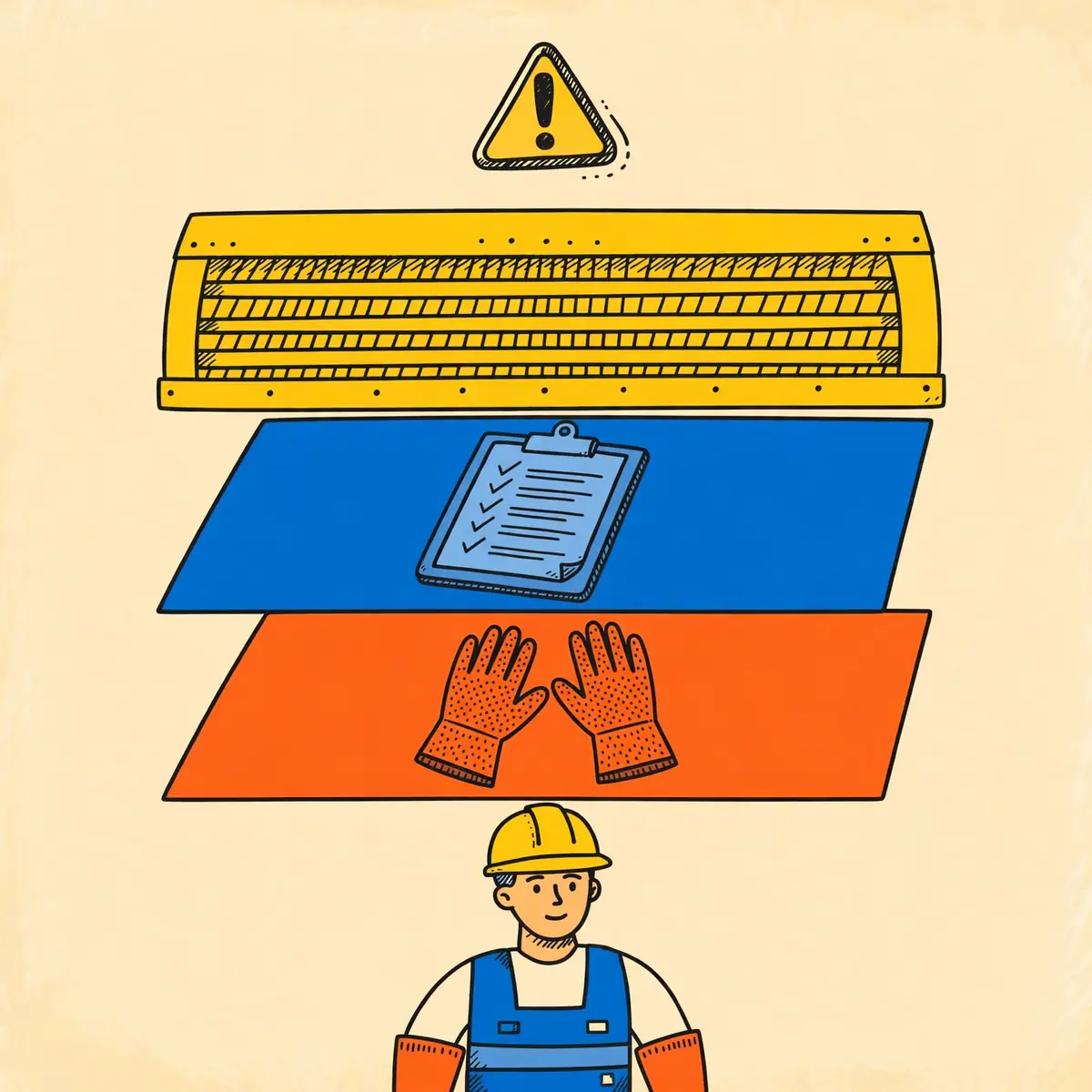
Choosing the right level is necessary but not sufficient. A control only counts when it is in place and confirmed to work, and most hazards need more than one level. OSHA notes that a combination of control methods is often most effective. OSHA gives the example of a local exhaust system that also needs training, periodic inspections, and preventive maintenance to keep working.
Layering is good practice for high-consequence hazards in particular. A machine guard, a safe work procedure, and gloves together protect a worker far better than any one of them alone. Each layer covers the failure of the one above it. The hierarchy tells you where to invest first; it does not say you must pick only one level.
Layering controls for high-risk work
Layering works when each layer addresses a different failure. The guard stops the hand reaching the hazard. The procedure keeps hands clear during the task. The gloves reduce the harm if contact still happens. Three layers of the same kind add little, while three layers at different levels cover each other's weaknesses.
- Guard a machine, require a safe work procedure, and still mandate gloves for the task.
- Fit ventilation, rotate workers out of the area, and provide respirators for residual exposure.
- Separate pedestrians and vehicles with barriers, add mirrors at blind corners, and require high-visibility vests.
Verify every control
A control is not finished the moment it is added. NIOSH advises employers to train workers and supervisors on how to use controls correctly. Employers should also evaluate controls regularly to check whether they reduce exposure and to find improvements. The recurring question is whether controls are adequate, verified, and effective, and the hierarchy answers only the first of the three.
Controls can also introduce new hazards, which is why the check matters. In OSHA's own worked example, a forklift and pedestrian hazard in a warehouse is controlled with barriers, mirrors, alarms, and high-visibility vests. The alarms add noise and alarm fatigue, and a loose vest can be caught by machinery. A control programme that adds a control and moves on, without re-assessing, can trade one risk for another and never notice.
Where the hierarchy appears in law and standards
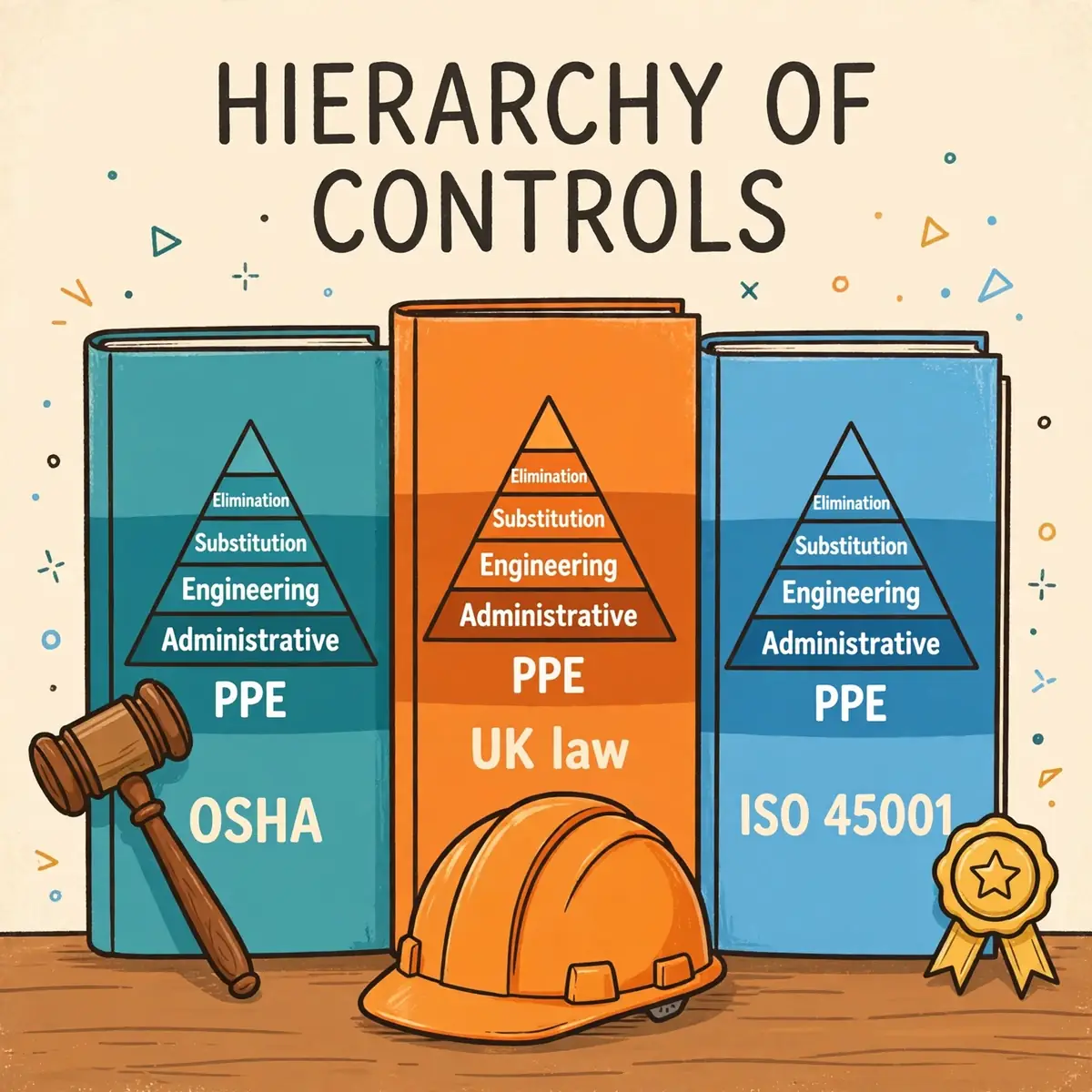
The hierarchy itself is guidance, not a regulation, and that distinction matters. No law says "follow the five levels". Laws and standards in the United States, the United Kingdom, and international management systems all point in the same direction. Several specific rules hard-code the order for particular hazards. The sections below attribute each requirement to its own jurisdiction.
That matters because a US search market does not establish US jurisdiction, and the same hazard can carry different duties in different countries. Readers should check the rule that applies where the work happens. The links beside each claim lead to the original document so the wording can be checked.
United States
The duty starts above any single standard. The General Duty Clause of the Occupational Safety and Health Act requires each employer to provide a workplace free from recognised hazards. Those hazards are causing, or are likely to cause, death or serious physical harm. It does not dictate a specific fix, but an auditor's question is whether a higher control could reasonably have been used and was not.
Several specific standards hard-code the order. The noise standard, 29 CFR 1910.95, sets a permissible exposure limit of 90 dBA over an eight-hour shift. It requires feasible engineering or administrative controls to be used first, with hearing protection only where those controls do not bring exposure down. The hexavalent chromium standard requires feasible engineering and work-practice controls before respirators make up the difference. Machine guarding standards require a guard as the primary protection at a point of operation.
United Kingdom and ISO 45001
In the UK, the direction comes from the general principles of prevention in Schedule 1 of the Management of Health and Safety at Work Regulations 1999. The principles are avoiding risks, combating risks at source, and replacing the dangerous with the less dangerous. Collective protective measures take priority over individual ones, and employees receive appropriate instructions. The five steps are not written in any UK regulation in those words. The principles point the same way, and the Control of Substances Hazardous to Health Regulations 2002 set out their own order for chemical exposure.
ISO 45001:2018, clause 8.1.2, requires organisations to eliminate hazards and reduce occupational health and safety risks using the hierarchy. The order is to eliminate the hazard, substitute with less hazardous processes, operations, materials or equipment, and use engineering controls and reorganisation of work. Administrative controls including training come next, and adequate personal protective equipment comes last. The site's ISO 45001 guide covers the standard's requirements and certification in more detail.
Common mistakes when applying the hierarchy
Most hierarchy programmes fail below the level of the diagram. The five levels are easy to draw and easy to agree with. The same errors appear in audit after audit: PPE chosen first, controls listed without ranking, and controls that are never checked after they are fitted. Knowing the hierarchy is not the same as running it, and the failures are consistent enough to name.
The mistakes below are the ones to look for when reviewing a risk assessment or preparing for an audit. Each one has a simple correction, and the correction is usually a question rather than a purchase. Was a higher level considered, is there an owner, and has anyone checked that the control still works?
Five mistakes to avoid
These five errors account for most of the gap between a hierarchy that looks good on paper and one that actually protects people on the floor. They are worth checking explicitly during any review, because each one is easy to miss when the paperwork is complete and every box appears ticked.
- Defaulting to PPE, the fastest control to write down and the weakest one available.
- Listing controls without ranking them, so nothing shows that higher levels were weighed.
- Never verifying a control after it is fitted, so a removed guard goes unnoticed.
- Not re-checking after a change, so a new process or layout invalidates the old controls.
- Ignoring new hazards a control creates, such as alarms adding noise or a vest catching in machinery.
What good looks like instead
A sound programme treats every control as something with an owner, a due date, and a verification step. The assessment recommends a guard, the recommendation is logged. Six months later someone can say whether the guard was fitted, whether it is still there, and whether it still works. That record is the difference between a control and a wish.
AlertA control with no owner and no check date is not a control yet. Assign both before the risk assessment is signed off, or the hazard stays open.
Good programmes also revisit the hierarchy when work changes. A new chemical, a new machine, a new layout, or a near miss are all reasons to work down the levels again for the affected hazard. The control that was right last year may not be right now. Change re-opens the decision, and the hierarchy is the tool for making it again.
Frequently Asked Questions
What is the hierarchy of controls?
The hierarchy of controls is a ranking of hazard control methods from most to least effective: elimination, substitution, engineering controls, administrative controls, and personal protective equipment. It guides safety professionals to choose controls that remove or reduce a hazard at its source before relying on procedures or PPE.
What are the five levels of the hierarchy of controls in order?
In order of effectiveness: elimination, which physically removes the hazard; substitution, which replaces it with something less hazardous; engineering controls, which isolate people from the hazard; administrative controls, which change the way people work; and PPE, which protects the worker with equipment.
Why is PPE the least effective control?
PPE only protects the person wearing it, only when it is chosen correctly, fits, is worn properly, and is in good condition. It does not remove the hazard or put anything between the worker and it. A single failure, such as a torn glove or a respirator that was never fit-tested, leaves the worker exposed immediately.
Can you use more than one level of control at once?
Yes, and for high-consequence hazards you often should. Layering controls is good practice: a machine guard, a safe work procedure, and gloves together protect a worker far better than any one of them alone. The hierarchy tells you where to invest first, not that you must pick only one level.
Is the hierarchy of controls required by OSHA?
The hierarchy as a whole is guidance promoted by OSHA and NIOSH, not a regulation in itself. However, the General Duty Clause requires employers to address recognised hazards. Several specific standards, such as the noise standard and the hexavalent chromium standard, require higher-level controls before PPE. Auditors expect to see higher controls considered before PPE is accepted.
What is the difference between elimination and substitution?
Elimination removes the hazard completely, so nothing remains to cause harm. Substitution keeps the work but replaces the hazardous material, process, or equipment with a less hazardous one. Elimination is stronger because there is nothing left to fail, while substitution still leaves a hazard, even a smaller one, that must be managed.
Sources
- NIOSH — Hierarchy of Controls
- OSHA — Identifying Hazard Control Options: The Hierarchy of Controls (worksheet)
- OSHA — Recommended Practices for Safety & Health Programs
- OSHA — 29 CFR 1910.95, Occupational noise exposure
- ISO — ISO 45001:2018, Occupational health and safety management systems
- The Management of Health and Safety at Work Regulations 1999, Schedule 1 — General Principles of Prevention