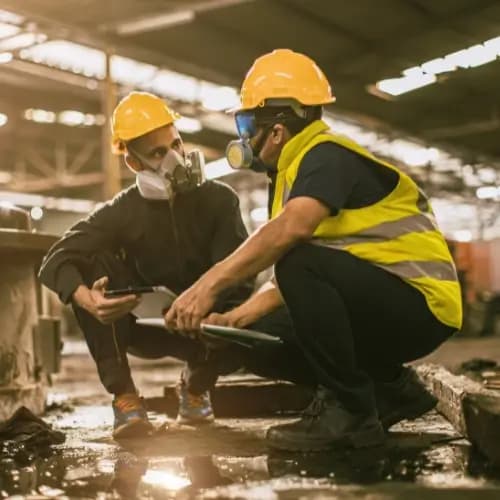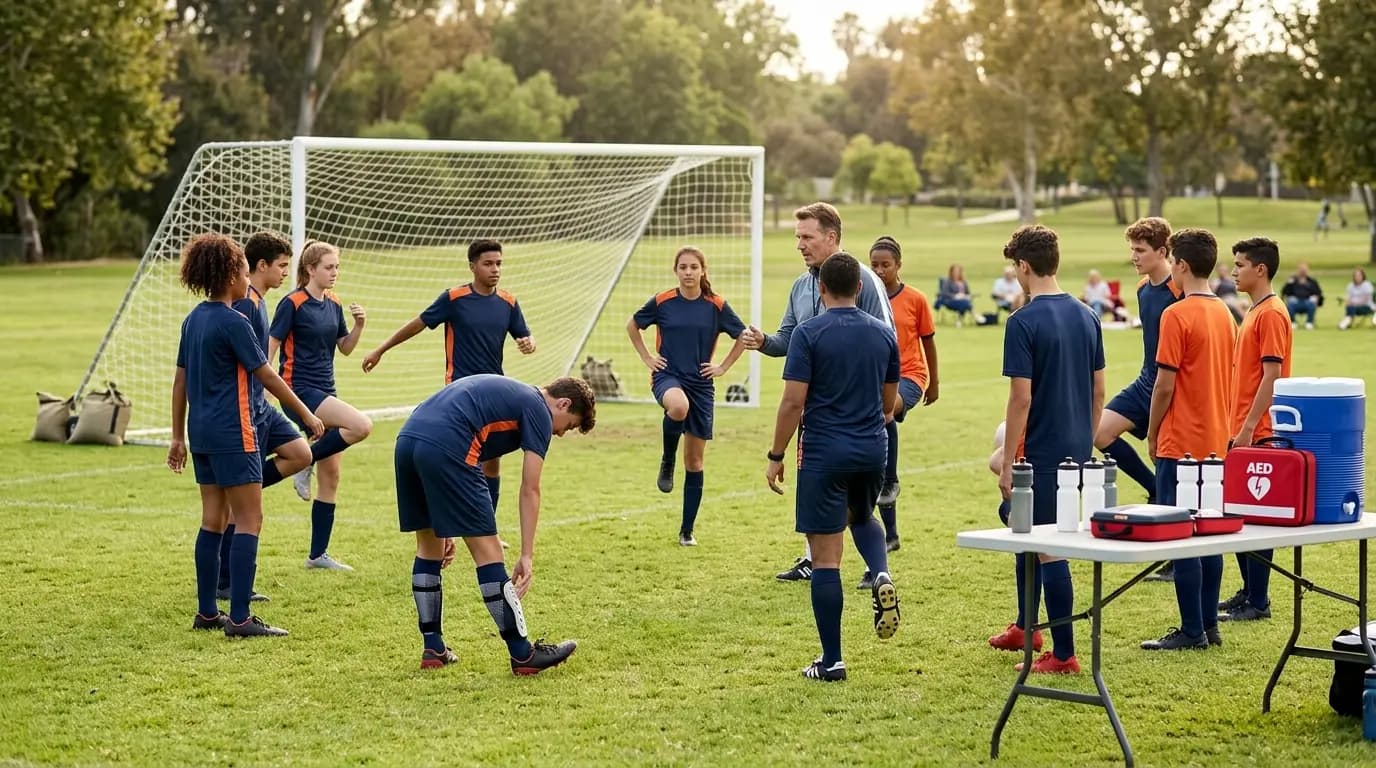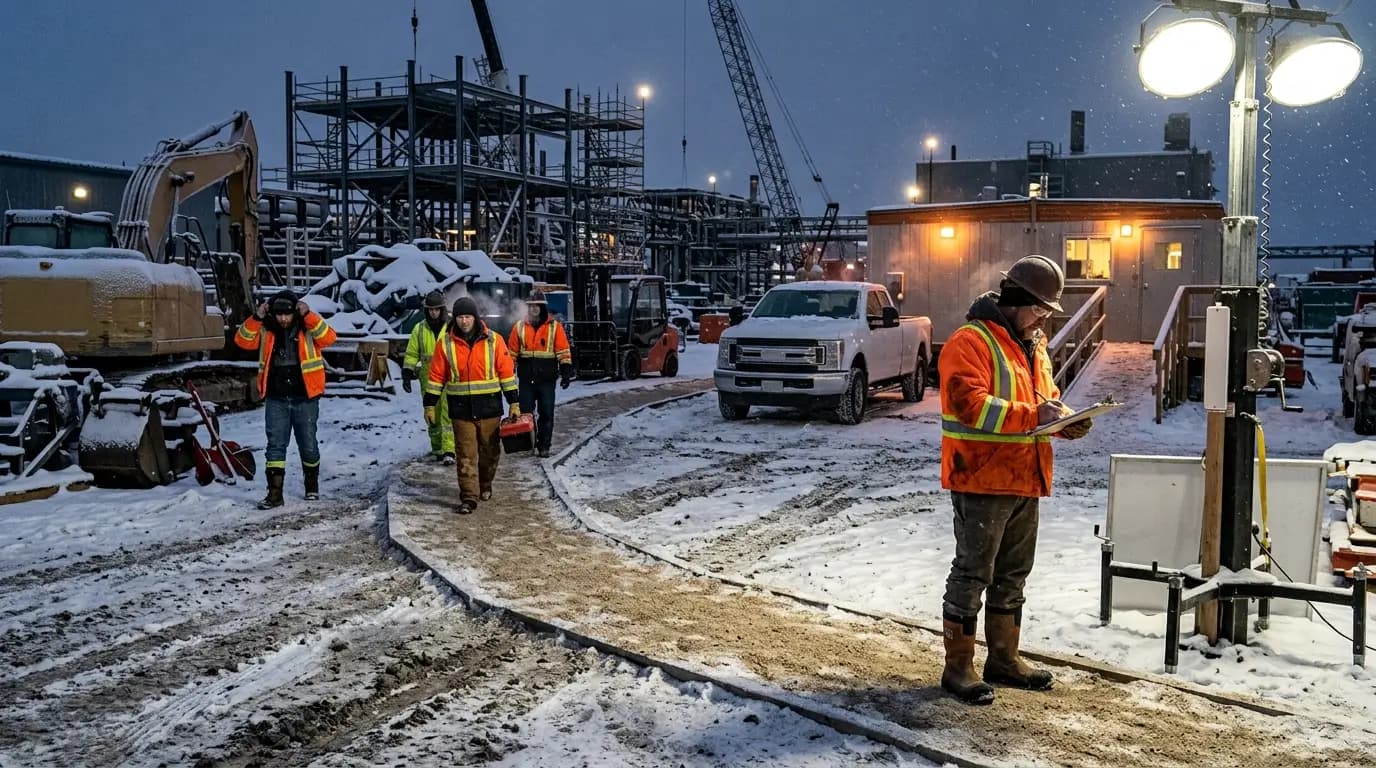


Almost half of heat-related deaths happen on a worker's first day in the heat, and over 70 percent happen within the first week, according to OSHA's guidance for new workers. That one figure reorganises most summer safety advice. The dangerous day is rarely the hottest day of the year — it is the first hot day, or the first day back after a fortnight away, before the body has adapted.
So the short version: watch humidity and workload rather than the thermometer, drink on a schedule that has a ceiling as well as a floor, give yourself a week to acclimatise, and learn to tell the person who needs shade from the person who needs an ambulance.
I have spent 16 years in occupational hygiene across 14 countries, including two years leading heat stress programmes at MSA Safety Hygiene Programmes. This guide covers home, outdoor and workplace settings, and flags where US, UK and international requirements differ.
Key takeaways
Six points do most of the work in this guide:
- Air temperature alone is a poor predictor of heat risk. Humidity, radiant heat, workload and clothing all change how much heat your body can shed. ISO 7243 uses the WBGT index for exactly this reason.
- Hydration has an upper limit. OSHA and NIOSH suggest about one cup every 15–20 minutes and warn against exceeding roughly 12 quarts (11.4 litres) in 24 hours.
- Acclimatisation takes 7–14 days. OSHA and NIOSH recommend the Rule of 20 percent — 20 percent of normal duration on day one, increasing by 20 percent daily.
- Hot, dry skin is not a reliable sign of heat stroke. OSHA lists heavy sweating or hot dry skin. Confusion and slurred speech are the signs that matter.
- For suspected heat stroke, cold water immersion is the fastest cooling method, and OSHA names it as the best option in an emergency alongside calling 911.
- There is no federal US heat standard and no UK maximum workplace temperature — but general duties apply in both, and seven US states have their own enforceable rules.
Why the thermometer is the wrong number to watch
Your body sheds heat mainly by evaporating sweat. Anything that slows evaporation — humidity, still air, waterproof clothing — reduces your cooling capacity without changing the reading on a thermometer. Anything that adds heat — direct sun, hot surfaces, heavy physical work — increases the load without changing it either.
That is why three different numbers circulate, and why people talk past each other using them.
Air temperature is what a thermometer in the shade reads. The heat index adds humidity, but it assumes shade and light activity. WBGT — wet bulb globe temperature — combines a natural wet-bulb reading, a black globe reading for radiant heat, and air temperature, which is why ISO 7243:2017 uses it as the screening method for occupational heat stress, adjusted for metabolic rate and clothing.
The practical consequence is simple. A 28 °C (82 °F) day at 80 percent humidity, in full sun, digging a trench in overalls is a far more dangerous day than 33 °C (91 °F) in dry shade at a desk. Only one of those two facts shows up on a weather app.
In my time at MSA Safety Hygiene Programmes leading heat stress work, the recurring gap was not a missing water cooler. It was a stop-work decision being made from an air temperature reading taken in an air-conditioned office, a hundred metres and several degrees of radiant load away from the people it applied to. When I review a heat assessment now, the first thing I check is where the measurement was taken and what the person taking it was wearing.
| Measure | What it captures | What it misses | Typically used for |
|---|---|---|---|
| Air temperature | Dry-bulb air only | Humidity, sun, workload, clothing | Weather forecasts, indoor comfort |
| Heat index | Air temperature + humidity | Radiant heat, workload, clothing | Public heat alerts; OSHA's enforcement trigger |
| WBGT (ISO 7243) | Humidity, radiant heat, air temperature | Needs adjustment for clothing and work rate | Occupational heat stress screening, sport, military |
Before you decide whether an activity is safe today, run through the four factors that a thermometer cannot see:
- Humidity — high humidity slows sweat evaporation, narrowing your main cooling route; HSE lists it alongside work rate and clothing as a heat stress factor
- Radiant load — direct sun, hot roofs, furnaces and dark surfaces add heat you do not feel as "air temperature"
- Work rate — heavy physical work can generate more internal heat than the environment adds
- Clothing — coveralls, high-visibility layers and any waterproof or chemical-protective garment trap the sweat that was supposed to evaporate

"Drink plenty of water" is incomplete advice
The advice repeated everywhere is to drink 8–10 glasses a day. For someone sweating heavily through a hot afternoon, that is too little. For someone drinking to be safe rather than to replace a loss, it can become too much.
Both errors are real. Drinking far beyond your sweat losses dilutes blood sodium, a condition called hyponatraemia, and the OSHA–NIOSH heat illness infosheet states plainly that it is harmful to drink extreme amounts of water, advising against more than about 12 quarts (11.4 litres) in a 24-hour period. The same guidance sets the pace: roughly one cup (about 240 ml) every 15 to 20 minutes while working in heat.
Notice that this is a schedule, not a response to thirst. Thirst lags behind fluid loss, which is why a rule based on the clock beats a rule based on how you feel.
Across the exposure-control work I have done in 14 countries, water is almost always present and almost always in the wrong place. I ask one question on site — how far is it from where you are standing to a drink — because a cooler that costs a worker a four-minute round trip in the sun is a cooler that gets used at break times only.
On electrolytes, the guidance is less dramatic than the marketing. Regular meals and snacks supply enough salt to replace what sweating removes, provided you are drinking enough water alongside them — sports drinks are usually unnecessary for ordinary exposure. They earn their place on long, heavy, sweat-soaked days, and diluting them is sensible.
| Question | Practical answer | Source |
|---|---|---|
| How often? | About 1 cup (240 ml) every 15–20 minutes in the heat | OSHA/NIOSH |
| Before you feel thirsty? | Yes — thirst appears after fluid loss has begun | OSHA/NIOSH |
| Upper limit? | Generally no more than ~12 quarts (11.4 L) in 24 hours | OSHA/NIOSH |
| Electrolytes? | Regular meals usually suffice; add drinks for long heavy exposure | OSHA/NIOSH |
| Water temperature? | Around 50–60 °F (10–16 °C) where possible — cool water gets drunk | OSHA/NIOSH |
The habits worth building for a hot week, in the order they matter:
- Start hydrated. If you begin the day behind, you will not catch up during it.
- Drink to the clock, not to thirst, in small amounts spaced through the day.
- Check urine colour — pale straw is the target; dark amber means you are behind; consistently colourless can mean you are overdoing it.
- Eat normally. Skipping meals in the heat removes your salt replacement.
- Treat alcohol and heavy caffeine as a cost, particularly the evening before a hot working day.

Your body needs days, not minutes, to get used to heat
Acclimatisation is the physiological adaptation that follows repeated heat exposure: you sweat sooner and more efficiently, your sweat carries less salt, your heart rate and core temperature climb more slowly, and blood flow to the skin improves. It takes days, and it fades.
This is where the fatality statistics come from. If almost half of heat deaths occur on day one and most of the rest inside the first week, the risk is concentrated in exactly the period people treat as ordinary.
Who counts as unacclimatised
The category is much wider than "new starter". Reviewing heat programmes, I found this the single most common misreading — plans written for inductions, with nothing covering the workforce already on site.
OSHA includes anyone starting work in warm conditions, anyone newly wearing extra clothing or working harder, anyone returning after an absence of a week or more, anyone working through the first temperature rise of spring or early summer, and anyone working on a day significantly warmer than the days before it. Under that definition, a heatwave makes an entire experienced workforce unacclimatised overnight.
The same logic applies away from work. The first hot weekend of the year, a holiday to a hotter climate, or the first long run after a cool fortnight all put you in the same physiological position.
The Rule of 20 percent, applied
The OSHA and NIOSH source guidance recommends reducing the duration of heat exposure while keeping the intensity similar to the real task. Light duties do not acclimatise you to heavy work.
For an eight-hour day, the ramp looks like this:
- Day 1 — about 1 hour 40 minutes in the heat, with at least one rest break
- Day 2 — around 3 hours 20 minutes
- Day 3 — around 5 hours
- Day 4 — around 6 hours 40 minutes
- Day 5 — full schedule, with breaks increasing as the exposure lengthens
Some people need up to 14 days rather than five, and OSHA's advice where there is doubt is to allow more days, not fewer. Fitness helps but does not substitute for adaptation, and there is no way to identify in advance who will struggle — which is why the buddy system, rather than a screening questionnaire, is the control that works.

Heat exhaustion and heat stroke: the sign most guides get wrong
Almost every summer safety article says that heat stroke means hot, dry skin and an absence of sweating. That description comes from classic heat stroke in elderly people during heatwaves. In exertional heat stroke — the kind that affects roofers, runners, warehouse pickers and anyone working hard in the heat — the person is often still drenched in sweat.
OSHA's own heat-related illness and first aid page lists heat stroke signs as heavy sweating or hot, dry skin. Waiting for skin to go dry before treating someone seriously is how a survivable emergency becomes a fatal one.
The signs that separate heat stroke from heat exhaustion are neurological, not dermatological: confusion, slurred speech, agitation, seizures, collapse. If someone working in heat starts behaving oddly, that is the emergency, whatever their skin is doing.
Guidance is not fully aligned on this, and it is worth saying so. HSE's heat stress page still describes heat stroke as hot dry skin with confusion and convulsions, while OSHA's materials list hot dry skin or profuse sweating. My reading, and the one I would train a supervisor on, is the wider of the two: treat either presentation as heat stroke if the neurological signs are there.
OSHA's instruction to workplaces is worth adopting at home too: do not try to diagnose which heat illness is occurring, because the symptoms overlap and the conditions worsen quickly. Cool the person and call for help.
| Condition | What you may see | What to do |
|---|---|---|
| Heat rash | Clusters of red bumps, often neck, upper chest, skin folds | Cool, dry the area, keep it clean |
| Heat cramps | Muscle spasms or pain in legs, arms, trunk | Rest in a cool place, fluids, do not resume heavy work immediately |
| Heat syncope | Fainting, dizziness, often on standing | Lie down in a cool place, sip fluids, seek advice |
| Heat exhaustion | Fatigue, irritability, thirst, nausea, dizziness, heavy sweating, fast pulse | Move to cool area, cool actively, fluids, do not leave alone; escalate if no improvement |
| Heat stroke | Confusion, slurred speech, unconsciousness, seizures; heavy sweating or hot dry skin; very high temperature | Call 911/999 immediately and cool aggressively while waiting |
| Rhabdomyolysis | Muscle pain, weakness, dark or reduced urine | Urgent medical assessment; stop activity |
When I audited emergency arrangements, the answer I wanted to hear from a supervisor was not a list of symptoms. It was a decision rule, because symptoms overlap and people hesitate. Three triggers are worth committing to memory:
- Any confusion, slurred speech or odd behaviour — treat as heat stroke, call emergency services, start cooling
- Symptoms that do not improve within minutes of cooling and rest — escalate rather than wait
- Any collapse, seizure or loss of consciousness — emergency services immediately, and stay with the person
⚠️ Safety critical: Confusion, slurred speech or loss of consciousness in someone who has been in the heat is a medical emergency. Call emergency services and begin cooling immediately — do not wait to see whether they improve, and do not leave them alone at any point.

Cooling someone down: what actually works
Most guidance stops at "move them somewhere cool and give them water". That is adequate for mild heat exhaustion and insufficient for heat stroke, where the priority is dropping core temperature as fast as physically possible.
OSHA names cold water immersion as the best method for cooling someone rapidly in an emergency — an ice bath made by tipping all available ice into a large container of water, the standard practice in sports medicine. A cool shower is a distant substitute, and a fan alone is not a treatment for a collapsing person.
When I check a site's heat emergency arrangements, I ask where the ice is. Plenty of sites have a written plan naming immersion; far fewer have enough ice on site at 2pm on a Friday to fill anything. That gap between the plan and the container is the whole difference between a procedure and a control.
One detail that gets skipped: heavy protective clothing has to come off. Coveralls and waterproof layers are why the person overheated, and leaving them on while applying ice packs works against you.
The sequence, in the order it should happen:
- Call emergency services if there is any confusion, slurred speech or loss of consciousness.
- Move the person out of the heat — shade or air conditioning.
- Remove outer layers, especially heavy or impermeable protective clothing.
- Immerse in cold water or an ice bath where that is possible.
- If immersion is not possible, apply ice or cold wet towels to head, neck, trunk, armpits and groin, and use fans to move air across wet skin.
- Stay with them. OSHA is explicit that a person with heat-related illness should never be left alone, because the condition can deteriorate rapidly.

What the law actually requires where you live
If you are reading this as an employee, a supervisor or a small employer, the legal position is probably not what you assume — in either direction.
In the United States there is still no comprehensive federal heat standard. OSHA published a proposed heat injury and illness prevention rule in the Federal Register on 30 August 2024; the informal hearing concluded on 2 July 2025 and the post-hearing comment period closed on 30 October 2025, but the rule has not been finalised. Until it is, federal enforcement rests on the General Duty Clause, Section 5(a)(1) of the OSH Act, supported by a Heat National Emphasis Program. Seven states run their own enforceable standards — California, Colorado, Maryland, Minnesota, Nevada, Oregon and Washington — though their scope varies, which is why published counts differ. Colorado's covers agriculture; Minnesota's is indoor-focused.
In Great Britain there is no maximum workplace temperature and never has been. Regulation 7 of the Workplace (Health, Safety and Welfare) Regulations 1992 requires only that indoor temperature be "reasonable"; the Approved Code of Practice sets a floor of 16 °C, or 13 °C for strenuous work, and no ceiling. The real duty sits in the risk assessment required by the Management of Health and Safety at Work Regulations 1999, and in HSE's guidance on temperature and thermal comfort, which frames the question as six factors rather than one reading. HSE has been reviewing that Approved Code of Practice, so the position on guidance figures may change.
| Jurisdiction | Instrument | What it requires | Numerical trigger |
|---|---|---|---|
| US — federal | OSH Act §5(a)(1); heat rule proposed 2024, not final | Recognised hazard must be addressed; NEP directs inspections | Proposed rule used heat index triggers; not yet enforceable |
| US — states | 7 state standards (CA, CO, MD, MN, NV, OR, WA) | Written plans, water, shade, rest, acclimatisation, training | Varies; CA uses 80 °F shade and 95 °F high-heat triggers |
| Great Britain | Workplace (HSW) Regs 1992 Reg. 7; MHSWR 1999 | "Reasonable" temperature; risk assessment and controls | No maximum; ACOP floor 16 °C / 13 °C |
| International | ISO 7243:2017 | WBGT screening method for heat stress | WBGT limits adjusted for metabolic rate and clothing |
⚖️ Jurisdiction note: "No legal maximum" does not mean "no duty". In Great Britain the duty is to assess and control the risk; in most US states it runs through the General Duty Clause. Both are enforceable, and neither depends on a number being crossed.
The questions worth asking your employer before the next hot spell are short:
- Is there a written plan covering water, rest, shade and what happens when someone shows symptoms?
- Is there an acclimatisation schedule for new starters, returners and the first hot days?
- Who is watching? A named person monitoring conditions, and a buddy system for anyone working in heat
- What is the emergency response — who calls, from where, and how does an ambulance reach the work location?

Sun protection that survives a working day
Sun protection fails for a boring reason: reapplication. A single morning application of sunscreen is not protection for an eight-hour outdoor day, and neither sweat-resistant nor water-resistant means permanent.
For anyone outdoors for extended periods, clothing does more reliable work than lotion. A tightly woven long-sleeved shirt, a brim wide enough to shade the ears and back of the neck, and UV-blocking sunglasses hold their protection all day without a reapplication schedule. Sunscreen then covers what clothing cannot: face, hands, and the strip at the back of the neck that a hard hat leaves exposed.
Two details are routinely missed. Shade reduces direct UV but not the UV reflected from concrete, sand, water and light-coloured surfaces. And UV intensity does not track how hot it feels — an overcast, breezy day can carry a high UV index while feeling mild, which is exactly when people stop bothering.
Outdoor workers accumulate dose over years rather than afternoons, which is the part a general summer guide tends to leave out. In my audits the finding I write up is rarely "no sunscreen provided" — it is sunscreen provided once, in March, to a crew that will be outdoors until October. The exposure that matters for skin cancer risk is cumulative and occupational, not just the holiday sunburn.
Build the routine around the things that do not depend on remembering:
- Clothing first — long sleeves, wide brim, sunglasses; UPF-rated fabric where available
- Broad-spectrum sunscreen, SPF 30 or higher, applied generously to what clothing does not cover
- Reapply roughly every two hours, and immediately after swimming, sweating heavily, or towelling off
- Check the UV index, not the temperature, when deciding whether protection is needed
- Schedule the heaviest outdoor work outside the middle of the day where the task allows it

Water safety: the risk is quieter than the films suggest
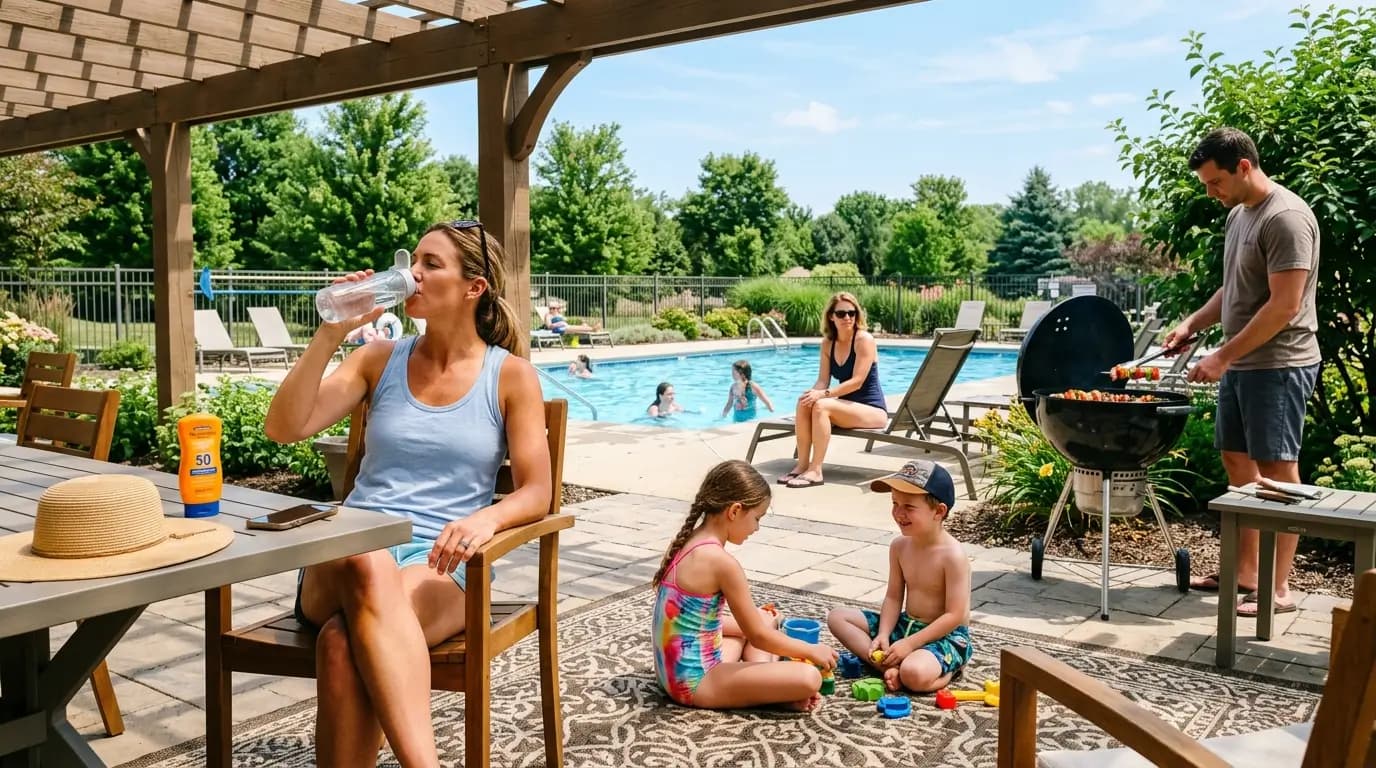
Drowning does not look like drowning. It is usually silent, fast, and close to other people — which is why "someone was watching" is such an unreliable control on its own.
The scale is steady rather than sensational. CDC drowning data records an average of 4,083 unintentional drowning deaths a year in the United States across 2012–2021, alongside an average of 8,111 emergency department visits annually for non-fatal drowning — and non-fatal drowning can leave lasting brain injury.
The control that works is designation. "Everyone is watching the pool" reliably means nobody is. One named adult, phone away, watching the water for a defined stretch of time, then handing over to another, is the arrangement that survives contact with a busy afternoon. It is the same principle as the buddy system in heat work: a specific person with a specific job beats general vigilance.
Two other points are worth stating plainly. Inflatable armbands and pool noodles are toys, not life jackets, and children can slip out of them silently. And cold water shock is a genuine hazard in open water even on hot days — the gasp reflex on sudden immersion causes inhalation of water before any question of swimming ability arises.
Set these up before anyone gets in the water:
- A named water watcher for a fixed period, with no phone and no other task
- Properly fitted, approved life jackets for weak swimmers and open water, never inflatable toys
- A barrier around home pools — fencing with a self-closing, self-latching gate
- No alcohol for swimmers, supervisors or anyone operating a boat
- Enter open water gradually to blunt the cold water shock response, whatever the air temperature
- Current first aid and CPR training for at least one adult present

Food that sits out in the heat
The temperature rule is fixed and easy to apply, which is why it is worth knowing precisely rather than approximately.
USDA guidance on the danger zone puts rapid bacterial growth between 40 °F and 140 °F (4 °C and 60 °C), where bacteria can double in as little as 20 minutes. Perishable food should not sit out of refrigeration for more than two hours — and above 90 °F (32 °C), that window drops to one hour. An outdoor table in summer sun is comfortably above that threshold.
The clock is cumulative, which is the part people get wrong at barbecues. Food that spent 40 minutes out before lunch and another 40 minutes after has used 80 minutes of its allowance, not started fresh. And reheating is not a reset: heat kills bacteria but does not neutralise toxins some of them have already produced.
| What | Hold at | Time limit out of temperature control |
|---|---|---|
| Cold perishables (meat, dairy, salads) | 40 °F (4 °C) or below | 2 hours; 1 hour above 90 °F (32 °C) |
| Hot cooked food | 140 °F (60 °C) or above | 2 hours; 1 hour above 90 °F (32 °C) |
| Leftovers | Refrigerate at 40 °F (4 °C) or below | Within 2 hours of cooking or removal from heat |
Three habits handle most of the risk at an outdoor meal:
- Run two coolers — one for drinks, which gets opened constantly, and one for perishables, which does not.
- Label the time food goes out, so the two-hour clock is a fact rather than a guess.
- Serve in small batches, keeping the rest chilled or hot, rather than putting everything out at once.

A summer plan you can actually run this week
Most of what is above condenses into a small number of decisions, and they differ depending on whether you are looking after yourself or looking after other people.
The habit I would keep from 16 years of field verification is unglamorous: check the control where the work happens, not where the paperwork lives. A cooler full of water in a site office is not hydration if the crew is 200 metres away on a roof. Shade that nobody can reach inside a break is not shade. That gap — between a control that exists and a control that is usable — is where most heat programmes actually fail, and it is just as true of a family barbecue as it is of a construction site.
Run through the list for whichever role applies to you today:
- For yourself: start the day hydrated; drink to the clock; treat the first hot day of a spell as a reduced-activity day; know that confusion in yourself or a companion means stop and get help
- Outdoors: clothing before sunscreen; reapply every two hours; heavy work outside the middle of the day; check the UV index separately from the temperature
- Around water: one named watcher at a time; approved life jackets, not toys; no alcohol for anyone supervising
- At a barbecue: two coolers; label the time food goes out; one hour, not two, when it is above 90 °F (32 °C)
- If you supervise others: written plan, acclimatisation schedule, buddy system, and a rehearsed answer to "who calls the ambulance and how does it reach us"
If you manage people who work in heat, the acclimatisation schedule is the highest-value item on that list by a wide margin, because it addresses the days on which the deaths are concentrated. Everything else is worth doing; that one is worth doing first.

Frequently asked questions
These are the questions people most often search after a heat warning, answered briefly and sourced to the guidance above.
How much water should I drink in hot weather?
OSHA and NIOSH suggest about one cup (240 ml) every 15 to 20 minutes while active in heat, rather than waiting for thirst. There is also a ceiling: generally no more than around 12 quarts (11.4 litres) in 24 hours, because excessive plain water can dangerously dilute blood sodium.
What is the difference between heat exhaustion and heat stroke?
Heat exhaustion involves fatigue, nausea, dizziness and heavy sweating, with the person still lucid. Heat stroke adds neurological signs — confusion, slurred speech, seizures or unconsciousness — and is a medical emergency. Skin may be sweating or dry in either case, so do not use skin to decide.
Is there a legal maximum working temperature?
Not in Great Britain, and not under US federal law. British employers must keep indoor temperature "reasonable" under Regulation 7 of the Workplace (Health, Safety and Welfare) Regulations 1992 and assess the risk. US federal enforcement uses the General Duty Clause, while seven states operate their own heat standards.
How long does it take to get used to working in the heat?
Usually seven to fourteen days. The OSHA and NIOSH source guidance recommends working 20 percent of the normal duration on day one and adding 20 percent daily, keeping the work intensity realistic. Heat tolerance is lost after about a week away, so returners restart the ramp.
What temperature is too hot to work outside?
No single number answers this, which is why WBGT exists. Humidity, direct sun, workload and clothing change the answer substantially, so 28 °C in humid full sun doing heavy work can be more dangerous than 33 °C in dry shade. Assess the combination, not the thermometer.
How long can food sit out at a summer barbecue?
Two hours at ordinary temperatures, and one hour once it is above 90 °F (32 °C). USDA treats 40 °F to 140 °F (4 °C to 60 °C) as the danger zone. The time is cumulative across the day, and reheating does not reset it.
Do fans help during extreme heat?
They help by speeding sweat evaporation, so they work while you are still sweating and hydrated. For someone with suspected heat stroke, a fan alone is inadequate — OSHA identifies cold water immersion as the fastest cooling method, with fans as a supporting measure.
About the author
Sophia Bennett is a Principal Occupational Hygiene & Exposure Control Consultant with 16 years of field experience across 14 countries and more than 180 workplaces inspected. Her work centres on proving that controls still function where the work actually happens — under night shift, contractor and schedule pressure. She led heat stress programmes at MSA Safety Hygiene Programmes and has held senior roles with IOM Consulting, HSL Buxton Partners, Casella Measurement, TSI Incorporated Hygiene, SKC Ltd and Dräger Safety Hygiene. She now leads Bennett Occupational Hygiene Partners, based in Manchester, United Kingdom.
Sophia holds the NEBOSH International General Certificate, ISO 45001 Lead Auditor and ISO 14001 Internal Auditor certifications, IOSH Managing Safely, and incident investigation training.
Sources and further reading
- OSHA — Heat: Protecting New Workers (acclimatisation, Rule of 20 percent, fatality timing)
- OSHA — Heat-Related Illnesses and First Aid (signs, cooling methods)
- OSHA — Heat Injury and Illness Prevention Rulemaking (current status of the proposed federal standard)
- OSHA/NIOSH — Protecting Workers from Heat Illness infosheet (hydration pace and upper limit)
- HSE — Temperature in the workplace: heat stress
- HSE — Temperature in the workplace: is it too hot or cold to work?
- HSE — Thermal comfort
- ISO — ISO 7243:2017 Assessment of heat stress using the WBGT index
- CDC — Drowning facts and data
- USDA FSIS — "Danger Zone" (40 °F – 140 °F)