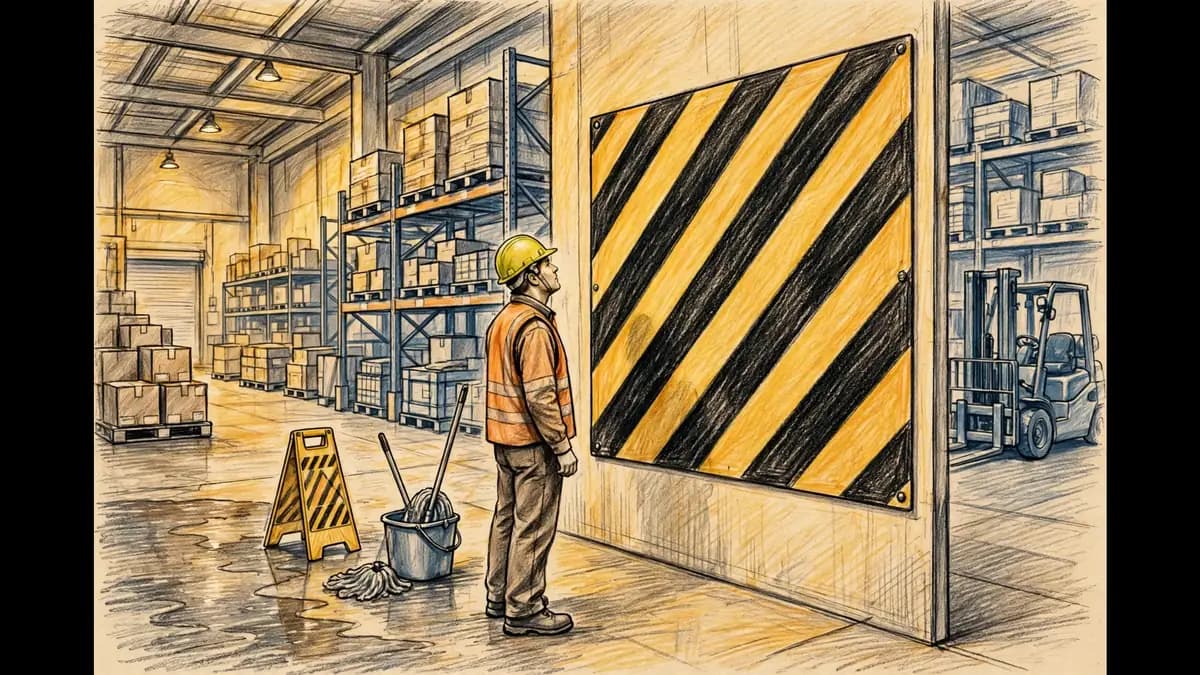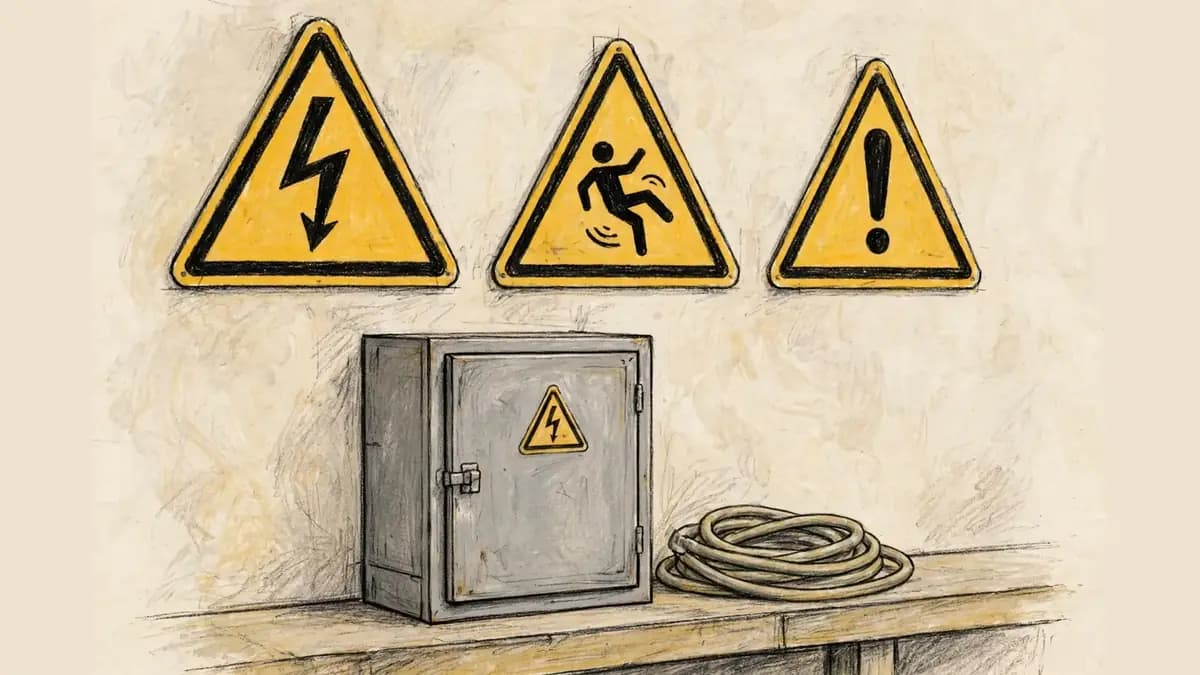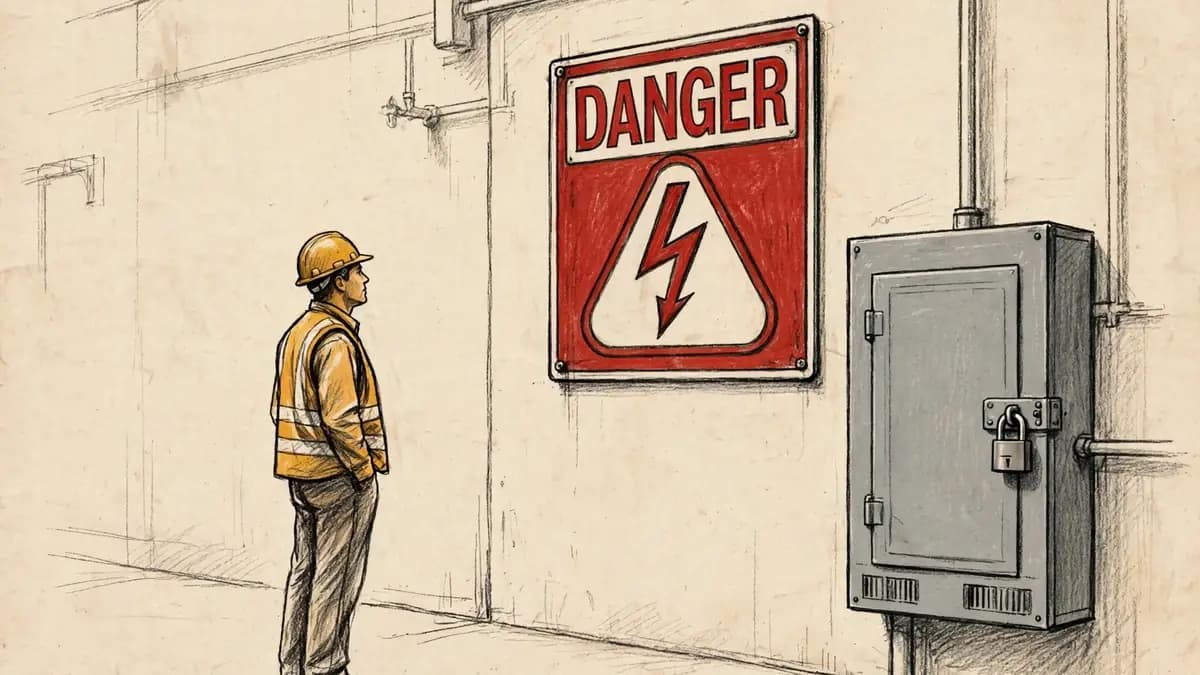
A danger sign means an immediate hazard that will cause death or serious injury if it is not avoided. The red header, the white word DANGER and the black outline are not decoration. They are a fixed legal code, set by the Occupational Safety and Health Administration (OSHA) in the United States. Every worker on the site is expected to know what they mean.
When a red DANGER sign is posted correctly, a person approaching the hazard is warned before they reach it. The sign names the hazard, states what will happen, and tells the reader what to do instead. When one is posted wrongly, or used for a hazard that does not deserve it, the warning loses its force. Workers stop believing the red headers, and the next real danger goes unnoticed.
That is why the rules for danger signs are strict. OSHA allows no variation in the design of a danger sign. The word, the colours and the message panel are fixed. The sign may only be used where an immediate hazard exists. And every employee must be taught what it means. The sections below explain the design, the law, where the signs belong, and what to do when one is seen.
What a danger sign means
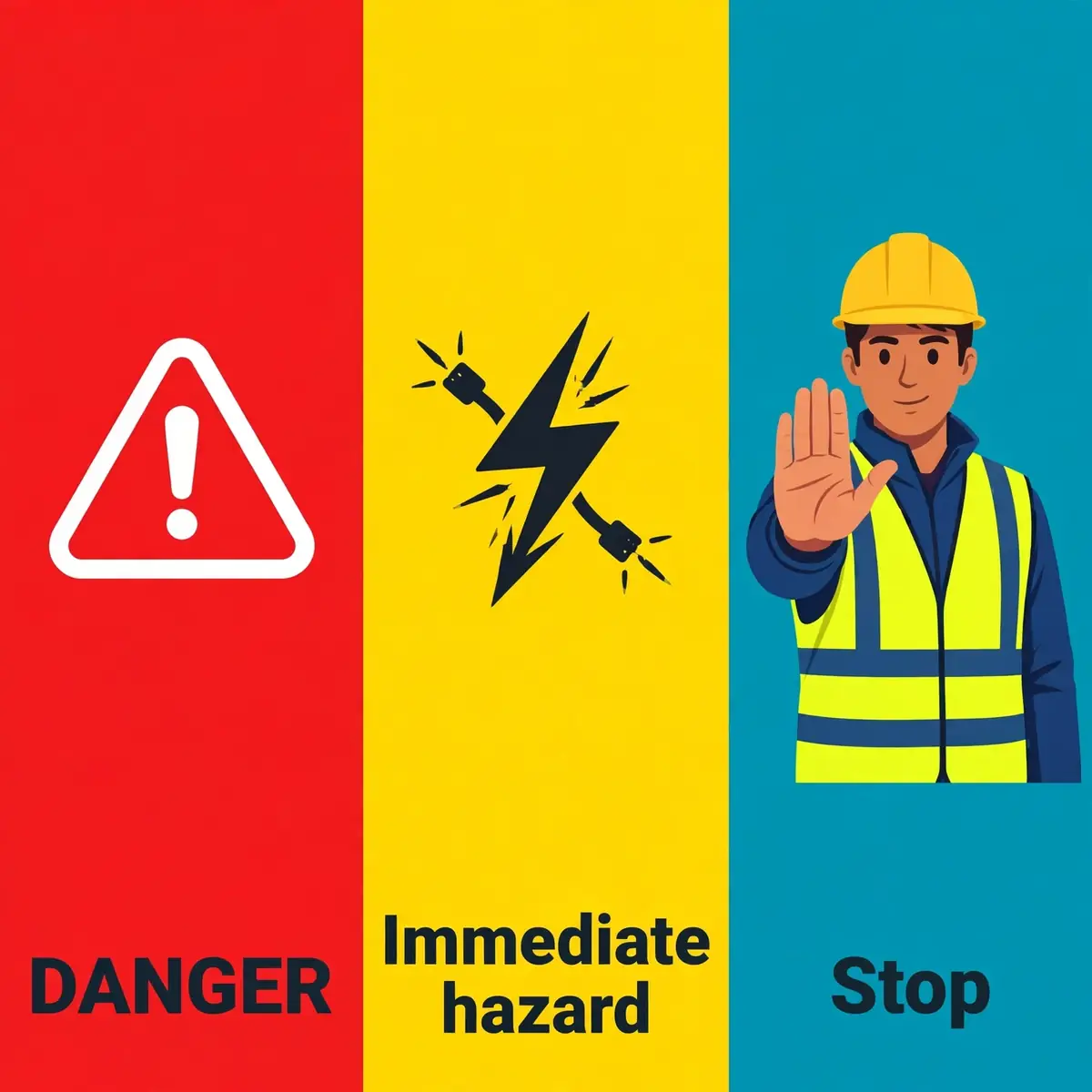
A danger sign is the highest warning a workplace can post. It marks a hazard that is present now, not one that might appear later. Contact with the hazard will cause death or serious injury unless the reader takes the avoidance action the sign states. That single word, will, is what separates DANGER from every other signal word.
OSHA states the rule in plain terms. Under 29 CFR 1910.145(c)(1)(ii), employees shall be instructed that danger signs indicate immediate danger and that special precautions are necessary. The same paragraph adds a strict rule. There shall be no variation in the type of design of signs posted to warn of specific dangers. The message is fixed because the response must be instant: stop, read, and do what the sign says.
The one-word test: will, could or may
The signal words form a scale of certainty, and the scale is the whole system. DANGER means the injury will happen if the hazard is not avoided. WARNING means it could happen. CAUTION means it may happen, or that a minor or moderate injury is possible. When the outcome is certain and severe, only DANGER is correct. When the outcome is only possible, a lower word is the honest choice.
Getting the word wrong has a cost in both directions. A DANGER sign on a minor hazard teaches workers that red headers are routine. The next real danger sign gets ignored. A CAUTION sign on a lethal hazard understates the risk. A worker walks into a live panel or an unguarded press believing the danger is small. The test is simple: if a person meets the hazard unprotected, will they be killed or seriously injured? If the answer is yes, the sign says DANGER.
What counts as an immediate hazard
An immediate hazard is one that can hurt a person the moment they meet it, with no further step needed. Examples of immediate hazards are:
- Live electrical parts at a voltage that can kill.
- An open tank of corrosive liquid.
- An unguarded machine that cycles on its own.
- A confined space with an atmosphere that cannot support life.
The danger is present while the sign stands there, and the sign must stand there while the danger lasts.
A hazard that needs several further steps before it can hurt someone is not an immediate hazard. Examples are:
- A chemical stored safely in a sealed drum.
- A machine that is locked out and tagged.
- A roof edge behind a fixed guardrail.
They still need signs or labels of some kind, but not a DANGER sign. The red header is reserved for the hazard that is live, exposed and able to kill on contact.
WarningNever post a DANGER sign to make a general area look serious. Overuse dulls the warning, and workers learn to walk past red headers.
How to read a danger sign
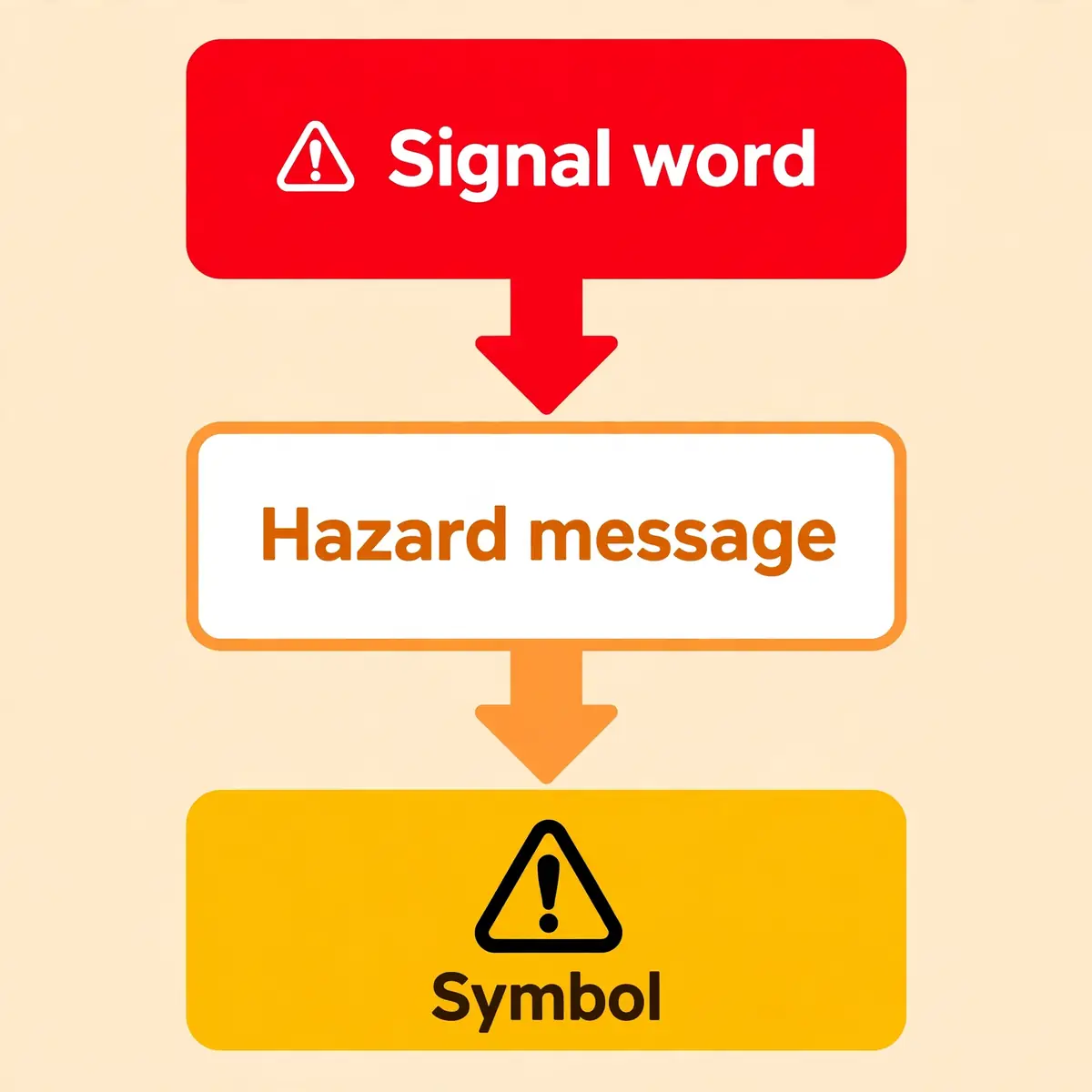
A danger sign is read in three parts, from top to bottom, and each part has a fixed job. The header gives the severity in one word. The message panel names the hazard, states the consequence, and gives the action. The pictogram shows the hazard to readers who cannot read the words quickly enough. A person who can read only the header has already learned the most important fact: stop.
The layout is fixed by the standard the sign is built to. Under the older OSHA format, the word DANGER appears in white letters on a red oval inside a black panel. Under the newer ANSI Z535.2 format, the word sits in white on a red signal-word panel. The safety alert symbol, an exclamation mark inside a triangle, stands beside it. Both formats comply with OSHA, because the construction rule accepts the ANSI Z535.2 figures as well as the older ones.
The red header
The header is the first thing the eye meets, and it is the part that must never change. The word is DANGER, in white capital letters, on a red background, with a black outline around the panel. The colours are fixed by 29 CFR 1910.145(d)(2): red, black and white. They match the safety colours in ANSI Z53.1-1967 or ANSI Z535.1-2006(R2011). No other colour may be used for the header, and the word may not be reworded.
The header works because it is the same on every site. A new visitor can read the severity from across the room before the message words are legible. That is the reason the design is fixed by law rather than left to each employer. A red header must mean the same thing everywhere. A header that changes meaning between factories is worse than no sign at all.
The message panel
The message panel sits below the header, black letters on a white background, and it carries the detail. A good danger-sign message has three parts: the hazard, the consequence, and the action. "HIGH VOLTAGE" names the hazard. "WILL CAUSE DEATH" states the consequence. "KEEP OUT" or "LOCK OUT POWER BEFORE SERVICING" gives the action. Each part is short, and the whole message is easy to read at a glance.
OSHA sets the wording rules in 29 CFR 1910.145(e)(2). The wording of any sign should be easily read and concise. The sign should contain sufficient information to be easily understood. The wording should make a positive, rather than negative, suggestion and should be accurate in fact. "Keep door closed" beats "Do not leave the door open": an action is processed faster than a prohibition. The message must also be true: a sign that overstates the hazard is as useless as one that understates it.
The pictogram
The pictogram is the symbol panel, usually placed to the left of the message or above it. It shows the hazard in a picture. A lightning bolt means electricity, a falling figure means a fall edge, and a skull means a lethal chemical. The symbols come from standard sets such as ISO 7010. The same picture therefore means the same thing in every country that uses them.
A pictogram is optional where the words alone are clear. It becomes essential where the workforce reads more than one language, or where some workers cannot read English fluently. OSHA requires the signal word and the major message to be understandable to every exposed employee. A picture carries the warning across a language gap in a way that text alone cannot. When a sign is made for a multilingual crew, the pictogram does the heavy work.
TipRead a new danger sign from the top down. The header gives the severity, the message gives the hazard and the action. The pictogram confirms what you are looking at.
Danger, Warning, Caution and Notice: the four signal words
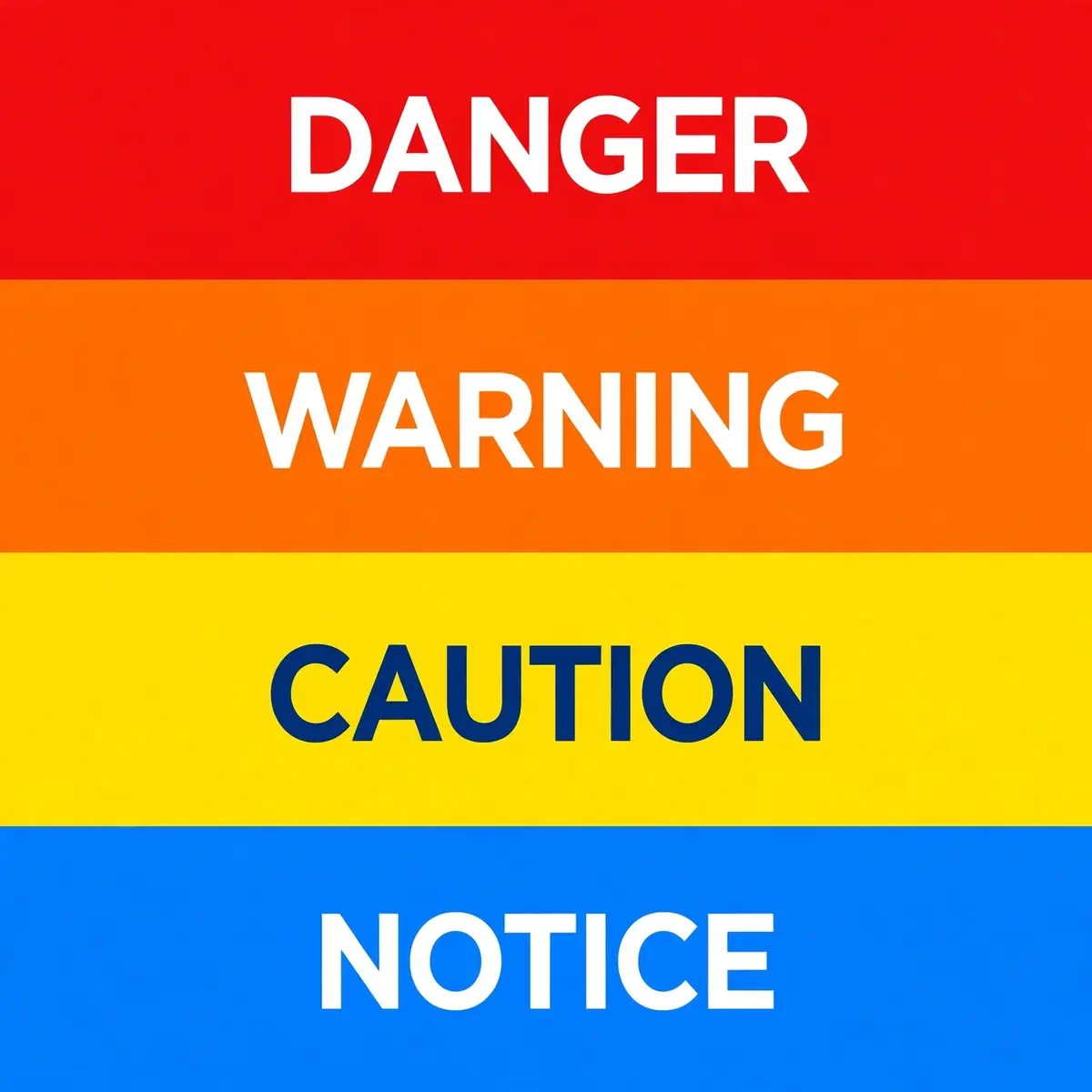
Four signal words cover almost every workplace sign, and each one means a different level of risk. DANGER is the top of the scale. WARNING sits between DANGER and CAUTION. CAUTION marks a potential hazard or an unsafe practice. NOTICE carries information that is not about personal injury at all. A fifth class, safety instruction signs, gives general safety guidance on a white background with a green panel.
The split between the words matters because OSHA and ANSI divide the work. OSHA's own sign rule, 29 CFR 1910.145, names three sign classes: danger, caution and safety instruction signs. WARNING and NOTICE come from ANSI Z535.2. OSHA accepts that standard as an alternative since the rule was updated in 2013. A sign built to the current ANSI Z535.2 format satisfies OSHA. The table below sets out the scale as it is used on sites today.
| Signal word | Colour | What it means | When to use it |
|---|---|---|---|
| DANGER | Red header, white letters | An immediate hazard that will cause death or serious injury if not avoided | Live electrical parts, unguarded machines, permit spaces, lethal chemicals |
| WARNING | Orange header, black letters | A hazard that could cause death or serious injury if not avoided | Overhead cranes, moving equipment, serious pinch or crush points |
| CAUTION | Yellow background, black panel | A potential hazard, or an unsafe practice, that may cause minor or moderate injury | Slippery floors, low clearance, hot surfaces, trip hazards |
| NOTICE | Blue header, white letters | Information not related to personal injury | Authorised personnel only, hard hat area, shutdown procedure |
| SAFETY INSTRUCTIONS | White background, green panel | General instructions and suggestions about safety measures | First aid station, eyewash location, PPE requirements |
Why the words are not interchangeable
The words look similar on a wall, but they ask for different behaviour. DANGER tells the reader to stop and stay out unless they are authorised and protected. WARNING tells the reader to take care because a serious injury is possible. CAUTION tells the reader to watch their step or their hands. NOTICE tells the reader about a rule or a procedure. Swapping one word for another changes the instruction. A worker who follows the wrong instruction is the one who gets hurt.
The words also train the workforce over time. When every sign on a site says DANGER, workers learn that red headers mean nothing in particular. The real danger sign then blends into the background. When the words are used correctly, the opposite happens. A red header is rare, and it stops people in their tracks. The discipline of choosing the right word is part of the safety system, not a matter of style. The site's guides to caution signs and warning signs cover the two middle levels in full.
Safety instruction signs and the green panel
Safety instruction signs are the quiet members of the family. They do not warn of a hazard; they tell the reader where help is or what to do. "First aid station", "Eyewash", "Wear hearing protection beyond this point" are safety instructions. Under 29 CFR 1910.145(d)(6), the background is white and the panel is green with white letters. Any extra wording on the sign is black on white.
The green panel is easy to confuse with a safe-condition sign, and the confusion is worth avoiding. In the UK and ISO system, green marks emergency escape routes and first aid, which is close but not identical. On a US site, a green panel means an instruction, not an all-clear. The safest habit is to read the words on every sign, even a green one. Do not trust the colour alone.
AlertOSHA's sign rule names only Danger, Caution and Safety Instruction signs. Warning and Notice come from ANSI Z535.2, which OSHA accepts as an alternative format.
Where danger signs are required
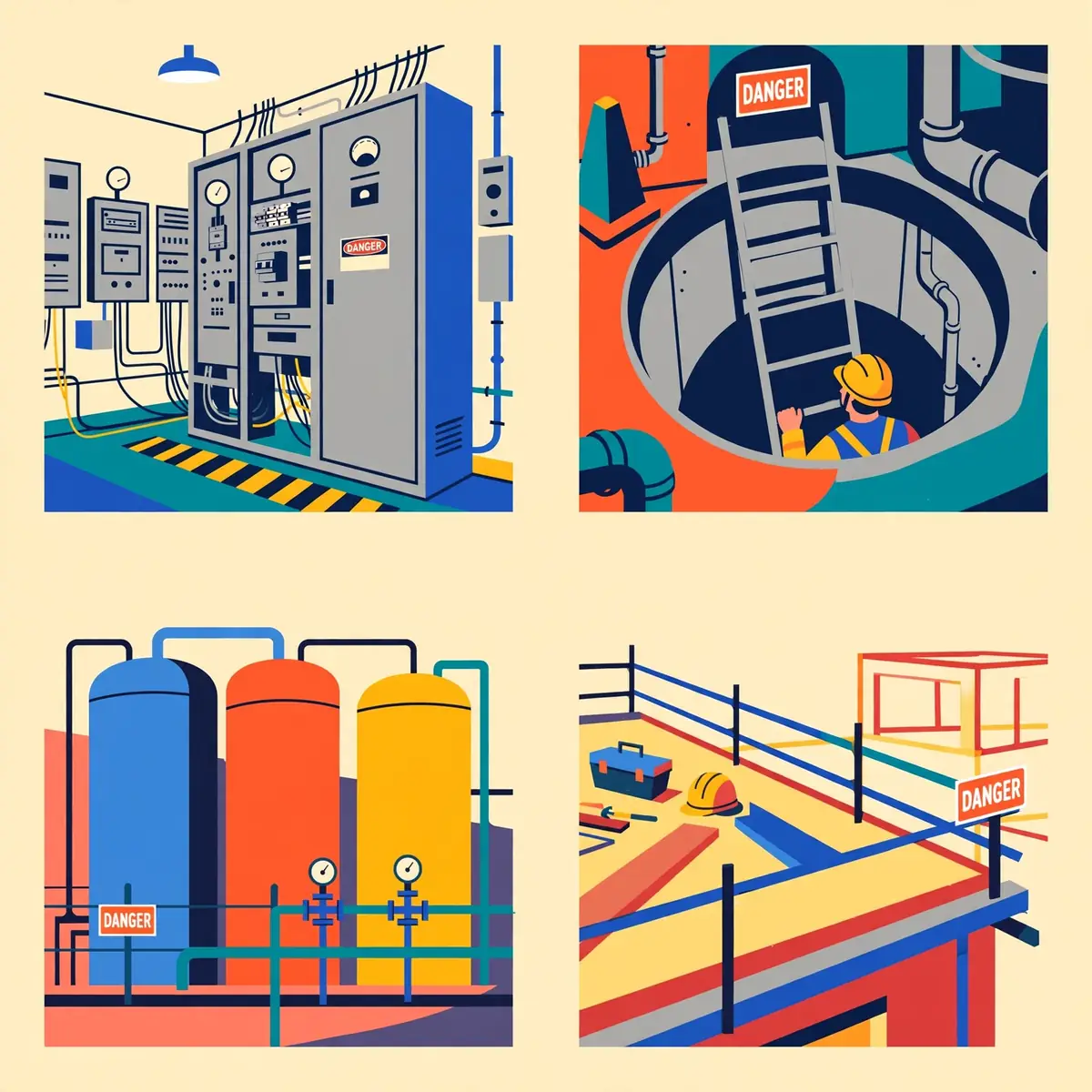
A danger sign is required wherever an immediate hazard exists and people can reach it. The general rule sits in the construction standard, 29 CFR 1926.200(b)(1). It states: "Danger signs shall be used only where an immediate hazard exists." The word "only" does two jobs at once. It requires the sign where the hazard is immediate, and it forbids the sign where the hazard is not.
Several other OSHA standards name danger signs directly for their own hazards. The table below lists the places where the law itself calls for one. In each case, the sign is part of a wider duty. That duty covers the permit system for confined spaces, the alerting techniques for electrical work, and the signage rules for construction. A sign on its own never satisfies those duties, but the duty is not satisfied without the sign either.
| Place or hazard | What the law requires | Source |
|---|---|---|
| Permit-required confined space | Inform exposed employees by posting danger signs, or by an equally effective means, of the existence, location and danger of the space | 29 CFR 1910.146(c)(2) |
| Electrical hazards | Use safety signs, symbols or accident prevention tags where necessary to warn employees about electrical hazards that may endanger them | 29 CFR 1910.335(b)(1) |
| Construction sites | Use danger signs only where an immediate hazard exists; keep signs visible while work is performed and remove or cover them when the hazard is gone | 29 CFR 1926.200(a), (b)(1) |
| Radiation hazards | Signs posted to warn of specific dangers and radiation hazards follow the fixed danger-sign design, with no variation | 29 CFR 1910.145(c)(1)(i) |
| Biological hazards | Use the biological hazard warning to mark the actual or potential presence of a biohazard on equipment, containers, rooms and materials | 29 CFR 1910.145(e)(4) |
Confined spaces
Confined spaces are the clearest case in the general industry rules. Under 29 CFR 1910.146(c)(2), a workplace with permit spaces must inform exposed employees. The employer must tell them of the existence, location and danger of the spaces. Posting danger signs does the job, and any other equally effective means does too. The standard even gives example wording: a sign reading "DANGER — PERMIT-REQUIRED CONFINED SPACE, DO NOT ENTER" satisfies the requirement.
The sign is the first line of the permit system, not the whole of it. Entry still needs a permit, an attendant, air testing and a rescue plan. The guide to confined space entry explains the full system. But the sign is what stops the worker who was never told about the space. Tanks, vessels, silos, manholes and pits all count. The sign belongs at every entry point, not just the main one.
Electrical hazards
Electrical rooms, switchgear and live panels are the most common place to see a danger sign. Under 29 CFR 1910.335(b)(1), safety signs, safety symbols or accident prevention tags shall be used where necessary. They must warn employees about electrical hazards that may endanger them, as required by 1910.145. Where signs alone cannot keep people out, the same paragraph requires barricades used with the signs. If even that is not enough, an attendant must be stationed to warn and protect employees.
High-voltage equipment deserves a sign that names the voltage. "DANGER — HIGH VOLTAGE — 480 VOLTS" tells a qualified worker what they face; a bare "DANGER" does not. Arc-flash labels sit beside the danger sign rather than replacing it. NFPA 70E calls for a label on the equipment giving the incident energy and the PPE category. That lets a qualified worker choose the right protection before opening a panel. The danger sign warns everyone else to stay out.
Construction sites
Construction has its own sign rule, and it is stricter about removal than the general industry rule. Under 29 CFR 1926.200(a), signs and symbols required by the subpart shall be visible at all times when work is being performed. They shall be removed or covered promptly when the hazards no longer exist. A danger sign left standing after the trench is backfilled or the roof edge is guarded is a violation. It teaches the crew to ignore the signs that remain.
Construction danger signs cover open trench edges, crane swing radius, unprotected roof perimeters, energised temporary panels and overhead power lines. At overhead lines, the sign must state the clearance distance workers must keep. Traffic control signs on the site follow the Manual on Uniform Traffic Control Devices. That duty sits in 1926.200(g)(2), not in the accident-prevention sign rules. The guide to road sign meanings covers the traffic side of the site.
Other places the law names danger signs
Radiation hazards take the fixed danger-sign design under 1910.145(c)(1)(i). That paragraph covers signs posted to warn of specific dangers and radiation hazards together. The radiation trefoil and the rules for posting it are covered in the guide to the radiation sign. Biological hazards have their own class under 1910.145(e)(4). The biological hazard warning marks the actual or potential presence of a biohazard. The sign carries the word BIOHAZARD with the biohazard symbol.
Bloodborne pathogen rules add their own labelling duties for regulated waste and contaminated equipment, under 29 CFR 1910.1030. Hazardous chemicals on stationary process containers may be marked with signs and placards instead of labels, under 29 CFR 1910.1200(f)(7). In each case, the sign is one part of a system that also includes training, procedures and protective equipment. No single sign carries the whole duty.
AlertA danger sign left standing after the hazard is gone is a violation on a construction site. It teaches the crew to ignore the signs that remain.
Common danger signs and what each one tells you

Most danger signs fall into a small set of families, and each family has its own wording. The table below lists the signs a worker is most likely to meet. It gives what each one means, and the action it asks for. The wording on a real sign may differ from the examples here. The hazard and the action must match the actual site. Read the sign in front of you, not the example in a table.
| Sign | What it means | What to do |
|---|---|---|
| DANGER — HIGH VOLTAGE | Live parts at a voltage that can kill on contact | Keep out unless authorised and qualified; do not touch |
| DANGER — PERMIT-REQUIRED CONFINED SPACE, DO NOT ENTER | A space with an atmosphere or engulfment risk that can kill | Do not enter without a permit, attendant and air testing |
| DANGER — KEEP OUT / AUTHORISED PERSONNEL ONLY | An area where an immediate hazard exists beyond the point | Turn back; enter only with authorisation |
| DANGER — DO NOT OPERATE / LOCKED OUT | Equipment under maintenance; starting it would injure the worker inside | Do not touch the controls; find the person who locked it out |
| DANGER — FALL HAZARD / UNPROTECTED EDGE | A drop that will kill or seriously injure on a fall | Stay behind the guardrail or barrier; wear fall protection if authorised |
| DANGER — CORROSIVE / TOXIC CHEMICAL | A substance that burns, poisons or destroys tissue on contact | Wear the stated PPE; do not open, move or mix the container |
High voltage and electrical danger signs
Electrical danger signs are the most common danger signs in industrial and commercial buildings. They mark switchgear rooms, transformer bays, battery rooms, exposed busbars and temporary power panels on construction sites. The sign must name the voltage where that matters. The protection a qualified worker needs at 480 volts is different from the protection needed at 11,000 volts.
The electrical danger sign is not the same as the arc-flash label. The danger sign warns everyone, qualified or not, to keep out. The arc-flash label is required by NFPA 70E. It gives the qualified worker the incident energy, the arc-flash boundary and the PPE category for the task. Both belong on the equipment, and neither replaces the other. The guide to fall protection covers the protection needed where electrical work is done at height.
Confined space danger signs
A confined space danger sign marks a space that is large enough to enter. It has limited entry or exit, and it is not designed for continuous occupancy. Tanks, vessels, silos, storage bins, hoppers, vaults and pits are the usual examples. The danger is often invisible: an oxygen-deficient atmosphere, a toxic gas, or a material that can engulf a worker. That invisibility is why the sign matters so much.
The sign alone never authorises entry. Entry needs a written permit and a trained attendant stationed outside. It also needs air testing before and during the entry, and a rescue plan that works. A worker who sees the sign and enters anyway, even with good intentions, risks becoming the next victim. Would-be rescuers who follow the first victim in without a permit or breathing apparatus often become victims too. The sign says do not enter, and that instruction covers rescuers too.
Chemical and biological danger signs
Chemical danger signs mark storage areas, bulk tanks and process vessels. The substance there can kill or seriously injure on contact, inhalation or ingestion. The sign should name the chemical where that helps the reader. "DANGER — ANHYDROUS AMMONIA" is more useful than "DANGER — CHEMICALS". The container label, under the Globally Harmonized System, carries the pictograms and the hazard statements for the substance itself.
Biological hazards use their own sign class. The biohazard sign carries the word BIOHAZARD and the biohazard symbol. It marks equipment, containers, rooms and materials that contain or are contaminated with infectious agents. On tags, the biohazard warning uses fluorescent orange or orange-red. The sign tells the reader that the hazard is a living agent. The precautions are containment and hygiene rather than distance alone.
Fall and machine danger signs
Fall danger signs mark unprotected edges, open holes, unguarded roof perimeters and crane swing areas. They are posted at the approach to the hazard. The sign stands far enough back that a person can stop before reaching the edge. A sign at the edge itself is too late. Where a guardrail, a safety net or a personal fall arrest system is in place, the sign supports the physical control. It never replaces it.
Machine danger signs mark equipment that can start without warning. Examples are presses that cycle automatically, robot cells in automatic mode, unguarded power take-off shafts, and conveyors with nip points. The sign names the machine hazard and the action, usually "DO NOT OPERATE" or "KEEP HANDS CLEAR". The physical control is guarding, interlocking or lockout, and the sign is the warning that sits on top of it.
How to place a danger sign so it works
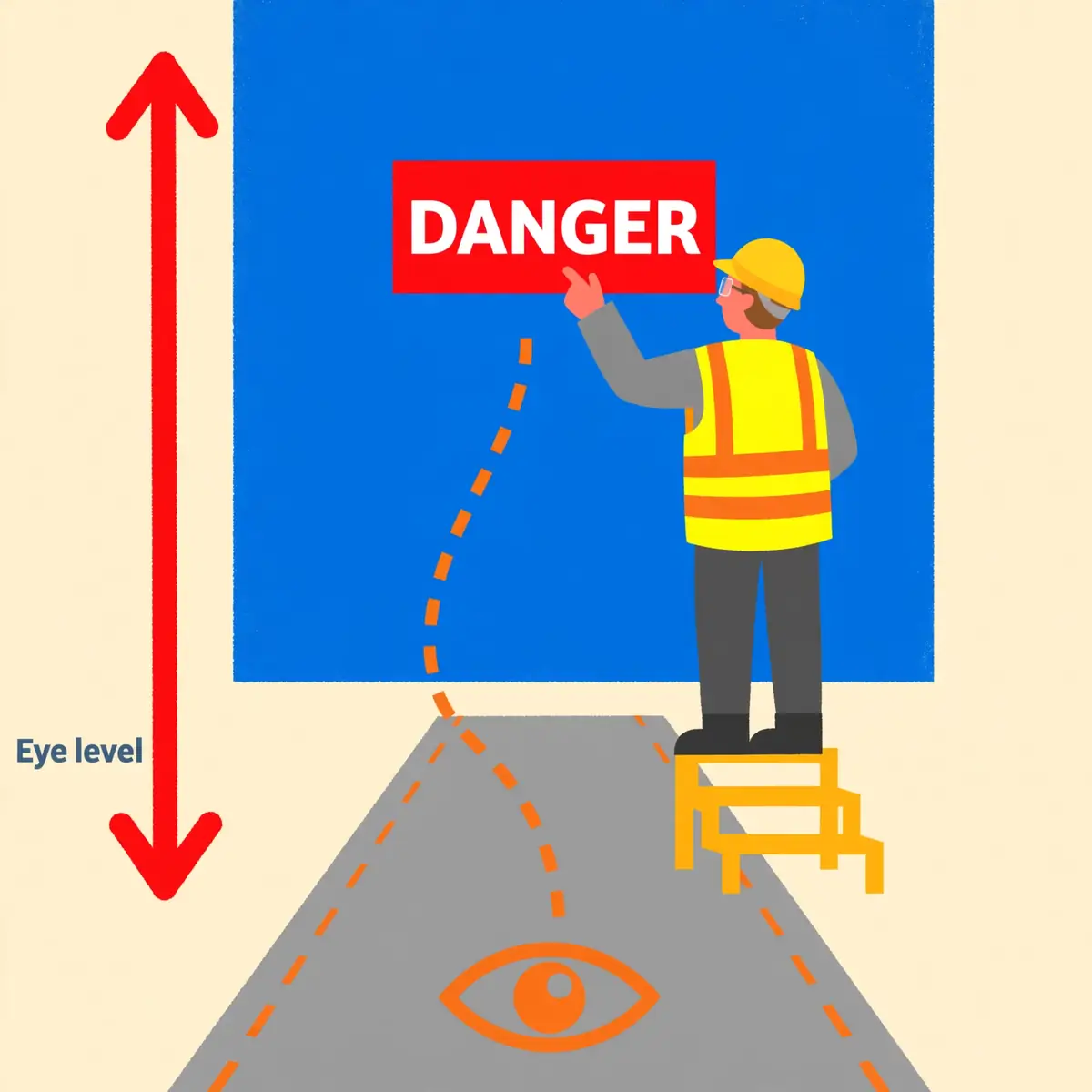
A danger sign works only if it is seen before the hazard is reached. Placement is therefore a safety decision, not a housekeeping one. The sign belongs at the point of approach, facing the people who are walking toward the hazard. It must stand far enough in advance that a person has time to stop, read and turn back. A sign hidden behind a door, mounted above head height, or placed past the hazard has already failed.
OSHA sets no single mounting height for danger signs. The practice sign makers follow is consistent. The centre of the sign sits between 5 and 7 feet from the floor. That is eye level for a standing adult. The sign faces the approach route, not the machinery. Where an area has more than one way in, every entry point gets a sign, not just the main door. A hazard with three approaches and one sign is a hazard with two unmarked approaches.
Height and sightline
Eye level is the rule because the eye finds a sign at its own height first. A sign mounted near the ceiling is read late, if it is read at all. A sign near the floor is blocked by the first pallet or drum left in front of it. The sign must face the direction people come from. A sign mounted flat on the side of a machine warns the wrong person at the wrong time. It is visible only to someone already standing beside the machine.
Check the sightline by walking the approach yourself. Stand where a new worker or a visitor would first see the area, and look for the sign. If a stack of boxes, a parked forklift or an open door blocks the sign, it is in the wrong place. Move the sign, not the worker. The check takes a minute, and it is the cheapest test in the whole safety system.
Distance and size
A sign must be large enough to read from the distance at which it must be read. ANSI Z535.2 sets letter height by viewing distance. Sign makers use a simple rule from it: letter height in inches equals viewing distance in feet times 0.07. A sign read from 25 feet needs the word DANGER about 1.75 inches tall. A sign read from 40 feet needs letters closer to 3 inches tall, which means a larger panel.
Common stock sizes follow that rule. A 10 by 7 inch sign suits a reading distance up to about 15 feet. A 14 by 10 inch sign suits about 25 feet. A 20 by 14 inch sign suits about 40 feet. Where the approach is longer, or the sign must be read by a driver, the panel grows. Size is not a matter of taste. A sign too small to read is the same as no sign at all.
Lighting and condition
A sign that cannot be seen in the light of the area where it stands does not comply. In low-light rooms, night-shift areas and outdoor sites, the sign must be illuminated. Reflective or photoluminescent material also works, because it stays visible when the lights fail. The material must suit the environment as well. Use aluminium or fibreglass-reinforced plastic outdoors, rigid PVC indoors, and vinyl where the sign must follow a curved surface.
Condition matters as much as placement. Faded print, cracked panels, peeling corners and paint splashes all reduce the warning. A damaged sign must be replaced, not patched. Include the signs in the regular workplace inspection, monthly or quarterly depending on the environment. Replace any sign that is no longer legible, accurate or relevant. An outdated sign that no longer matches the hazard is worse than a missing one. It teaches workers that signs cannot be trusted.
TipWalk the approach route yourself and check the sightline. If a box, a forklift or an open door blocks the sign, the sign is in the wrong place.
Danger tags and temporary hazards
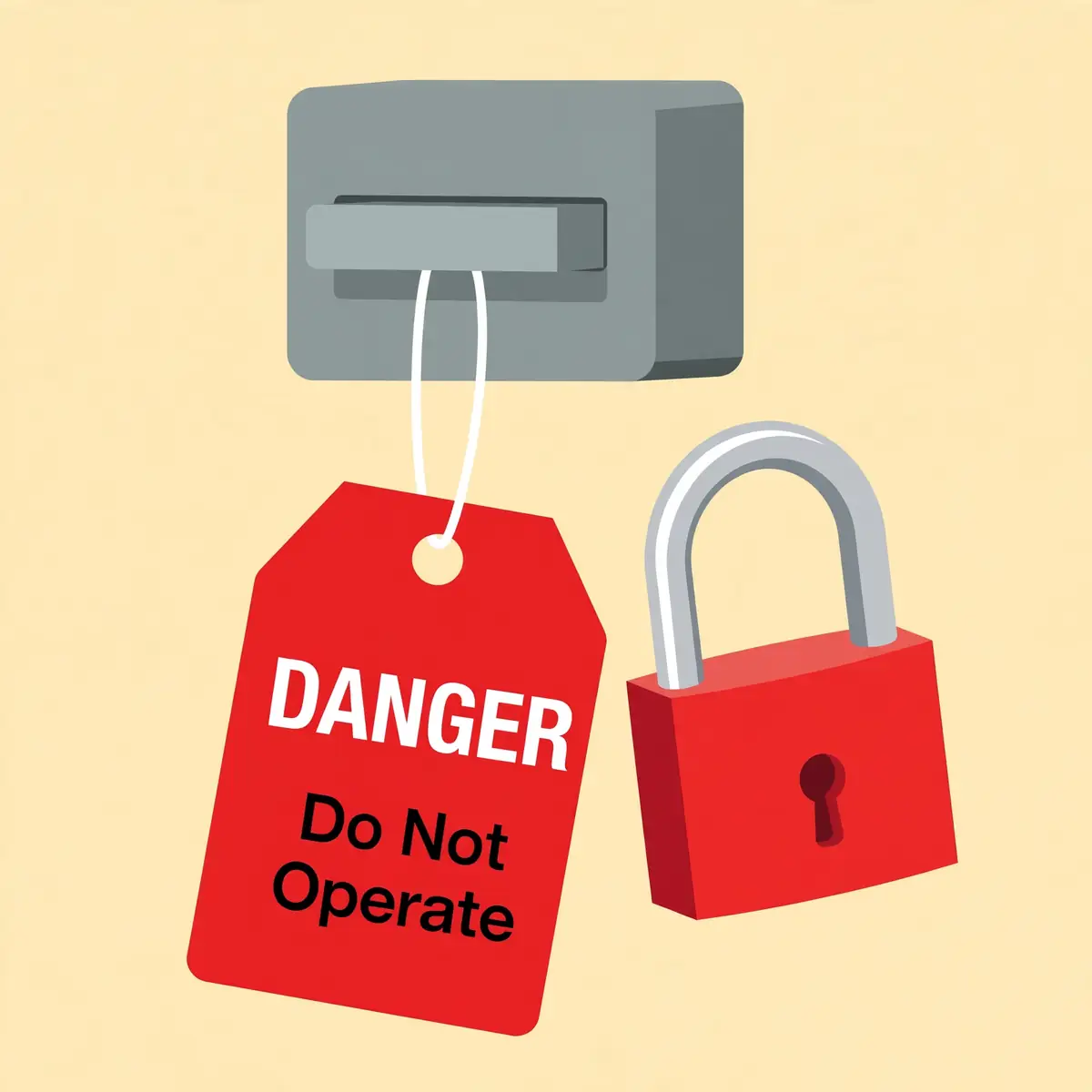
A tag is the temporary version of a sign. It marks a hazard that is out of the ordinary, unexpected or not readily apparent. It stays on until the hazard is gone. A defective tool, a machine under repair and a valve that must stay shut are tag jobs, not sign jobs. The tag warns the next person who reaches for the equipment that something has changed.
The tag rules sit in 29 CFR 1910.145(f), and they are strict in the same way the sign rules are. Tags shall be used until the hazard is eliminated or the hazardous operation is completed. Tags need not be used where a sign, guarding or another positive means of protection is already in place. On construction sites, tags are a temporary means of warning. They shall not be used in place of, or as a substitute for, accident prevention signs, under 29 CFR 1926.200(h)(1).
When a tag is the right tool
Use a tag when the hazard is temporary and specific to one piece of equipment or one task. Examples are:
- A lockout tag on an isolator.
- A "DO NOT OPERATE" tag on a pump under repair.
- A "DO NOT USE" tag on a damaged ladder.
The tag is attached to the equipment itself, at the control a person would touch. The warning is then met at the exact moment of use.
Do not use a tag where a permanent sign belongs. A permit space, a live switchgear room and an unguarded edge need fixed signs. The hazard is permanent, and the people at risk include visitors who were never told about it. A tag is also the wrong tool for a hazard that is part of normal operations. If the hazard is there every day, the warning should be fixed to the wall, not hung on a string.
What a danger tag must carry
Every required tag carries two things: a signal word and a major message. The signal word is DANGER, CAUTION, BIOLOGICAL HAZARD, or the biohazard symbol. The major message states the specific hazard or the instruction, in words, a pictograph, or both. "High voltage", "Close clearance", "Do not start" and "Do not use" are the standard's own examples. The message must be specific: a tag that says only "DANGER" tells the reader nothing about what to avoid.
The physical rules for tags are practical. The signal word must be readable from at least 5 feet, or further if the hazard warrants it, under 1910.145(f)(4)(ii). The tag must be affixed as close as safely possible to the hazard. Use a positive means such as string, wire or adhesive that prevents its loss or unintentional removal, under 1910.145(f)(4)(vi). All employees must be informed of the meaning of the tags used in the workplace. They must also learn the precautions the tags require, under 1910.145(f)(4)(v).
WarningA danger tag belongs only in a major hazard situation. That means an immediate hazard that presents a threat of death or serious injury. OSHA states it plainly: danger tags shall be used only in these situations.
The UK and ISO view: there is no "danger" class
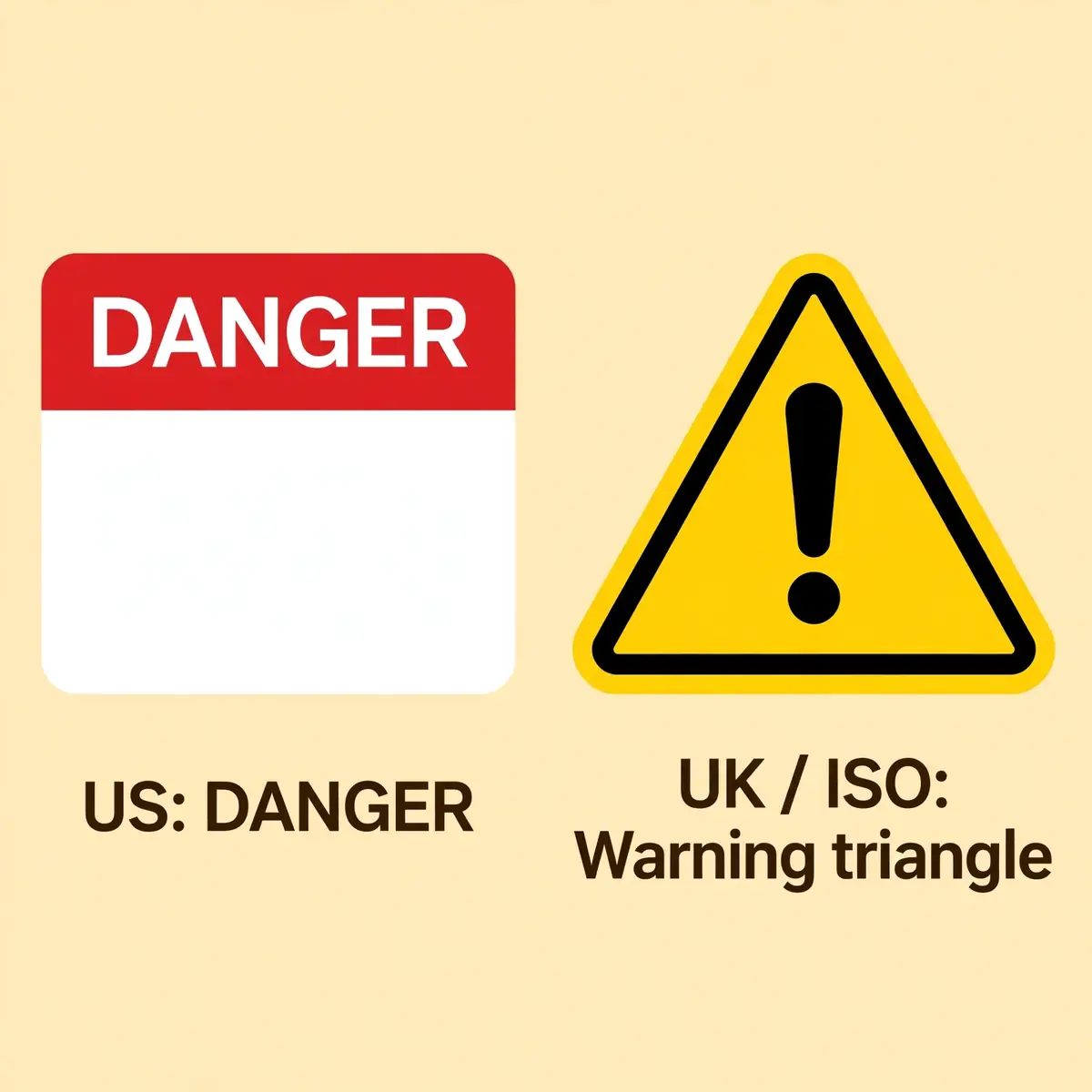
A worker who moves between a US site and a UK site will notice the signs change. The change is not cosmetic. The United Kingdom has no DANGER signal-word class. The Health and Safety (Safety Signs and Signals) Regulations 1996, SI 1996/341, divide signs by shape and colour. They do not use signal words. Red means prohibition, danger alarm or fire-fighting equipment. Yellow or amber means warning. Blue means mandatory action. Green means emergency escape or first aid.
The same hazard is therefore signed differently on each side of the Atlantic. A live electrical panel in the United States gets a red DANGER header. The same panel in Great Britain gets a yellow triangular warning sign with a black lightning bolt. It is built to BS EN ISO 7010, the standard the Health and Safety Executive accepts for safety signs. The message is the same — electricity here can kill — but the visual language is different.
How the UK system differs
The UK system uses shape as well as colour. Warning signs are yellow triangles with a black border and a black pictogram. Prohibition signs are white circles with a red border and a red bar. Mandatory signs are blue circles with a white pictogram. Safe-condition signs are green rectangles or squares. The regulations require signs to be uniform and, as far as appropriate, without words. That way they can be understood quickly without knowing the language.
Permanent signboards must be used for prohibitions, warnings and mandatory requirements. They also mark the location of emergency escape routes and first-aid facilities. Occasional signs — illuminated signs, acoustic signals and verbal communication — are used where the occasion requires. They signal danger, call persons to take a specific course of action, and help with emergency evacuation. A sign may only be used to convey the message the regulations specify for it.
What to do on a site that uses both systems
Multinational sites and visiting workers are where the two systems collide. A US worker in a UK plant may look for a red DANGER header that is not there. A UK worker in a US plant may read a yellow CAUTION sign as a warning triangle. The fix is training, not more signs. Every induction should teach the system used on that site. Use the actual signs on the actual walls, before the worker starts the job.
Where a site genuinely uses both systems, keep them apart. Do not mount a US danger sign and a UK warning triangle for the same hazard side by side. The two messages compete, and the reader hesitates. Pick the system that matches the law where the site stands, and use it consistently. Visitors should be told at the gate which system the site uses and what its colours mean.
NoteIn Great Britain, red on a safety sign means prohibition, danger alarm or fire-fighting equipment. There is no DANGER word class in the UK regulations.
Choosing the right sign: a step-by-step check
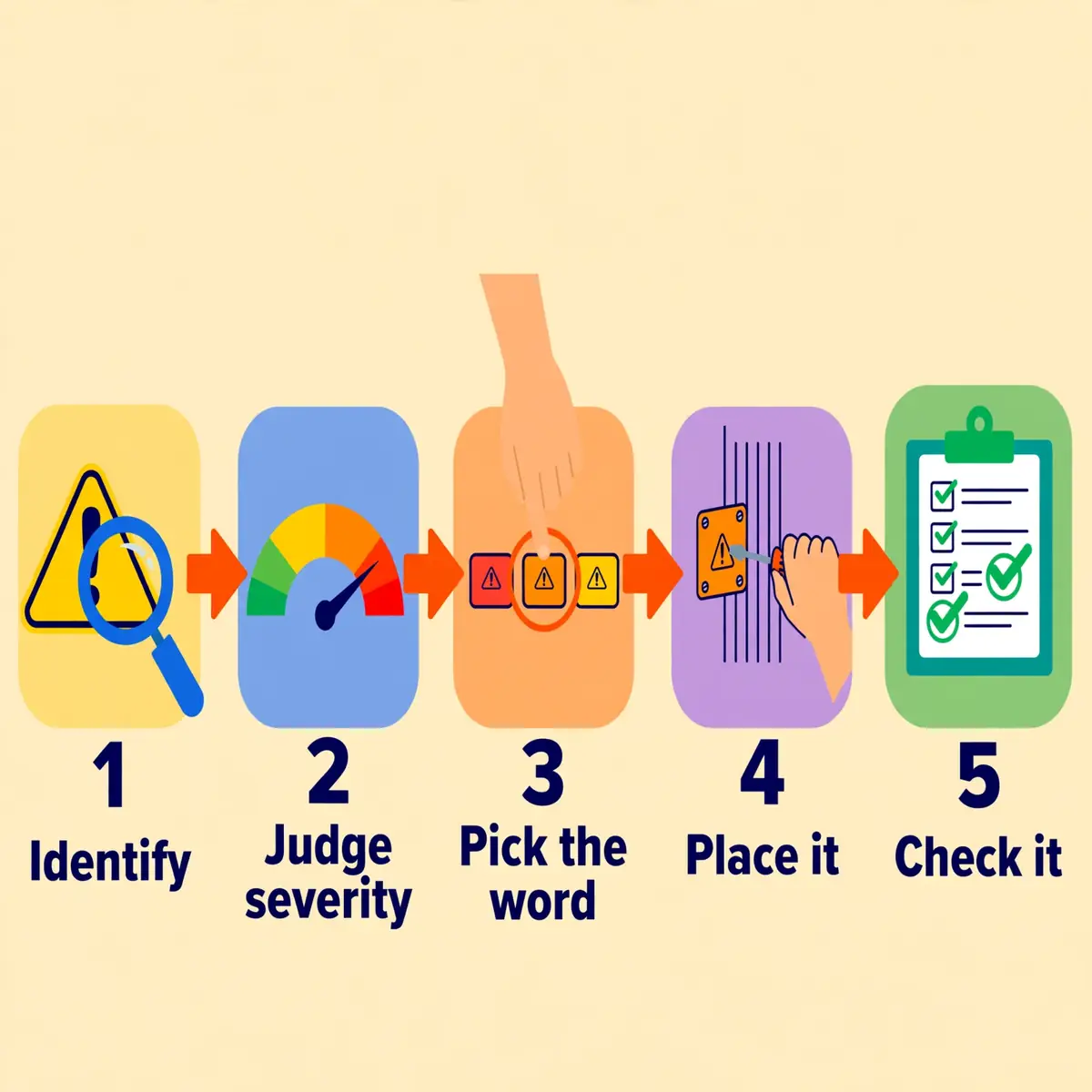
Choosing a danger sign is a short decision, but it should follow a fixed order. The order matters because each step depends on the one before it. The hazard decides the severity, the severity decides the word, and the word decides the design. The design then decides the placement. Skipping a step is how a DANGER sign ends up on a wet floor. It is also how a CAUTION sign ends up on a live panel.
- Identify the hazard. Name the energy, the substance or the drop that can hurt a person, and where it is.
- Judge the severity. Ask whether contact will cause death or serious injury, could cause it, or may cause a minor or moderate injury.
- Pick the signal word. DANGER for will, WARNING for could, CAUTION for may, NOTICE for information.
- Write the message. State the hazard, the consequence and the action, in short positive words.
- Place the sign and train the crew. Mount it at eye level on the approach, and teach every exposed worker what it means.
A worked example: the unguarded press
A metal press cycles automatically, and the point of operation is open while the operator loads parts by hand. Step one names the hazard: a crushing point that closes on its own. Step two judges the severity: a hand in the point of operation will be crushed or amputated. The outcome is death or serious injury, and it will happen on contact. Step three picks DANGER.
Step four writes the message: "DANGER — CRUSH HAZARD — KEEP HANDS CLEAR". Step five places the sign at the operator's approach, at eye level, facing the loading position.
The sign is only the warning on top of the physical controls. Those controls are guarding, a two-hand control, and a lockout procedure for maintenance. Without the guard, the sign alone would not make the press safe. The hierarchy of controls explains why: signage is an administrative control, and it sits below elimination, substitution and engineering controls. The guide to the hierarchy of controls sets out the order.
TipWhen the severity is genuinely uncertain, choose the lower signal word until a risk assessment is complete. A wrong DANGER sign is a warning that stops working.
Common mistakes with danger signs
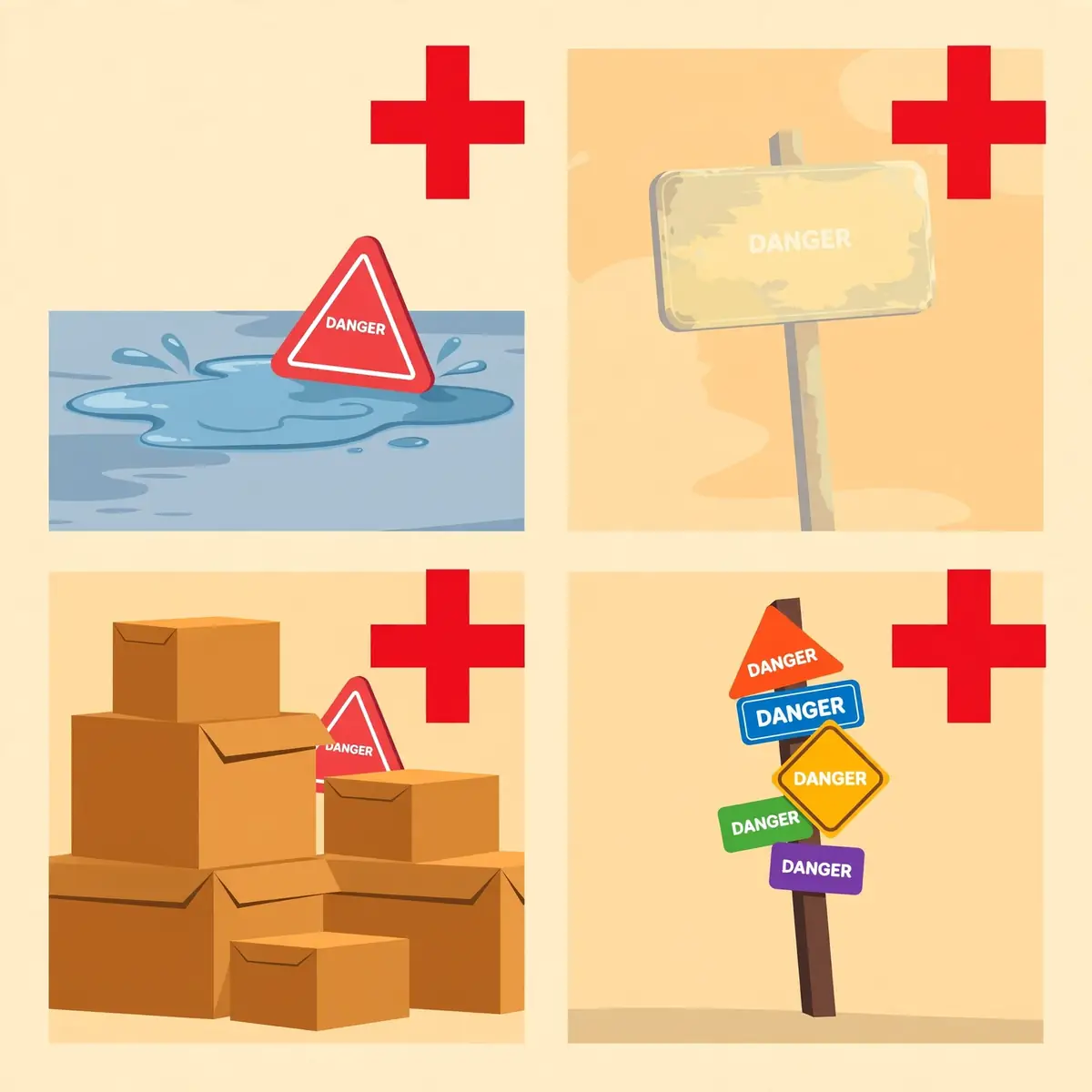
Most danger-sign failures are not design failures. They are failures of judgement, placement or upkeep, and they are easy to spot on a walk around any site. The list below covers the mistakes that appear most often, and each one has a simple fix. A sign audit takes less than an hour, and it catches most of them.
- Using DANGER for a minor hazard. A wet floor, a low step or a hot tap does not deserve a red header. Overuse is the fastest way to destroy the warning.
- Using a lower word for a lethal hazard. A CAUTION sign on a live panel or an unguarded edge understates the risk and gives workers a false sense of safety.
- Homemade signs. A printed sheet in a plastic sleeve, a handwritten warning, or a sign in the wrong colours does not comply, and workers read it as unofficial.
- Faded, damaged or dirty signs. Sun-bleached red, cracked panels and paint splashes make the sign unreadable. Replace it instead of patching it.
- Hidden signs. A sign behind stacked boxes, behind an open door, or above head height is not a sign. Move it to the approach at eye level.
- Signs left up after the hazard is gone. An outdated sign teaches the crew that signs are never updated, and the next real warning is ignored.
- Too many signs in one place. Five different headers on one post compete for attention, and the reader reads none of them. Keep the highest severity alone or at the top, and limit the cluster to three signs per sightline.
- No training behind the sign. OSHA requires employees to be instructed in what danger and caution signs mean. A sign without training is a poster.
- English only for a multilingual crew. A sign the reader cannot understand does not warn them. Add pictograms, or a second language, where the workforce needs it.
- Signs used as a substitute for a guard. A danger sign on an unguarded machine does not make the machine safe. Fix the guard first, then post the sign.
Using DANGER for a minor hazard
This is the most common mistake, and the most damaging. A site that posts DANGER on every wet floor, every step and every warm pipe trains its workers badly. They learn to treat red headers as decoration. The warning system depends on rarity: a red header must be unusual enough to stop a person. Every unnecessary DANGER sign spends a little of that power.
The fix is a short review of every danger sign on the site. Check each one, one at a time, against the severity test. For each sign, ask whether contact with the hazard will cause death or serious injury. If the honest answer is no, change the sign to the right word. The review takes an afternoon, and the signs that remain carry their full weight again.
Signs that are faded, hidden or out of date
Signs age faster than the hazards they mark. Sunlight fades red to pink, rain lifts the print, and forklifts bend the corners. A new stack of pallets can hide the panel. None of this is anyone's fault, but all of it is someone's job. Put the signs on the inspection checklist, with a named person and a fixed interval. Replace any sign that is no longer legible, accurate or relevant.
Removal matters as much as replacement. When a hazard is eliminated, the sign comes down the same day. A sign for a tank that was removed last year is not harmless clutter. It is a false warning, and false warnings are what teach workers to stop reading signs. The construction rule states it directly: signs shall be removed or covered promptly when the hazards no longer exist.
No training behind the sign
A sign system without training is a set of posters. OSHA requires employees to be instructed that danger signs indicate immediate danger and that special precautions are necessary, under 1910.145(c)(1)(ii). The same instruction applies to caution signs and to tags. The instruction belongs in induction, before the new worker meets the signs on the floor. It should use the site's own signs as examples.
Training should also cover what to do when a sign is missing, damaged or wrong. A worker who reports a faded danger sign has done the system a favour. The report should be welcomed, not ignored. The guide to OSHA training explains the training duties that sit behind the signage rules. The guide to safety training covers how to run it.
What to do when you see a danger sign
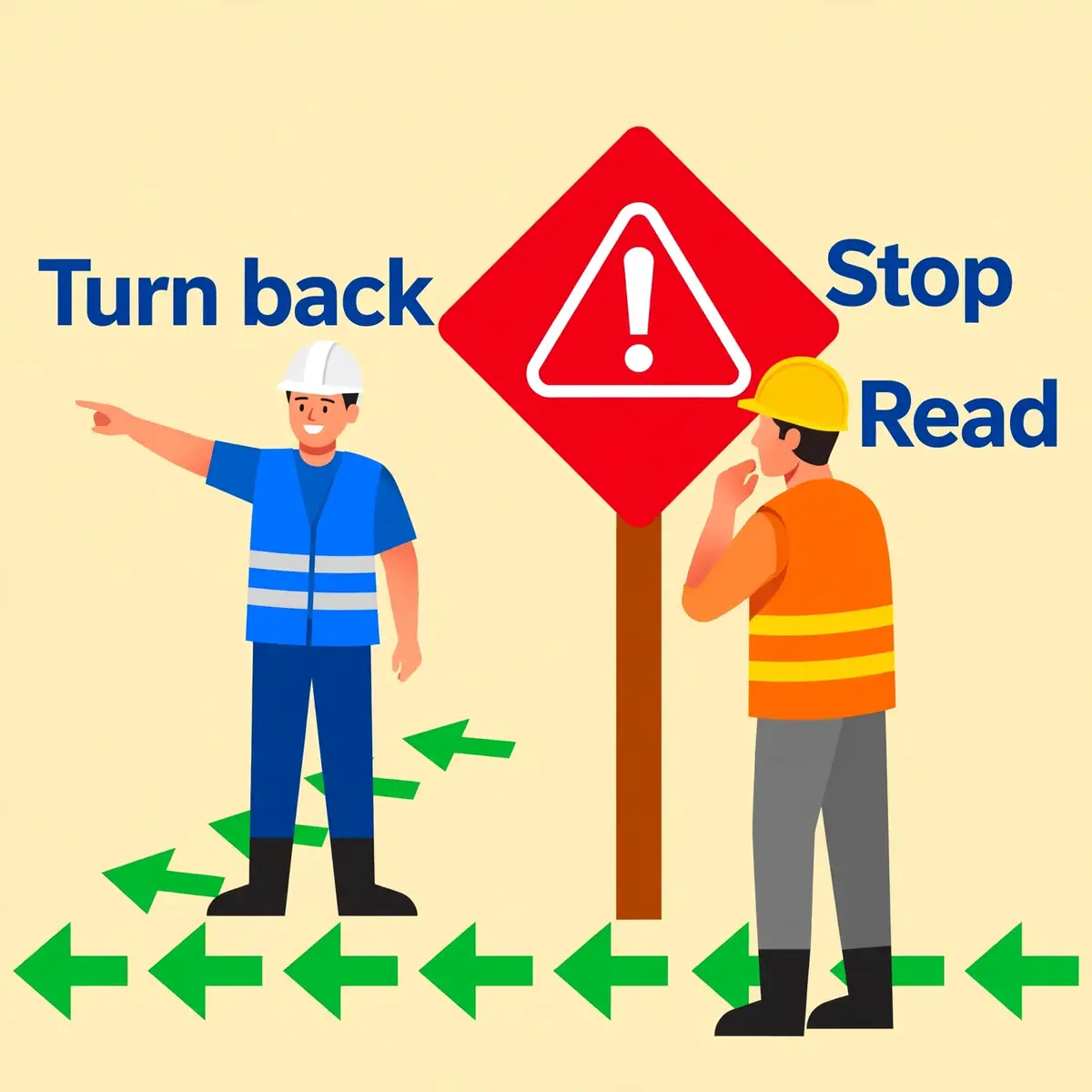
Seeing a danger sign is a decision point, and the right response takes seconds. Stop before the hazard, read the whole message, and do what it says. Do not walk past to have a closer look. Do not assume the sign is old, or that it applies to someone else. The sign is posted because the hazard is there now. The hazard does not check who you are before it hurts you.
The steps below apply to any danger sign, on any site, in any industry. They are the same for a visitor, a contractor and a worker who has passed the sign a hundred times. Familiarity is the risk: the sign a person walks past every day is the sign they stop seeing. The day the hazard changes is the day the habit turns dangerous.
Stop, read, then act
Stop at the sign, not at the hazard. Read the header, then the message, then the pictogram. The header tells you the severity. The message tells you the hazard, the consequence and the action. The pictogram confirms what you are looking at. If the message names an action, follow it exactly. The action may be to keep out, to not enter, to lock out power, or to wear the stated protection.
If the message tells you to stay out, stay out. Do not enter a permit space to fetch a tool, and do not open an electrical panel to check a breaker. Do not step past a barrier to take a shortcut. If the work must be done, it must be done by an authorised person. That person needs the permit, the protection and the procedure the sign points to. Your job is to report the need, not to improvise the entry.
When the sign is missing or wrong
A missing sign is a hazard in itself, and it should be reported the same day. If a danger sign has fallen, faded past reading, or been painted over, tell a supervisor. Do not enter the area until the sign is replaced. The same applies to a sign that is wrong. A DANGER sign may sit on a hazard that has been removed, or a CAUTION sign on a hazard that can kill.
Never remove, cover or move a danger sign yourself. The exception is when the hazard has been eliminated and you are the person responsible for the area. Moving a sign to make a walkway look tidier can leave the next person unprotected. The person who posted the sign decides when it comes down. So does the supervisor responsible for the area. The guide to exit signs covers the signs that mark the way out when the right response is to leave.
WarningDo not enter a permit space to rescue someone without a permit, an attendant and breathing apparatus. The rescuer who follows the first victim in is the most common second victim.
Frequently Asked Questions
What is the difference between a danger sign and a warning sign?
A danger sign marks an immediate hazard that will cause death or serious injury if it is not avoided. A warning sign marks a hazard that could cause death or serious injury. The difference is certainty: DANGER means the injury is the expected outcome, WARNING means it is a real possibility. DANGER has a red header with white letters; WARNING has an orange header with black letters.
What colour is a danger sign?
Red, black and white. The header is red with the word DANGER in white letters. The border is black, and the message panel is white with black letters. OSHA fixes these colours in 29 CFR 1910.145(d)(2), matched to the safety colours in ANSI Z53.1-1967 or ANSI Z535.1-2006(R2011). No variation in the design of a danger sign is allowed.
When must a danger sign be posted?
Wherever an immediate hazard exists and people can reach it. On construction sites, danger signs shall be used only where an immediate hazard exists, under 29 CFR 1926.200(b)(1). Permit-required confined spaces must be marked with a danger sign or an equally effective means, under 29 CFR 1910.146(c)(2). Electrical hazards must be marked with safety signs, symbols or tags where necessary, under 29 CFR 1910.335(b)(1).
Can a danger sign be used for a hazard that is only possible, not certain?
No. A possible hazard that could cause death or serious injury takes a WARNING sign. A potential hazard that may cause a minor or moderate injury takes a CAUTION sign. Using DANGER for a lower hazard dulls the warning, and workers learn to walk past red headers. When the severity is uncertain, use the lower word until a risk assessment is complete.
How large must a danger sign be, and how far away must it be readable?
Large enough to read from the distance at which it must be read. Sign makers working to ANSI Z535.2 use a simple rule. Letter height in inches equals viewing distance in feet times 0.07. A sign read from 25 feet needs the word DANGER about 1.75 inches tall. Common stock sizes follow that rule:
- A 10 by 7 inch sign suits about 15 feet.
- A 14 by 10 inch sign suits about 25 feet.
- A 20 by 14 inch sign suits about 40 feet.
For a danger tag, OSHA requires the signal word to be readable from at least 5 feet.
What is a danger tag, and when is one used instead of a sign?
A danger tag is the temporary version of a danger sign. It is a card hung on the equipment itself. It marks a hazard that is out of the ordinary, unexpected or not readily apparent, until the hazard is gone. Danger tags shall be used only in major hazard situations, under 29 CFR 1910.145(f)(5). That means an immediate hazard that presents a threat of death or serious injury. A tag never replaces a permanent sign for a permanent hazard.
Do danger signs exist in the UK?
Not as a signal-word class. The Health and Safety (Safety Signs and Signals) Regulations 1996 use shape and colour instead of words. A yellow triangle warns of a hazard, a red circle prohibits an action, and a blue circle orders one. The same live electrical panel gets a red DANGER header in the United States. In Great Britain it gets a yellow triangular warning sign with a lightning bolt. Workers moving between the two systems need an induction in the system used on the site they are on.
Sources
- OSHA: 29 CFR 1910.145 — Specifications for accident prevention signs and tags
- OSHA: 29 CFR 1926.200 — Accident prevention signs and tags (construction)
- OSHA: 29 CFR 1910.146 — Permit-required confined spaces
- OSHA: 29 CFR 1910.335 — Safeguards for personnel protection (electrical)
- Health and Safety (Safety Signs and Signals) Regulations 1996 (SI 1996/341)
- NFPA 70E: Standard for Electrical Safety in the Workplace